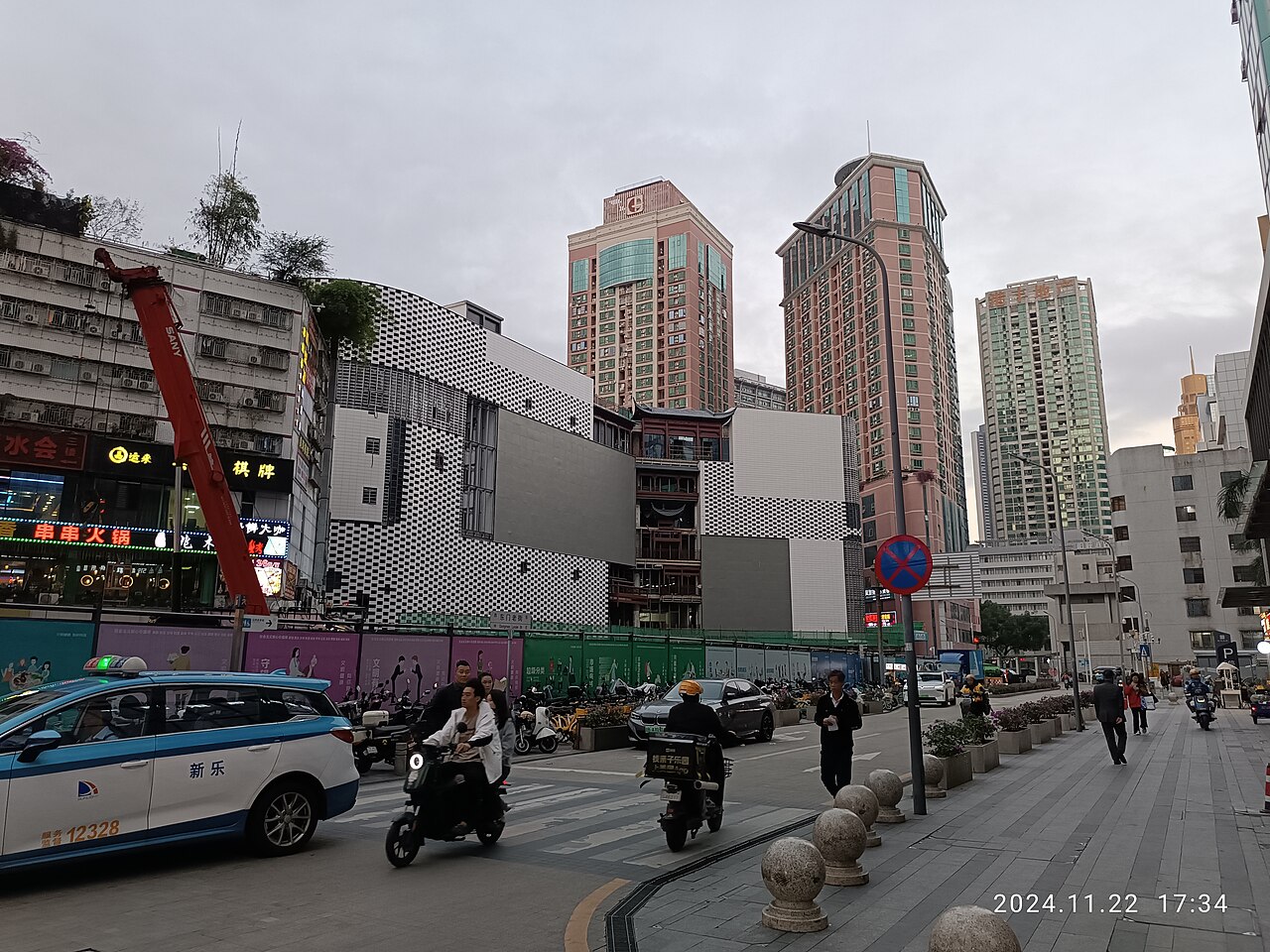
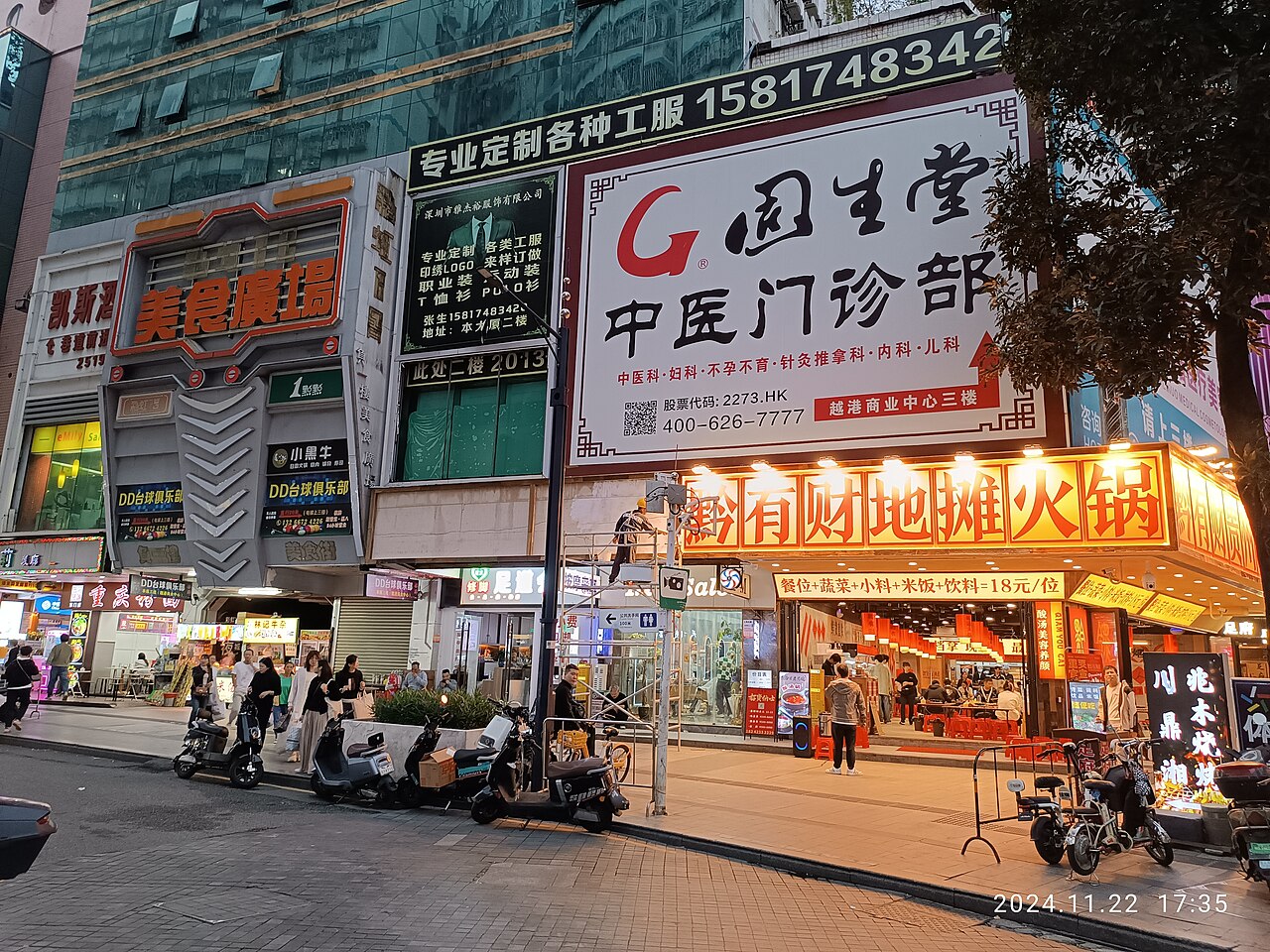
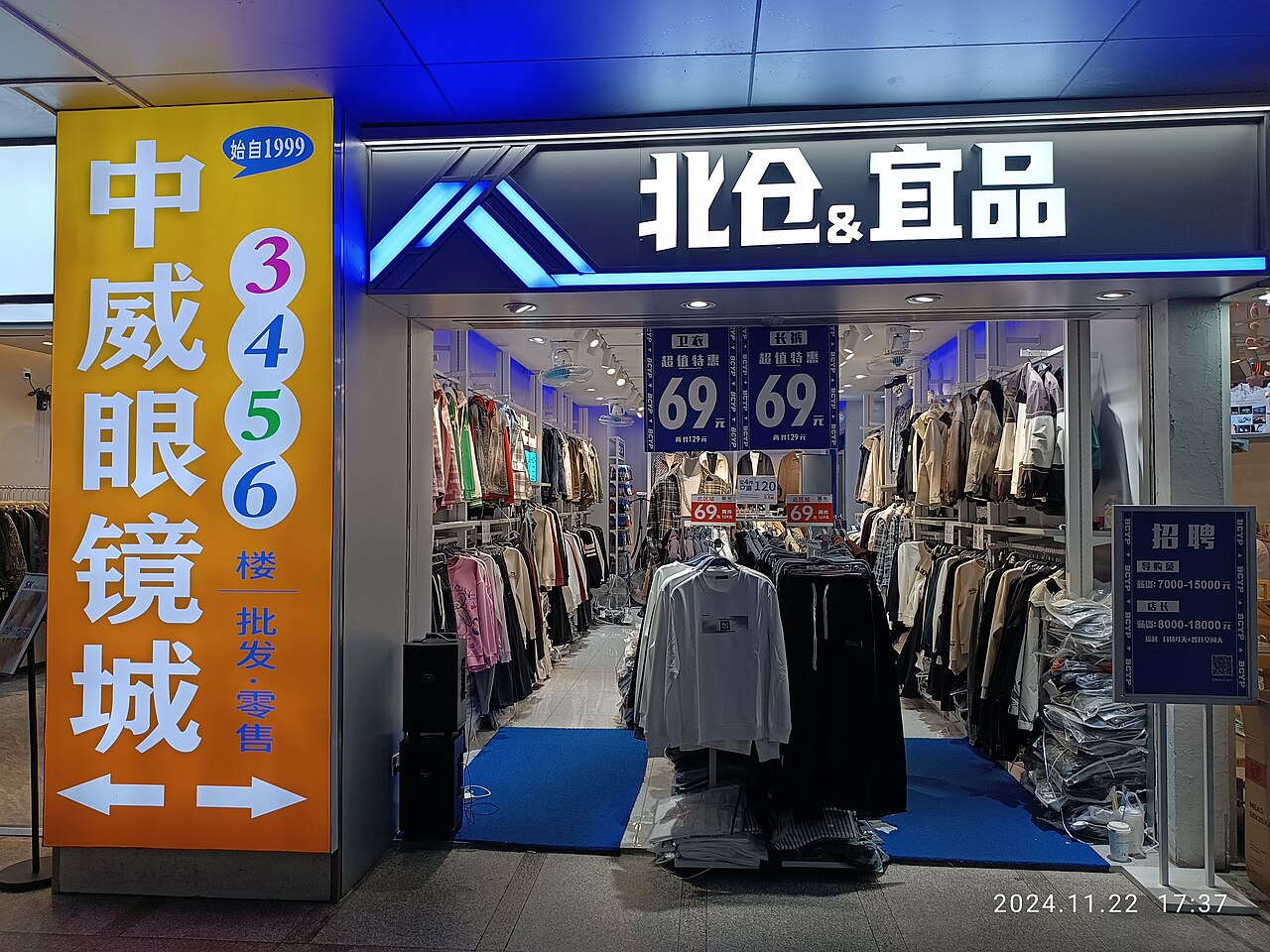
Dongmen Pedestrian Street is a roughly 176,000–180,000 sqm car-free retail district in the centre of Shenzhen's Luohu, and it is the city's oldest commercial quarter — it grew out of the Ming-era Shenzhen market town (深圳墟) that stood outside the settlement's east gate more than 300 years ago. A large-scale renewal launched in March 2024 and substantially finished at the end of 2025 was carried out without closing the street or shutting the shops: 21 building facades and five lanes were rebuilt, over 12,000 metres of underground utilities replaced, and 252 new brand stores opened. Foot traffic hit 80.7 million visits in 2025, about 133% above pre-renewal levels, with under-40 visitors now making up over 70% of the crowd — so the street today reads less as a heritage market than as a dense mix of anime merchandise, food stalls and live-commerce broadcasting. It is free and open-air, best treated as a half-day wander rather than a ticketed sight.
Siyue Academy (思月书院) and the surrounding heritage lane (风貌街) — a Qing-dynasty academy building over 300 years old, relocated to its current spot during the 1998 redevelopment and protected as a municipal heritage site. It housed the workers' reception station during the 1925 Canton–Hong Kong strike, and with the granite paving and lane gateways nearby it is the one block where old Shenzhen is still legible.
Xin Baima · Dimension 9 (新白马·次元9号) — a 17,000 sqm complex converted from the old Baima garment wholesale market into what is billed as the Greater Bay Area's first retail centre built around anime, gaming and virtual idols. The density of Chinese IP merchandise and 'guzi' collectible shops here is hard to find elsewhere.
MINISO LAND — a three-floor, roughly 1,500 sqm flagship where the great majority of stock is IP collaboration lines. It is the clearest single illustration of how the street's customer base shifted after the renewal.
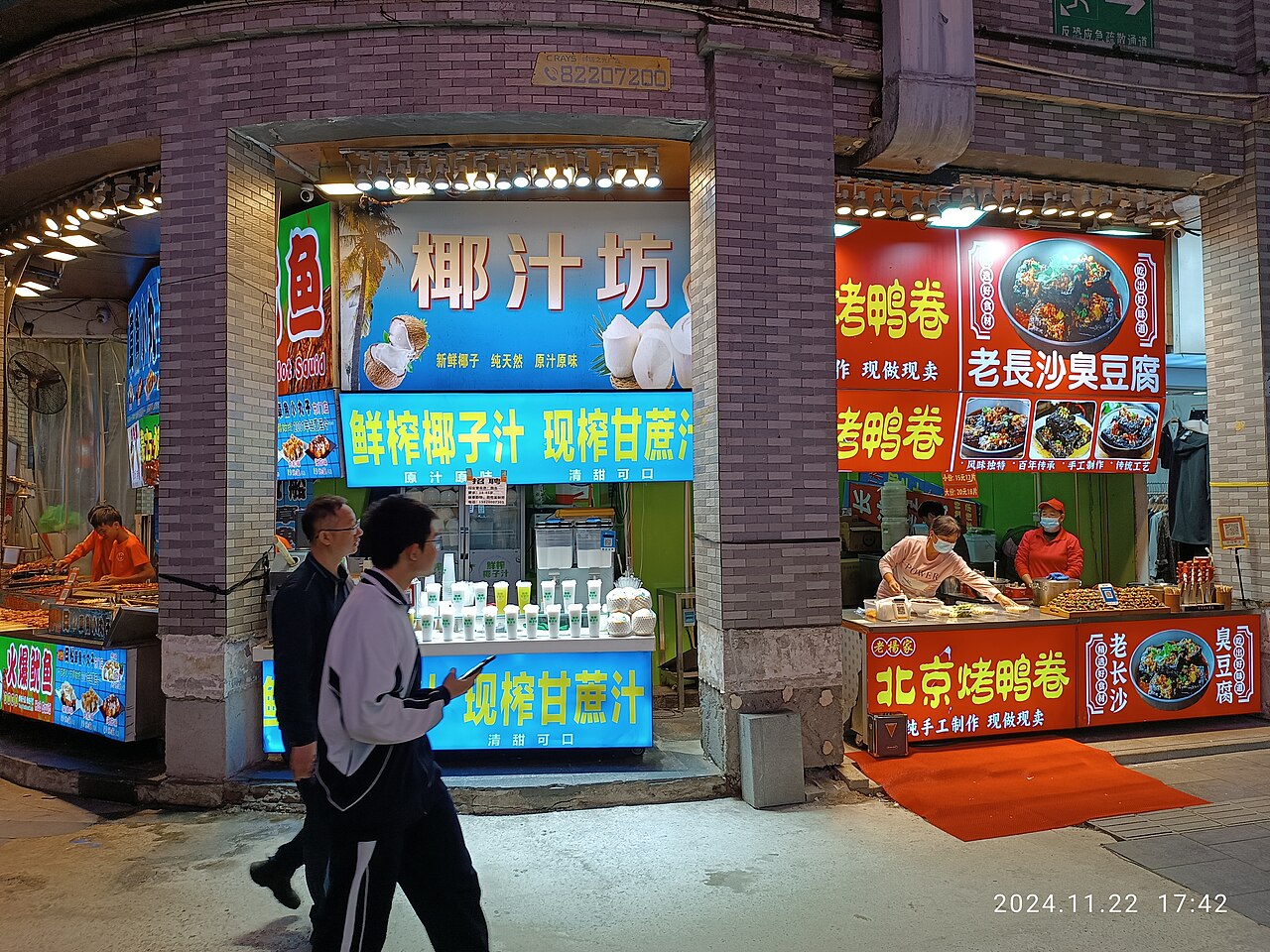
Dongmen food street (东门美食街) and the surrounding stall lanes — Cantonese and Hong Kong-style street food including cheung fun rice rolls and roast goose. The renewal explicitly aimed to preserve the area's 'yanhuoqi' (everyday street life), so long-standing vendors were kept in place.
Laojie Square and the live-streaming stretch after dark — since late 2023 the street has drawn enough live-commerce hosts to be nicknamed the 'influencer broadcast street'. Eighty smart lampposts were installed in the renewal and night-time foot traffic rose about 40%; the street is at its most characteristic in the evening.
Good to know
RulesPayment is effectively Alipay/WeChat Pay QR only. Install both apps before you fly, complete passport identity verification, and link an international card (Visa, Mastercard, JCB), so that if one wallet is declined the other still works. Small stalls often refuse cash, but carry some low-denomination RMB as backup. Transaction limits and fees change frequently — confirm the latest terms shortly before departure.
RulesOn the mainland many everyday services (Google, KakaoTalk, LINE and others) do not connect normally. International roaming or a travel eSIM often keeps them working, so think carefully before relying on a local SIM alone, and install and log into your map, translation and payment apps before entering the country. VPN use sits in a legal grey area locally; if you need work access, clear it with your employer's policy first.
RulesKorean ordinary passport holders can currently enter visa-free for up to 30 days for tourism, but this is a temporary measure running to 31 December 2026 and is re-announced year by year — verify the current status with the Chinese embassy before booking. Hotels register your passport automatically; if you stay in a private home you must file a temporary residence registration yourself.
CautionFixed-price shops sit alongside wholesale-style stalls, so the same item can be quoted at very different prices. Ask the price first and expect to bargain; opening quotes rise sharply for obvious tourists. Do not follow touts who approach you on the street offering luxury bags, watches or massages and lead you into another building. Buying counterfeits can also cause problems at customs on the way home.
SafetyCrowds have grown substantially since the renewal, and weekend evenings and Chinese public holidays can be shoulder-to-shoulder. Wear backpacks on your front and do not walk with your phone loose in your hand. Agree a meeting point with your group in advance — calls and location sharing are unreliable in dense crowds.
SeasonShenzhen is subtropical: May to October is both the rainy season and typhoon season, and July–August routinely feels above 35°C. Most of the street is open to the sky, so carry a compact umbrella, wear shoes you don't mind soaking, and note which malls you can duck into. During typhoon warnings shops may close early.
MannersLive-commerce broadcasts run throughout the street — avoid walking through tripods and lighting rigs, and don't film shop interiors or staff without permission. Helping yourself to tasting-counter food or opening packaged display stock easily causes disputes. Indoor malls are entirely non-smoking; smoke only in designated areas.
Practical info
Take Shenzhen Metro Line 1 or Line 3 to Laojie Station and use Exit A or D, which come out directly onto the street; arriving from Hong Kong it is one stop from Luohu Station (Luohu Port), roughly five minutes by metro after clearing the border. The street is open-air with no admission fee and no fixed opening hours; individual shops generally run from about 10:00 to 22:00 but vary widely, so if you are going for a specific venue (Xin Baima · Dimension 9, MINISO LAND) or an event, check the latest hours and schedule right before you visit.
On-site reviews📍 Verified on-site
No reviews yet. If you are here, be the first to leave one.