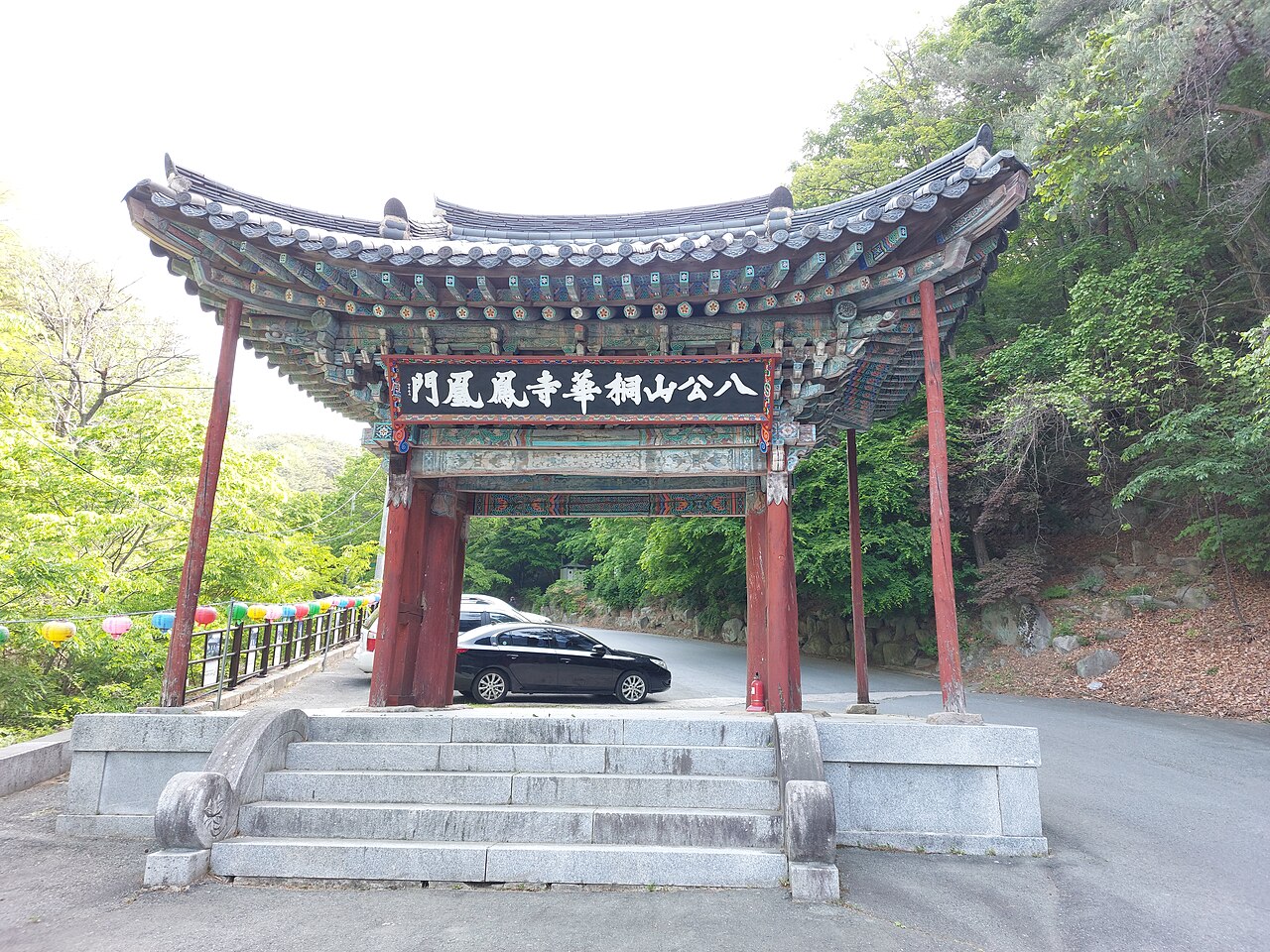
Donghwasa is a roughly 1,500-year-old Buddhist temple on the southern slopes of Palgongsan Mountain, about 22 km northeast of central Daegu, and serves as the head temple of the 9th district of the Jogye Order. Founded in 493 (during the Silla dynasty) by the monk Geukdal and originally called Yugasa, it was renamed Donghwasa after a paulownia tree reportedly bloomed in midwinter during a 9th-century reconstruction. Today it is one of Palgongsan's signature temples, home to a giant Medicine Buddha statue and a nationally designated treasure hall.
Unification Medicine Buddha (Tongil Yaksa Yeorae Daebul): a roughly 33 m stone statue built between 1990 and 1992, erected as a prayer for Korean reunification and the temple's most striking landmark.
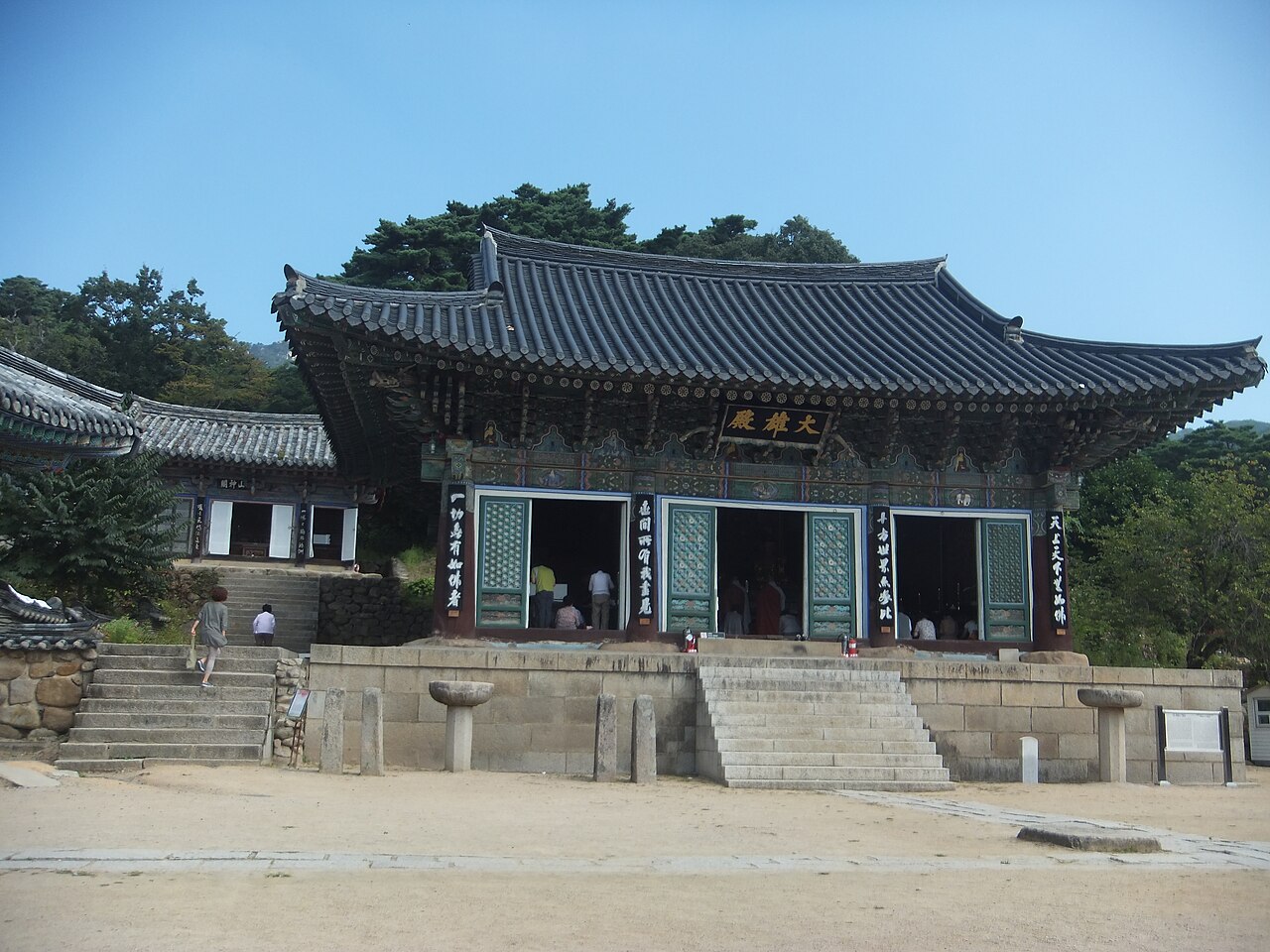
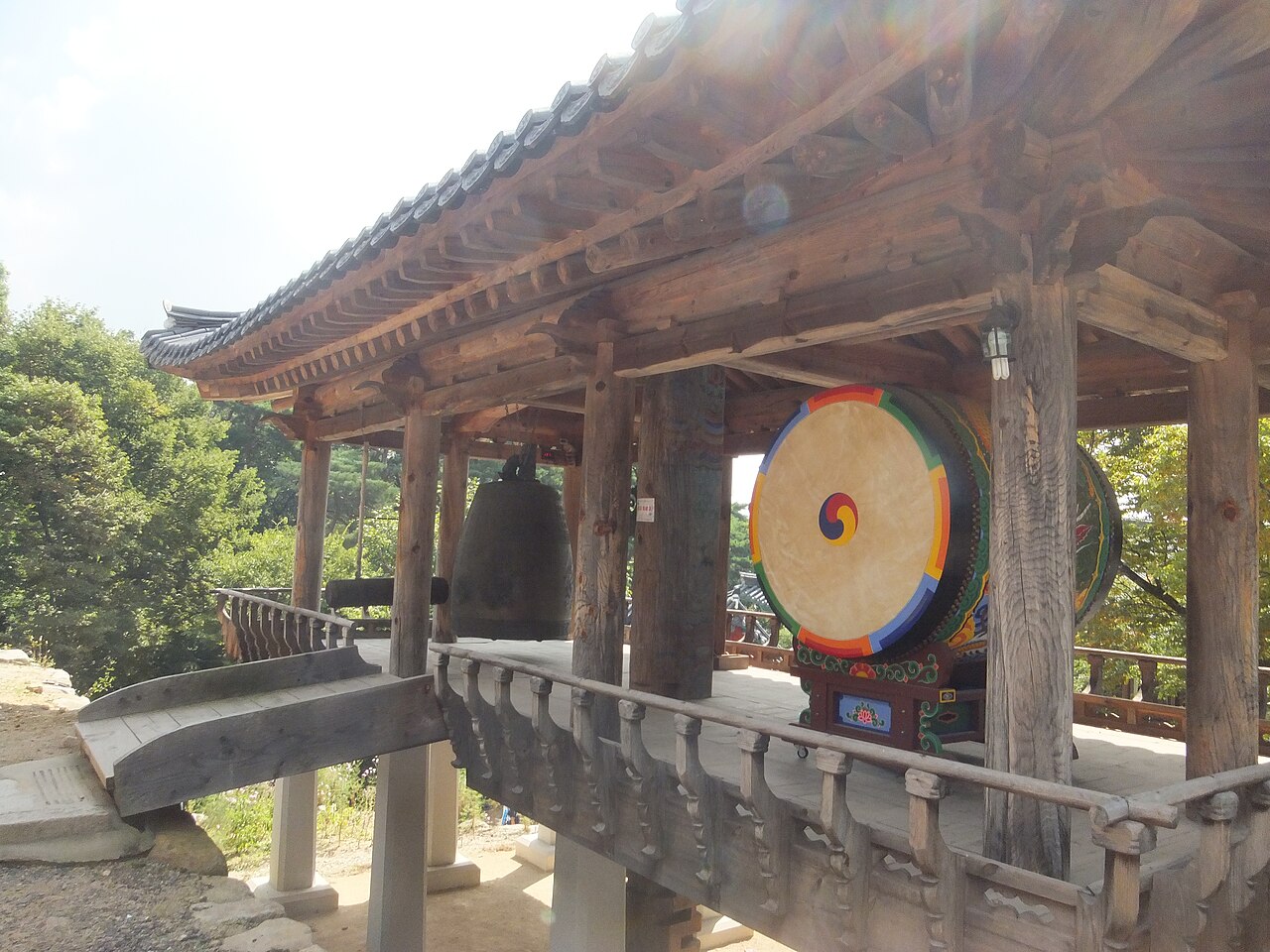
Daeungjeon Main Hall: a nationally designated Treasure, part of a historic complex that also includes Bongseoru Pavilion, linked to the monk-general Samyeongdaesa who led warrior-monks during the Japanese invasions.
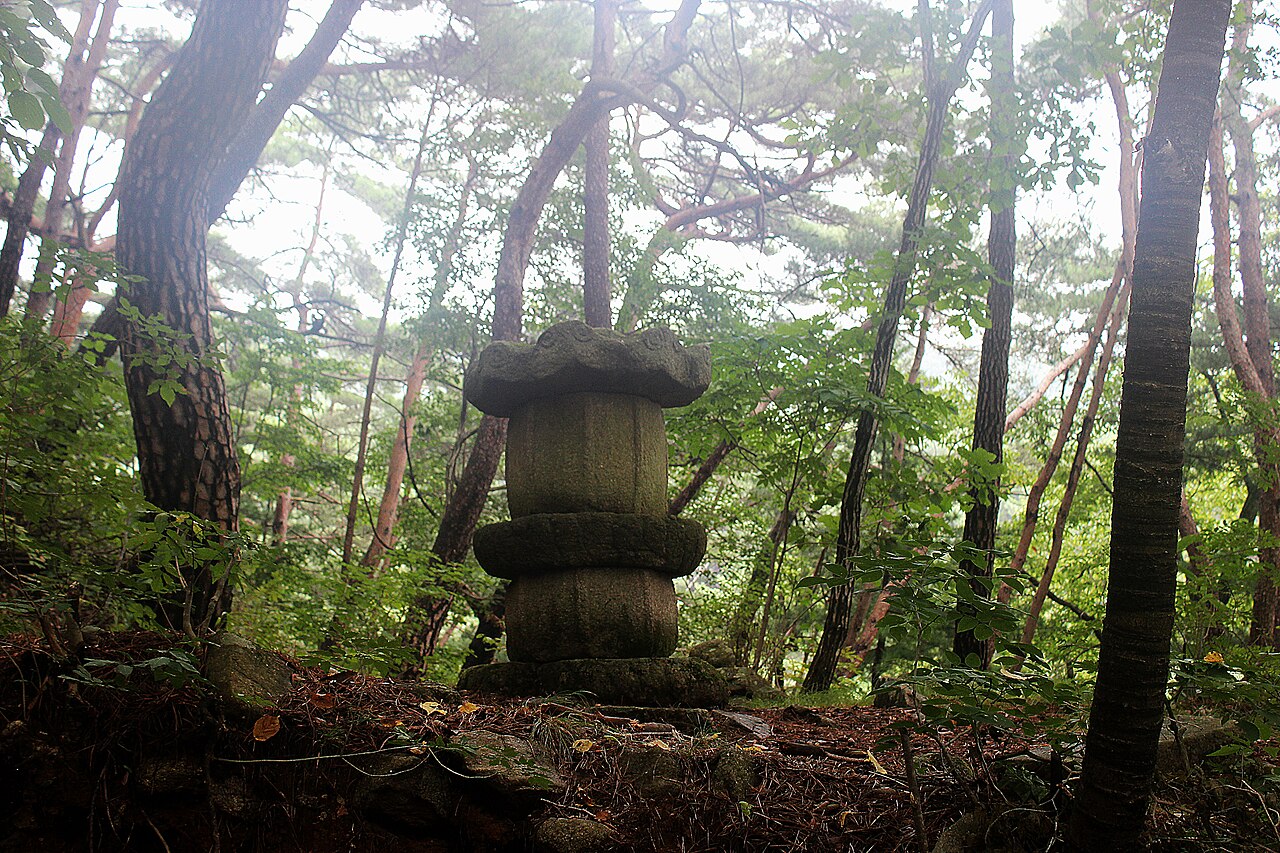
Scattered stone heritage: rock-carved seated Buddha (maaebul), the Biroam three-story pagoda, and the east and west pagodas at Geumdangam hermitage reward a slow walk through the grounds.
Four-season scenery: cherry blossoms and Buddha's Birthday lanterns in spring, shaded valleys in summer, celebrated autumn foliage along the Palgongsan loop road, and quiet snowscapes in winter.
Templestay and temple cuisine: meditation- and tea-focused day and overnight templestay programs plus temple-food experiences are offered (advance reservation recommended).
Good to know
MannersRemove shoes and keep quiet inside worship halls. Avoid photographing monks or praying worshippers head-on; photography may be restricted inside halls such as Daeungjeon.
RulesAs a temple inside a national park, cooking, camping, smoking, and pets are restricted. Stay on marked trails and do not damage streams or cultural relics.
SeasonDuring peak autumn foliage (mid-October to early November) and on Buddha's Birthday, the parking lots and the Palgong No. 1 bus get very crowded. Arrive early.
SafetyIf you continue onto the trails toward Yeombulbong or Dongbong peaks, the path becomes steep. The sun sets early on the mountain, so avoid late-afternoon hikes and allow ample time to descend.
SeasonIn winter, steps and mountain paths can be icy and slippery; wear non-slip shoes and dress warmly.
SafetyDuring the summer monsoon, stream levels can rise quickly; stay away from the water's edge and check weather alerts before visiting.
Practical info
The temple is easiest to reach by taking the Daegu subway and transferring to the Palgong No. 1 bus toward Donghwasa (about 40+ minutes). Admission fees, parking rates, museum hours, and templestay schedules can change, so confirm the latest details on Donghwasa's official website or the templestay site before you go.
On-site reviews📍 Verified on-site
No reviews yet. If you are here, be the first to leave one.