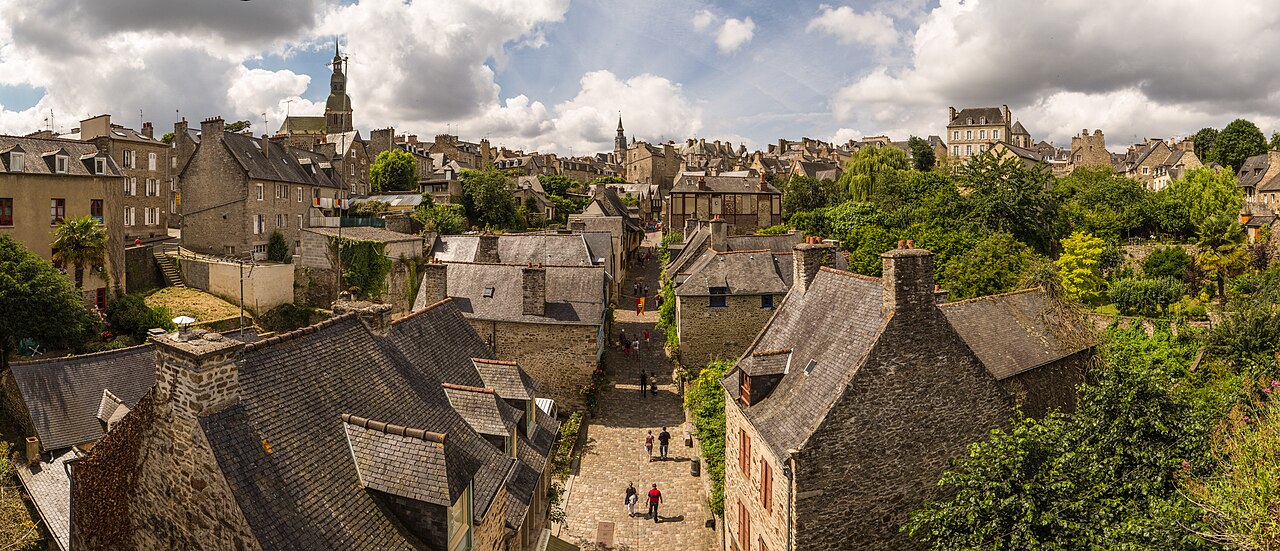
Dinan is one of France's best-preserved medieval towns, set on a hill in northern Brittany above the River Rance. Nearly 2.7 km of ramparts (the longest in Brittany) wrap the old town, while a 14th-century castle, roughly 130 half-timbered houses and a picturesque riverside port make the whole place feel like a living museum. As of 2026 the castle is open from early April to early January, and the celebrated Fête des Remparts is a biennial event, so there is no edition this year (the next is July 2027) — making 2026 a calmer year to wander. It pairs naturally with Saint-Malo and the Mont-Saint-Michel bay as a day trip or overnight stop.
Rampart walk: a 2.7 km circuit linking 10 towers and 4 monumental gates, rising up to 75 m above the Rance for sweeping views over the town and valley
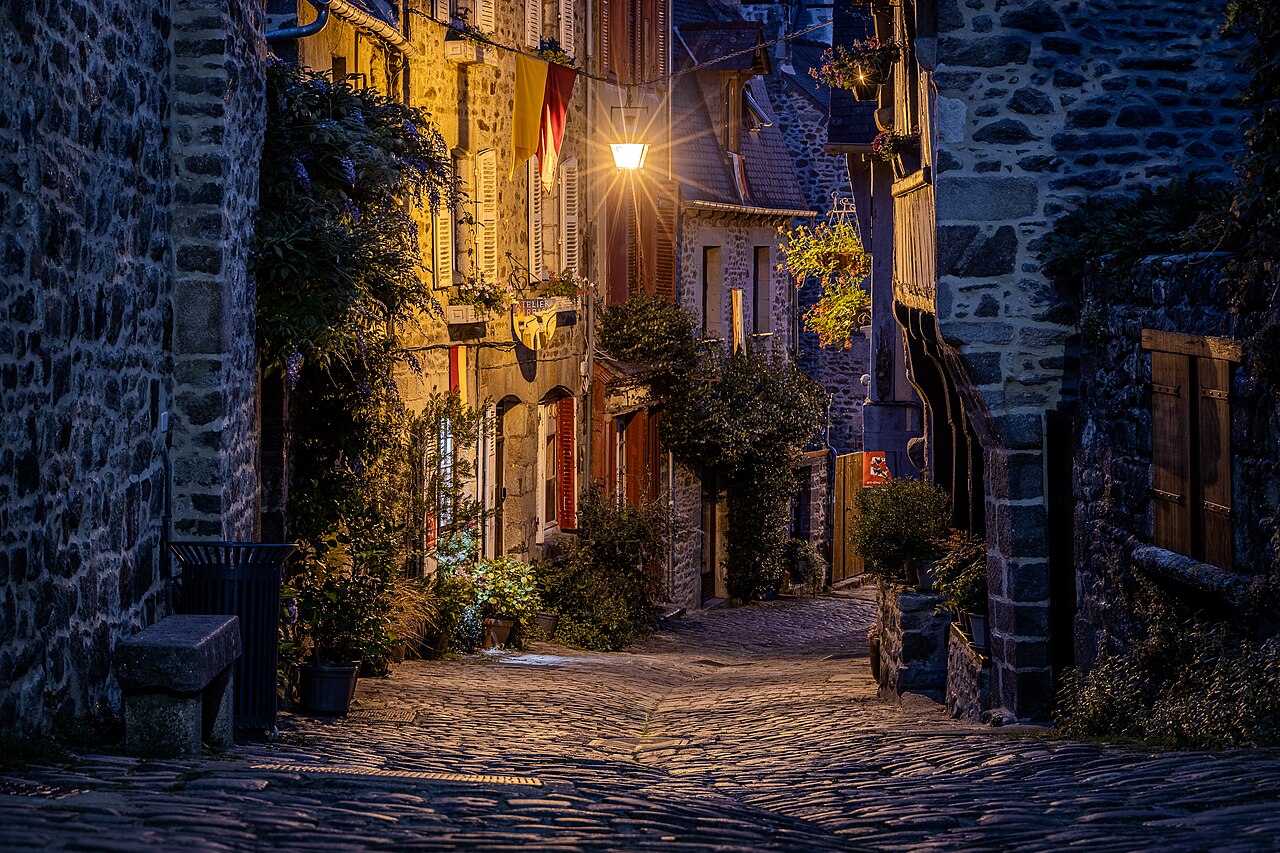
Rue du Jerzual & the old port: a steep, cobbled medieval street connecting the upper town to the harbour, passing through the 14th-century Porte du Jerzual down to the Rance-side marina
Château de Dinan: a late-14th-century residential tower built by Duke John IV of Brittany plus the 15th-century Coëtquen tower, with exhibits on courtly life and the art of war
Tour de l'Horloge (Clock Tower): a late-15th-century tower rising 43 m; climb it for a 360° panorama over the ramparts and rooftops. Its bell, gifted by Anne of Brittany, chimes every quarter hour
Place des Merciers & half-timbered houses: the heart of the old town, ringed by around 130 timber-framed houses (15th–18th c.) and lined with cafés and terraces
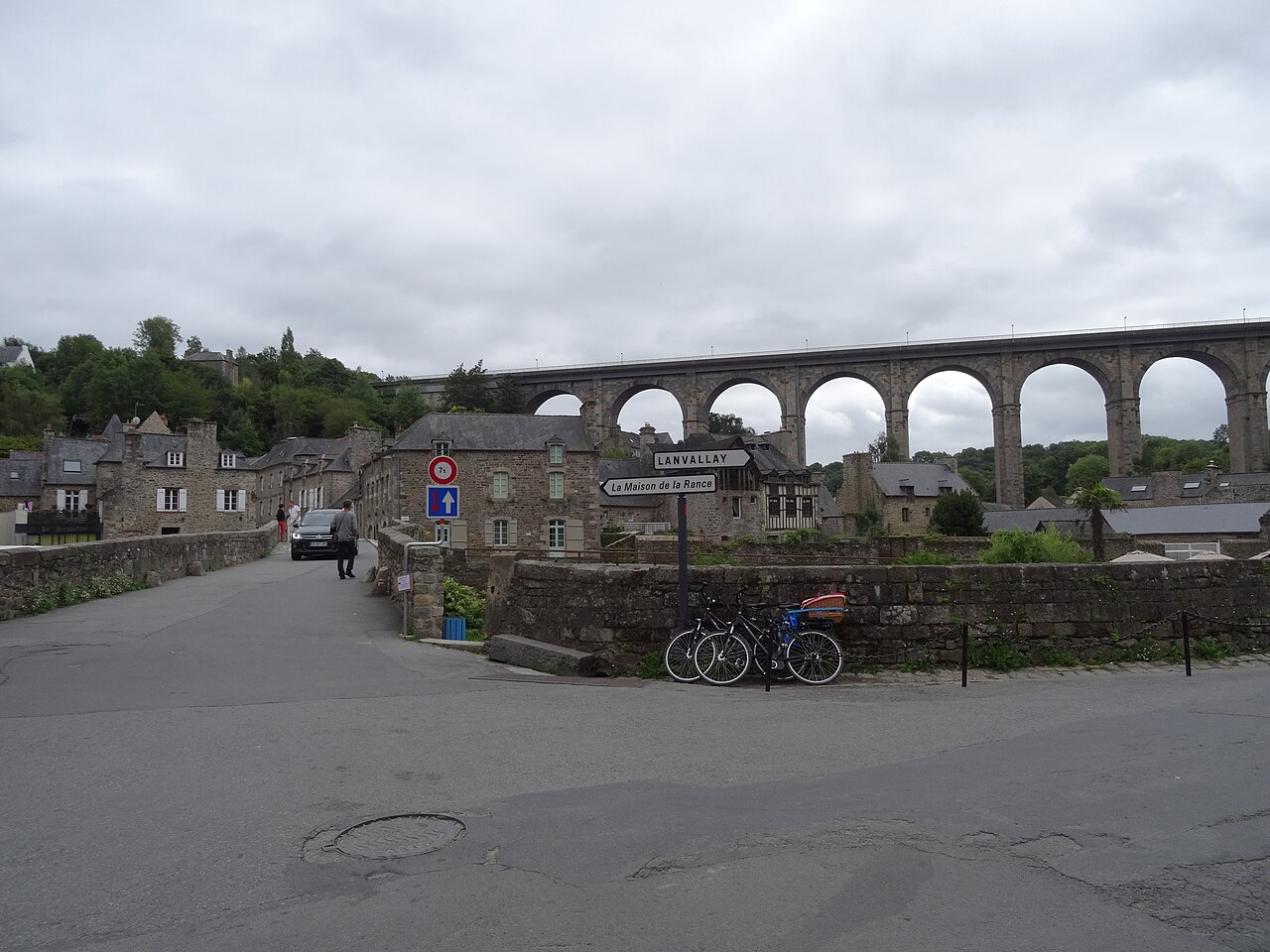
Jardin Anglais, Basilique Saint-Sauveur & Tour Sainte-Catherine: the town's classic viewpoints overlooking the port and its 250 m-long viaduct
Good to know
SafetyThe town splits into an upper old town and a lower port, and Rue du Jerzual is a steep cobbled lane reaching gradients of about 33%. Rampart paths are also stone and get very slippery in the rain, so wear flat, non-slip shoes and plan your up-and-down route if your knees or ankles tire easily.
SeasonBrittany has a changeable maritime climate with frequent showers and wind even in high summer. Pack a waterproof layer and clothes you can layer, and book accommodation and restaurants ahead in July–August, the busiest season.
RulesPaid sites such as the castle and clock tower run on seasonal hours and close for part of the winter, and sections of the ramparts occasionally shut for maintenance (a stretch of the north ramparts was closed in late April–early May 2026). Always check current opening days and times on the official site before you go.
MannersGreet shopkeepers and bakers with a 'Bonjour' on entering — it is basic French courtesy. The Basilique Saint-Sauveur is a place of worship, so keep quiet and dress modestly, and lower your voice in the narrow lanes where people actually live.
CautionIn crowds — during festivals or on the busy Place des Merciers — keep your belongings in front of you and watch for pickpockets. Café terraces may add a seating/service charge, so check menu prices first, and read paid-parking signs carefully to avoid fines.
SafetyTrains run via TER BreizhGo toward Rennes and Saint-Malo, but services are limited and often require a change (e.g. at Dol-de-Bretagne). Check the last-train times in advance, and if driving, use the signposted car parks since the old town is largely pedestrian and its lanes are narrow.
Practical info
Reach Dinan by TER BreizhGo train from Rennes or Saint-Malo — it is a 15–20 minute walk from the station to the old town and castle — or by car over the Rance viaduct when arriving from Rennes. The castle is typically open early April to early January (4 April 2026 to 3 January 2027), with adult admission around €8 and a 2-day castle-plus-clock-tower Pass 2D around €10; fares and hours change, so confirm the latest details on the official site before visiting.
On-site reviews📍 Verified on-site
No reviews yet. If you are here, be the first to leave one.