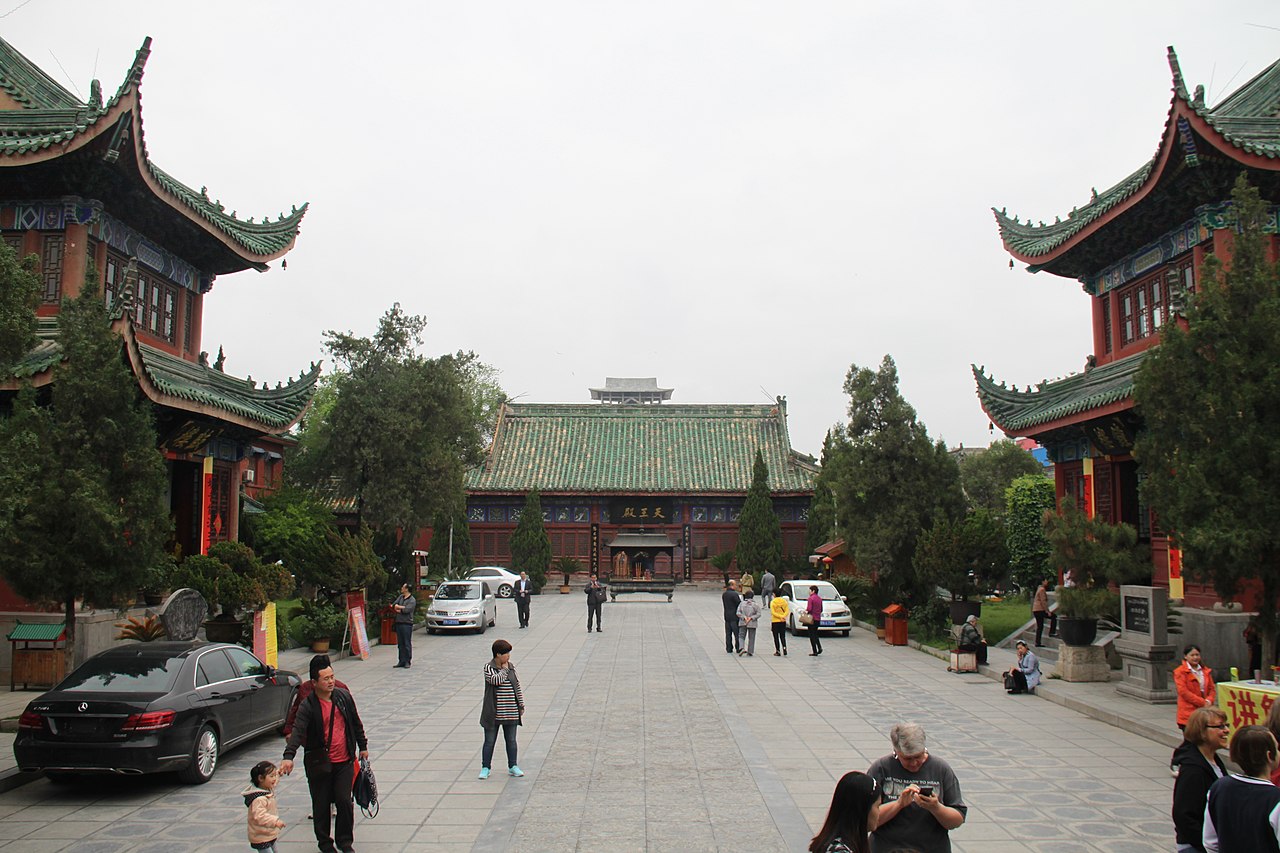
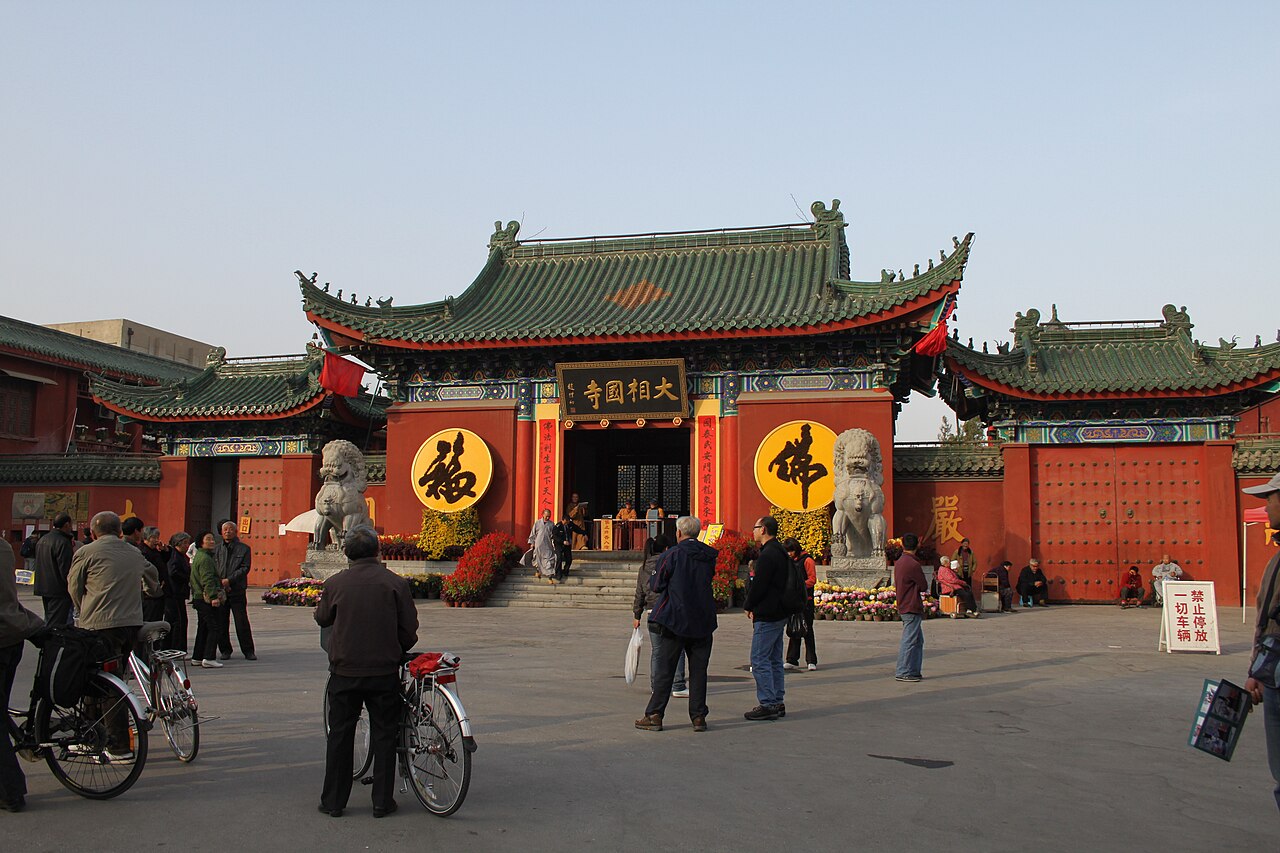
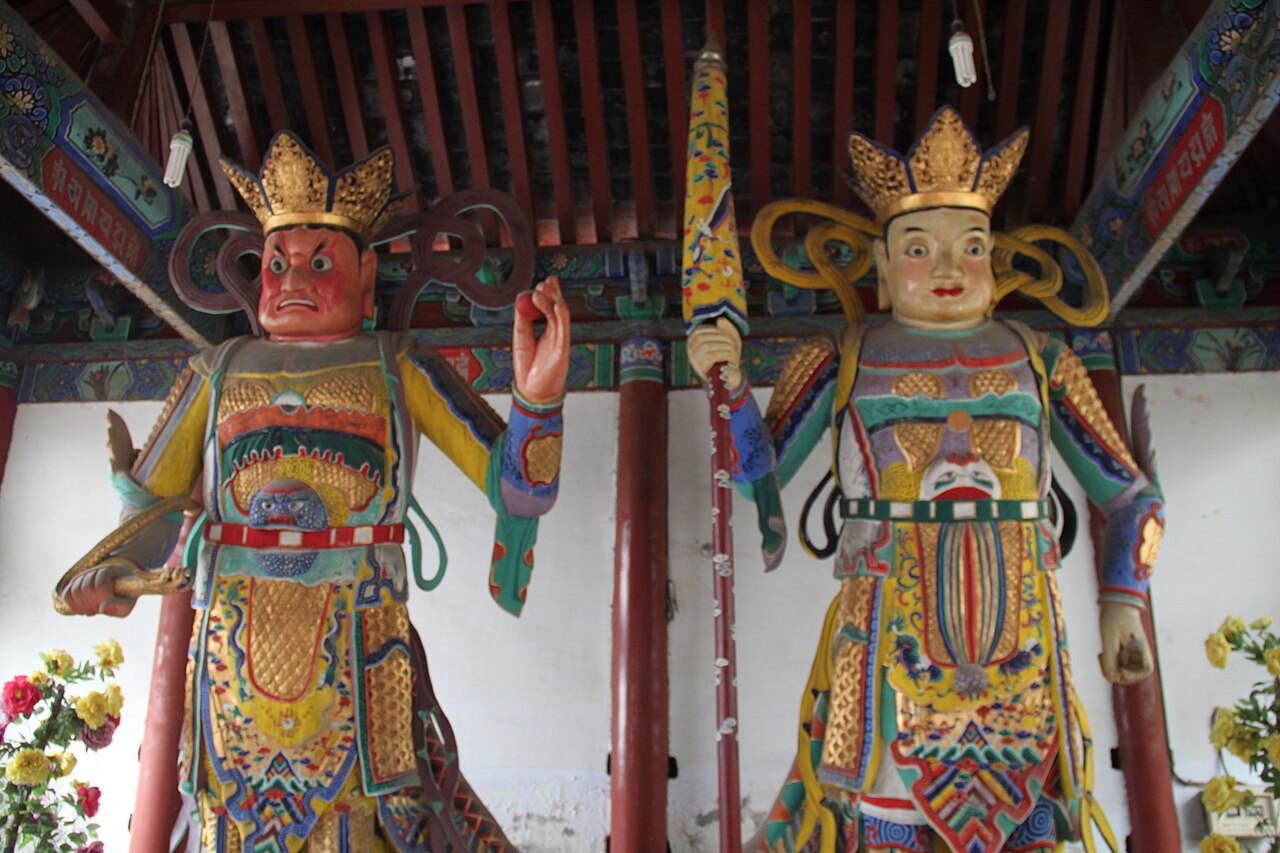
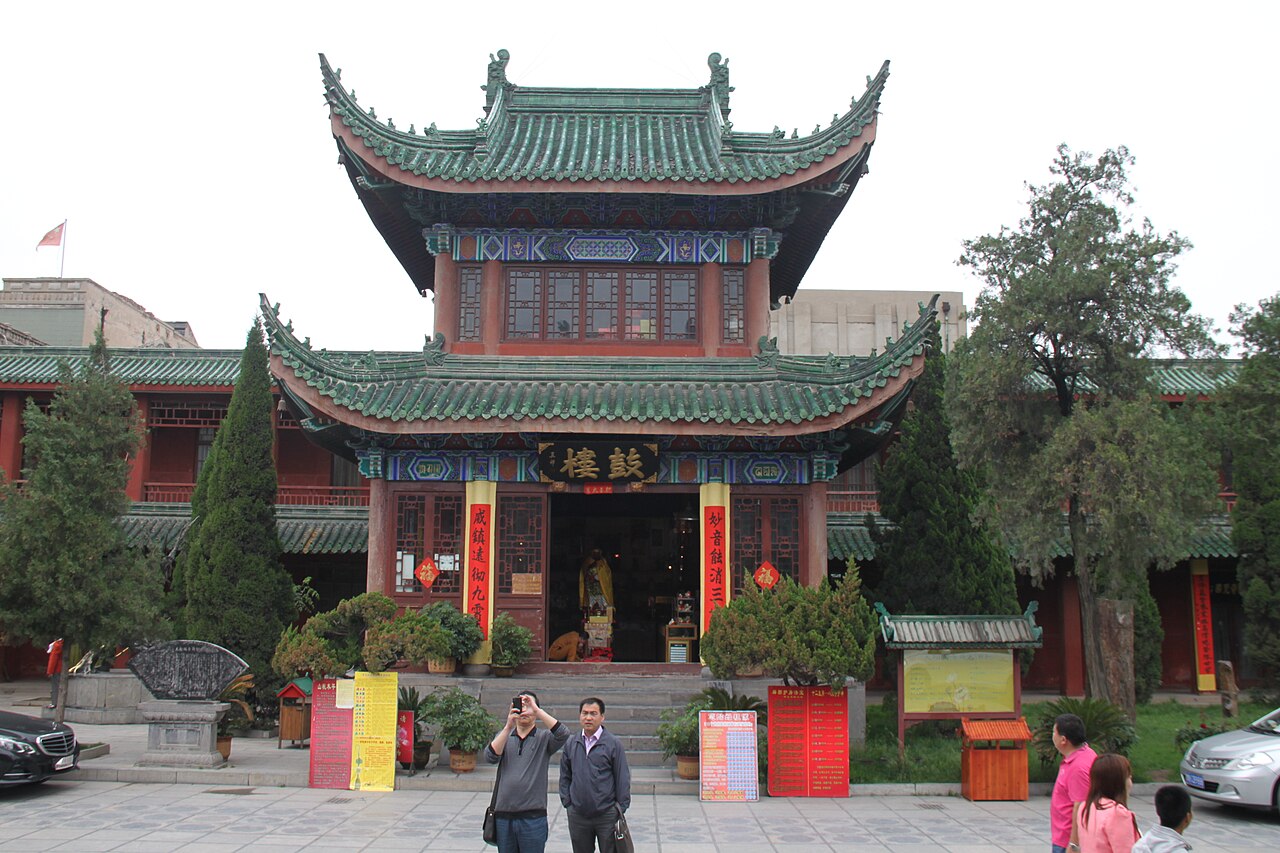
Daxiangguo Temple is a historic Buddhist monastery in the center of Kaifeng, Henan Province, China, first founded in 555 A.D. during the Northern Qi and flourishing as an imperial temple and international Buddhist hub under the Tang and Northern Song dynasties. It is famous as the setting where the monk Lu Zhishen uproots a willow tree in the classic novel Water Margin, and its surviving Qing-era halls include the Hall of Heavenly Kings, the Hall of Sakyamuni, the octagonal Arhat Hall, and the Scripture Tower. Its central-city location makes it an easy half-day visit.
The four-sided Thousand-hand-and-eye Guanyin statue at the heart of the octagonal Arhat Hall — carved from a single ginkgo tree in the Qing Qianlong era and regarded as the temple's treasure
The Hall of Sakyamuni (rebuilt 1661) with its three Buddhas and eighteen arhats
The bell tower housing a large bell weighing roughly 5 tons, noted for its resonant winter tolling
Performances of Daxiangguo Temple Buddhist music, a national intangible cultural heritage that carries on the Northern Song imperial musical tradition
A convenient downtown setting that pairs well with nearby Song-dynasty themed streets and night markets
Good to know
CautionBeware of people posing as 'monks' near the entrance or grounds who press a bracelet, charm, or beads into your hand and then demand a donation — a common scam at Chinese temples. If something is placed in your hand, set it down and walk away.
CautionSome temples have been reported pushing expensive 'high-grade incense' or charging hundreds of yuan for 'days of prayer/chanting.' Incense and donations are never mandatory; you may decline any on-site payment demanded outside the official ticket office.
RulesPhotography is generally prohibited inside the halls but allowed outdoors. Follow posted signs and staff instructions, and take care with fire when handling incense or candles.
MannersAs an active Buddhist temple, dress modestly with shoulders and knees covered. Avoid disrespectful poses toward the statues and do not disturb worshippers during chanting.
SeasonSummer (June–August) in Henan is very hot and humid, while winter is cold and dry; spring and autumn are the most comfortable. Bring water, a hat, or a parasol if visiting in summer.
Practical info
Admission is about ¥45 CNY for adults (roughly ¥23 for students). Opening hours are seasonal — approximately 08:00–18:30 (Mar 11–Oct 31) and 08:00–18:00 (Nov 1–Mar 10) — so confirm the latest details before visiting. Arrive early for a quieter atmosphere and to catch chanting or music.
On-site reviews📍 Verified on-site
No reviews yet. If you are here, be the first to leave one.