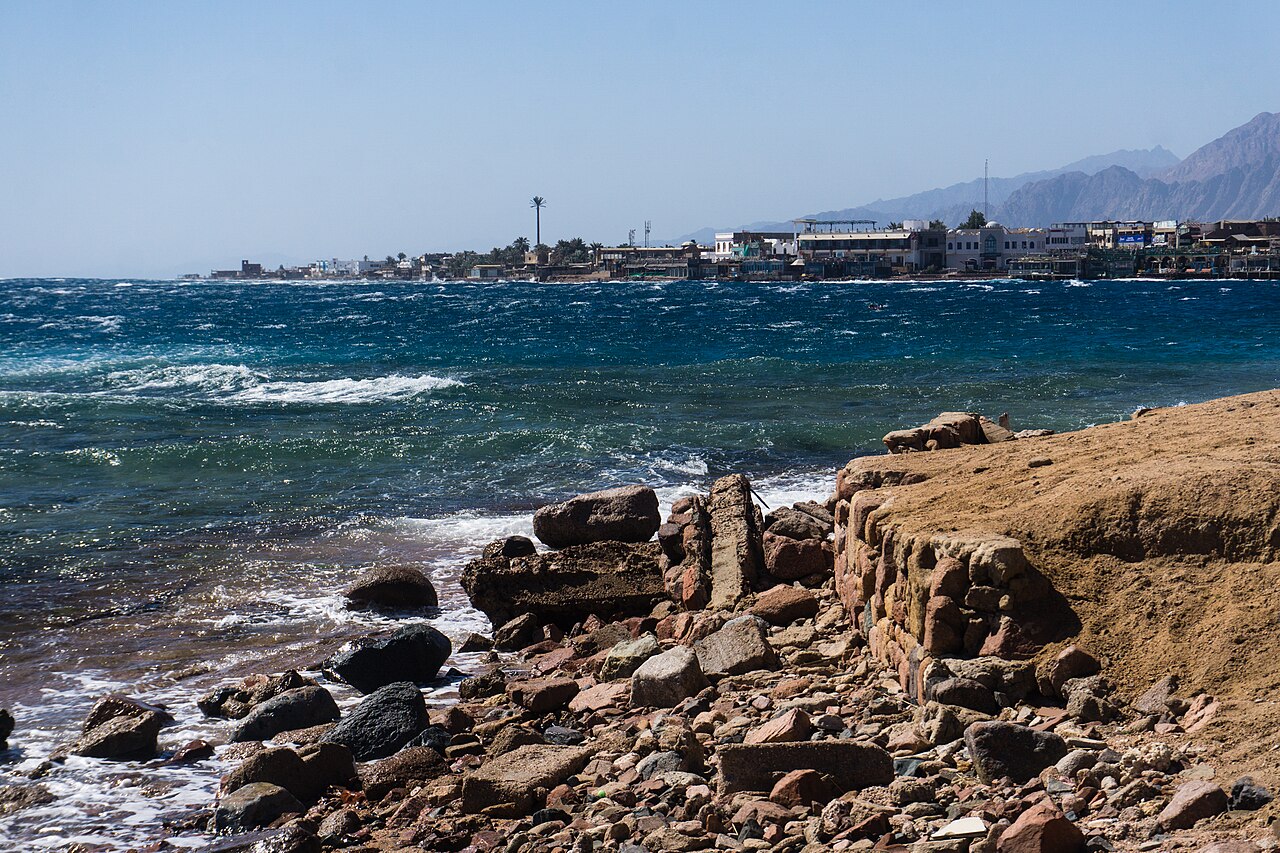
Lighthouse, on Dahab's Masbat Bay, is where most of the town's freediving actually happens: you walk in from a beach in the middle of town and reach deep water within a few strokes. A knee-deep confined-water area sits right beside the entry, and training lines to roughly 20, 30 and 40 metres are set just offshore, so a beginner course and a deep training block can run from the same patch of sand. The bay's sandy bottom slopes off gently to around 50 metres, current is minimal, and early mornings are often glassy. Water sits between about 21-22°C in February and 29°C in August with visibility typically 15-30 metres, and as of 2026 it remains a year-round hub where freedivers from all over settle in for long training stays.
Permanent 20/30/40-metre training lines a short swim from shore - daily depth sessions without ever boarding a boat
An adjacent knee-to-waist-deep confined area used for statics, equalisation drills and rescue practice
A gently shelving sand bottom that meets reef slope and pinnacles along the bay's outer edge
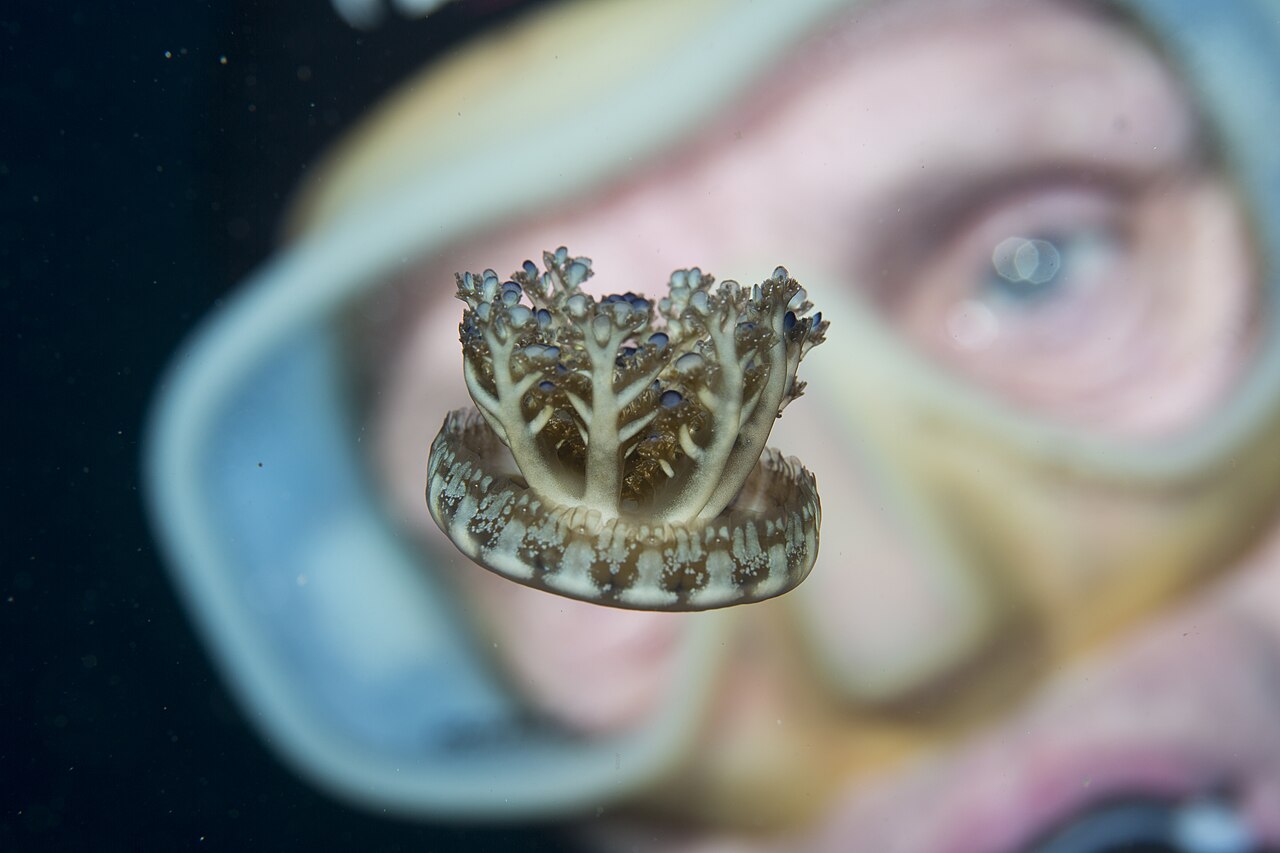
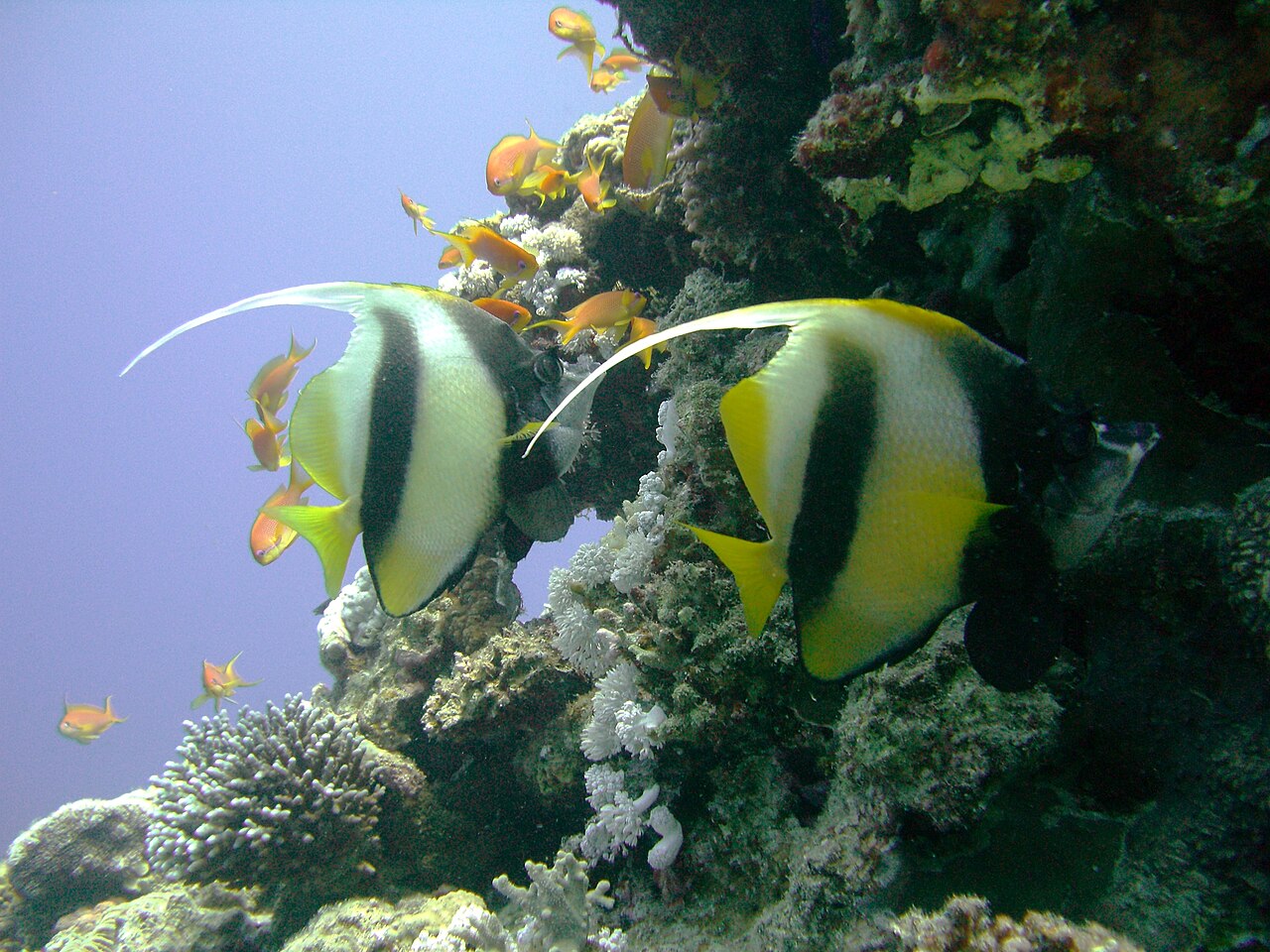
Shallow-reef life along the drop-off: Napoleon wrasse, large groupers, turtles, octopus and nudibranchs
The dead-calm window at first light, when the bay is at its flattest and lines are least crowded
A walkable cluster of schools, gear rental, budget accommodation and cafes built around long training stays
Good to know
SafetyNever dive the line alone. One-up/one-down with continuous visual contact is the rule, and hypoxic blackout most often strikes in the final 10 metres of the ascent or in the seconds after surfacing. Keep close, uninterrupted watch on your partner for at least 30 seconds after they surface.
SafetyThe Dahab community treats a lanyard as mandatory on every line dive regardless of depth. Decline any session that lacks a buoy, counter-ballast, a dedicated safety diver and surface support. Learn to recognise LMC (samba) and blackout, and rehearse airway protection and blow-tap-talk before you need them.
SafetyLighthouse having a wider safety margin than the Blue Hole does not make it safe. Dahab has a real fatality record: the Blue Hole is credibly associated with 130-200 deaths over recent decades, and in 2017 veteran safety diver Stephen Keenan died during a rescue there. Overhead environments such as the Arch are not freediving objectives, and chasing a personal best on a day when your equalisation or recovery feels off is the most common path into an incident.
SafetyThe bay carries snorkelling-tour boats and general tourist traffic on the surface. Always fly a clearly visible buoy marking your line. In high season, school lines cluster tightly, so follow the local rotation and keep proper spacing between descending and ascending divers to avoid collisions.
RulesYou do not need prior certification to start a freediving course, but schools require a medical questionnaire and a liability waiver. Bring a physician's clearance if you have asthma, cardiac, ENT or recent-surgery history. Standard travel insurance frequently excludes freediving - especially depth disciplines - so arrange and verify a policy that names freediving explicitly.
SeasonTraining runs year-round, but March-May and September-November give the steadiest water and wind. Water ranges from about 21-22°C in February to roughly 29°C in August; 5 mm in winter and 3 mm in summer are the usual reference thicknesses. Summer desert air can exceed 40°C, and dehydration and heat fatigue degrade dive performance directly.
MannersLighthouse is a working town reef. Do not touch coral or strike it with your fins, and stay flat and high when crossing the shallow reef top - coral damage is a punishable offence under Egyptian environmental law. Do not use another school's line or buoy without asking, and respect the session order of resident training groups.
Practical info
Sharm el-Sheikh International (SSH) is roughly 1.5-2 hours away by road, and Lighthouse is a short walk along Dahab's seafront promenade. Visitors staying only within the South Sinai resort zone may qualify for the free Sinai entry stamp; otherwise an e-visa or visa on arrival applies, so confirm current rules for your nationality and intended stay before departure. Courses and coached depth sessions fill early in peak months (March-May, September-November), so book ahead - and since prices, opening hours and line arrangements differ by school and change often, verify them directly at the time of booking.
On-site reviews📍 Verified on-site
No reviews yet. If you are here, be the first to leave one.