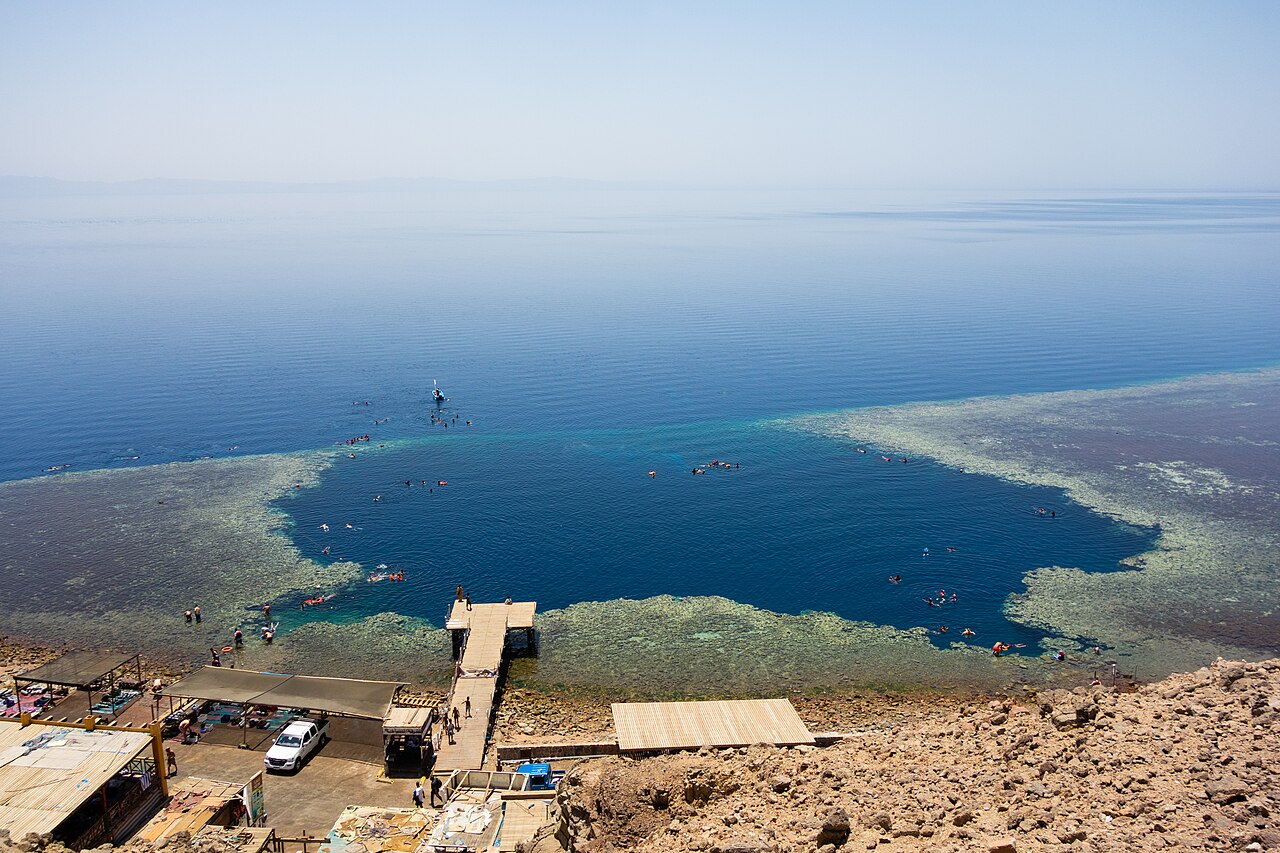
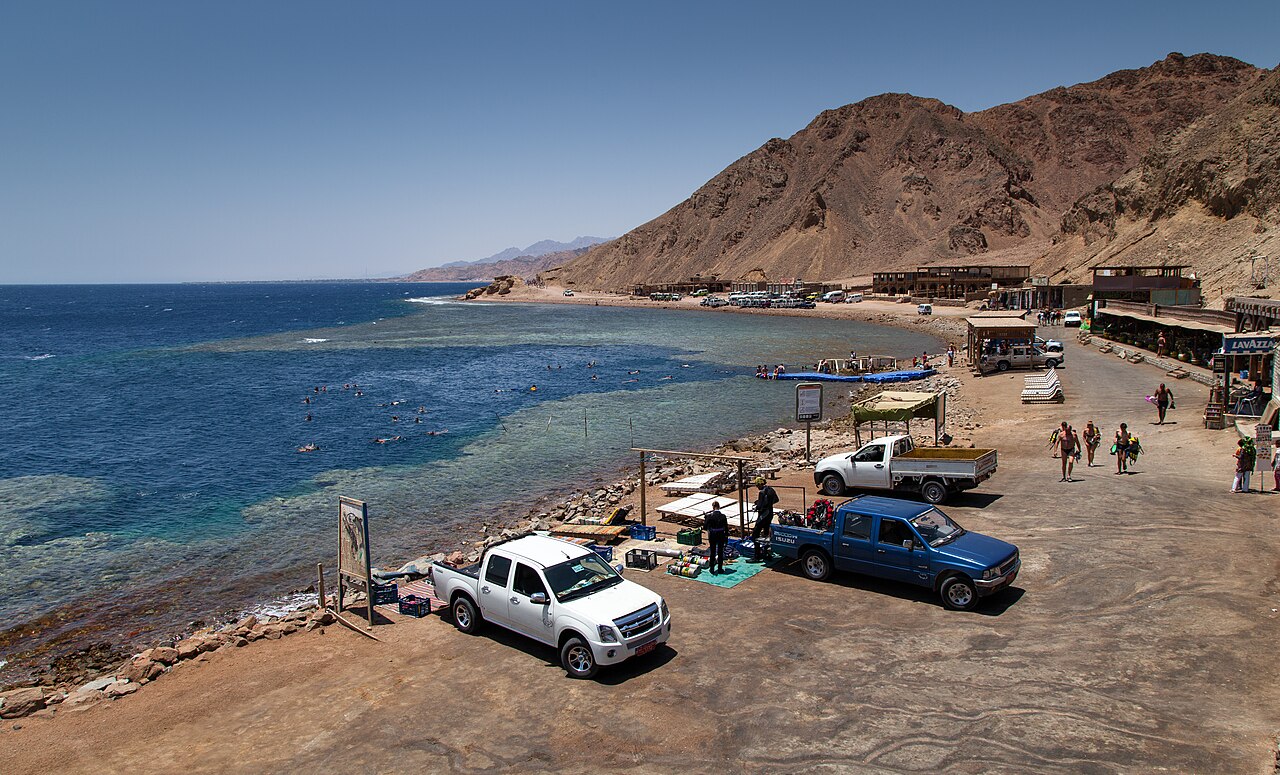
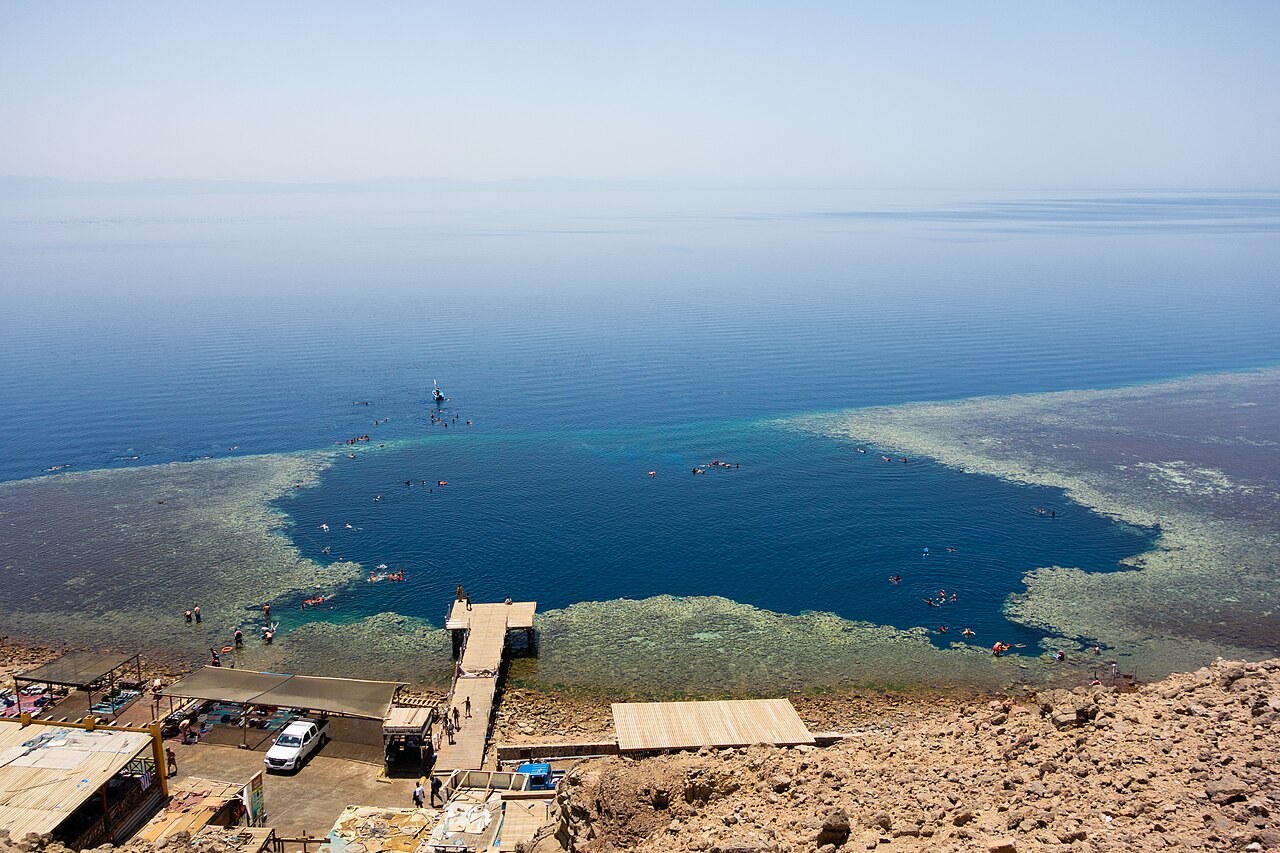
The Blue Hole is a roughly 100 m deep submarine sinkhole on the Gulf of Aqaba coast, a few kilometres north of Dahab on Egypt's Sinai Peninsula. A few steps from the beach put you straight onto a deep line, and with almost no current, a flat surface and warm water year round, it has become the sport's most recognisable training ground — elite competitors winter here. Water runs from about 21°C in February to 28°C at the height of summer, with visibility usually holding at 20–30 m or better. It is also the dive site with the highest recorded death toll in the world, and as of 2026 site staff still check certification and guide arrangements at the entrance.
The saddle — a shallow sill about 6 m deep linking the hole to the open sea. Cross it and the bottom drops away to over 100 m
The Arch — a 26 m tunnel whose ceiling sits at 55 m and whose seaward exit falls to around 120 m. A true overhead environment and one of the hardest challenges in freediving
Permanent shore-entry deep lines — typically rigged between 40 and 100 m with counterballast available, so multiple sessions a day are possible without a boat
The outer reef wall — beyond the hole the slope drops past 1,000 m, with dense hard coral and reef fish along the shallows
Competition and training season — CMAS and AIDA events including the Dahab open championship run here, and a dozen freediving schools cluster in town for long training stays
Good to know
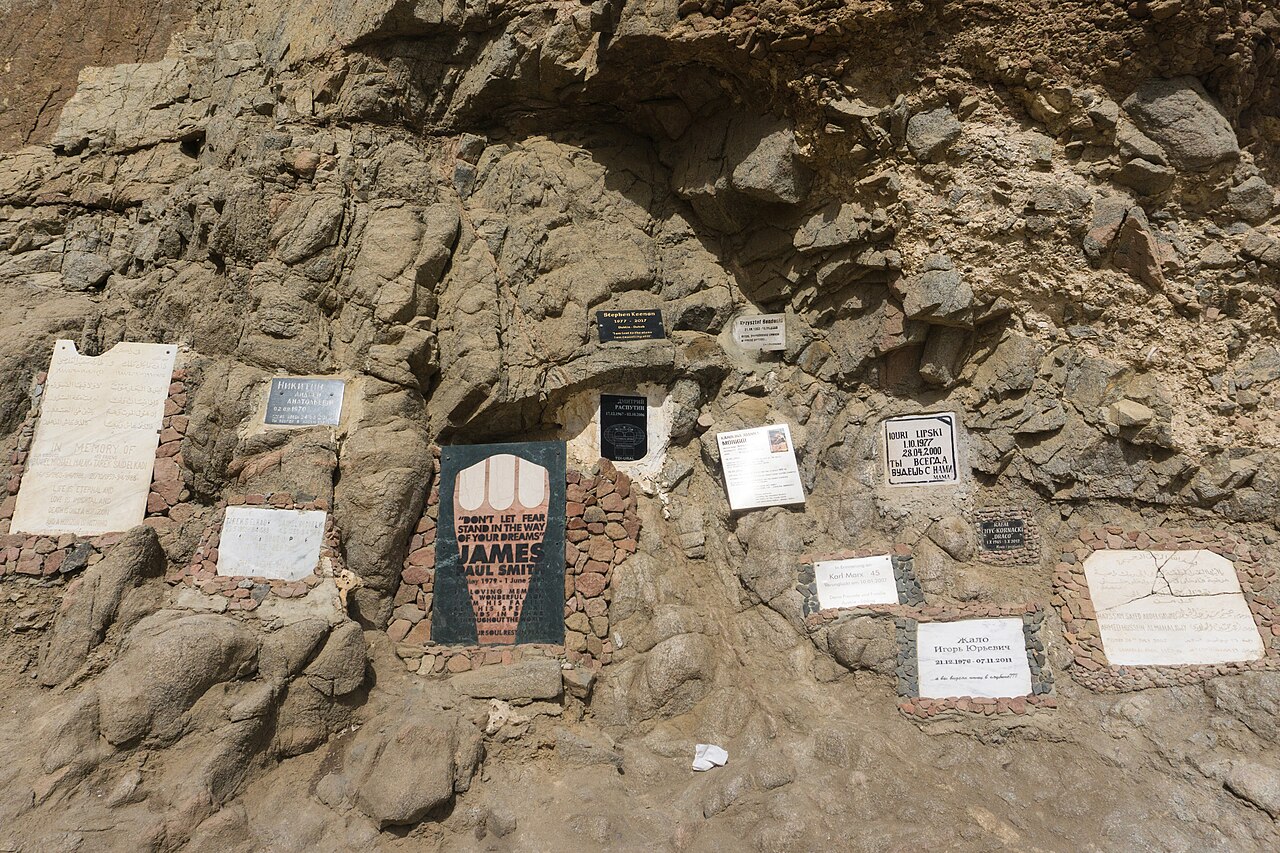
SafetyThis is the deadliest dive site on record. Roughly 130 deaths were logged between 1997 and 2012 alone, with cumulative estimates running to 200. The shore entry is the trap: because the depth is reachable on foot, divers repeatedly skip warm-up and progression and go straight deep.
SafetyShallow water blackout and LMC happen most often in the last 10 m before the surface. Never dive deep alone. A one-to-one buddy or safety diver must meet you below the surface, and surface protocol with at least 30 seconds of observation is not optional here.
SafetyWear a lanyard, and check for yourself before the session that counterballast is actually rigged and workable. A line hanging in the water is not the same thing as a safety system.
SafetyCrossing the Arch is a different risk category entirely. In 2017 Stephen Keenan, one of the sport's most respected safety divers, died supporting Alessia Zecchini's crossing — the first recorded death of a safety diver on duty in freediving history. Lose your bearings under a 55 m ceiling and there is no direct route to the surface. Do not attempt it without an elite team and a rehearsed plan.
RulesEgypt's Chamber for Diving and Watersports posts staff at the site to confirm divers are with a certified guide and to check credentials. Carry your AIDA, SSI or Molchanovs card, and confirm before you travel that your insurance genuinely covers freediving to the depths you intend (DAN and similar).
SeasonThe season runs March to November, with April–May and September–October the sweet spot. Midsummer land temperatures exceed 40°C and dehydration between dives is a real problem; February water drops to around 21°C, so long deep sessions need an adequately thick suit.
RulesRisk on the Sinai Peninsula is highly location-dependent. Northern and central Sinai carry do-not-travel warnings from most governments; the South Sinai resort corridor that includes Dahab and Sharm el-Sheikh is excluded from those. Expect multiple road checkpoints, carry your passport at all times, and check your own government's current advisory before booking.
Practical info
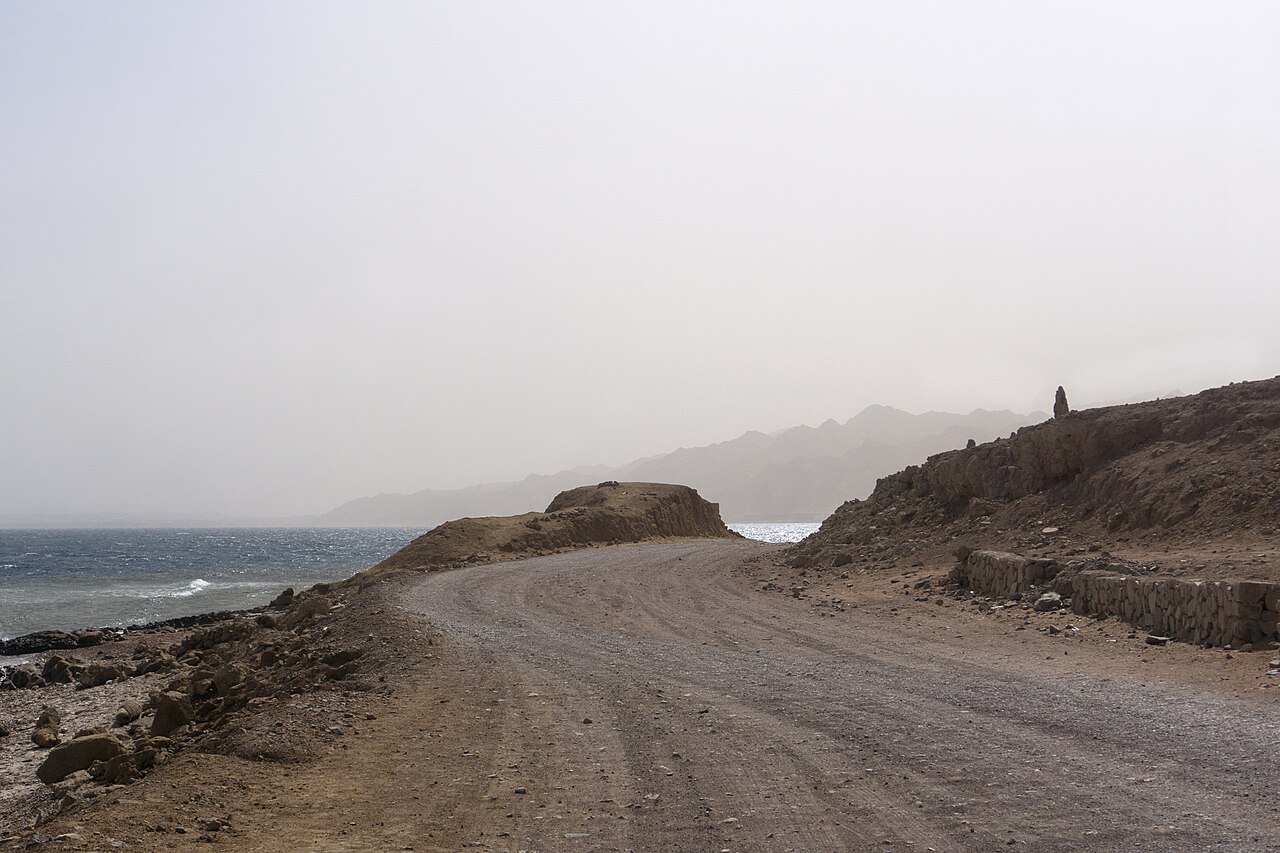
Sharm el-Sheikh airport is about 1.5–2 hours away by road, and routing via Cairo also works. The Blue Hole is 20–30 minutes from Dahab town, and most schools bundle transport, lines and safety cover into a session. A foreigner entrance fee plus a checkpoint charge is collected on site, and course prices, line fees and insurance requirements shift with the season and local policy — confirm the current terms directly with your school before booking.
On-site reviews📍 Verified on-site
No reviews yet. If you are here, be the first to leave one.