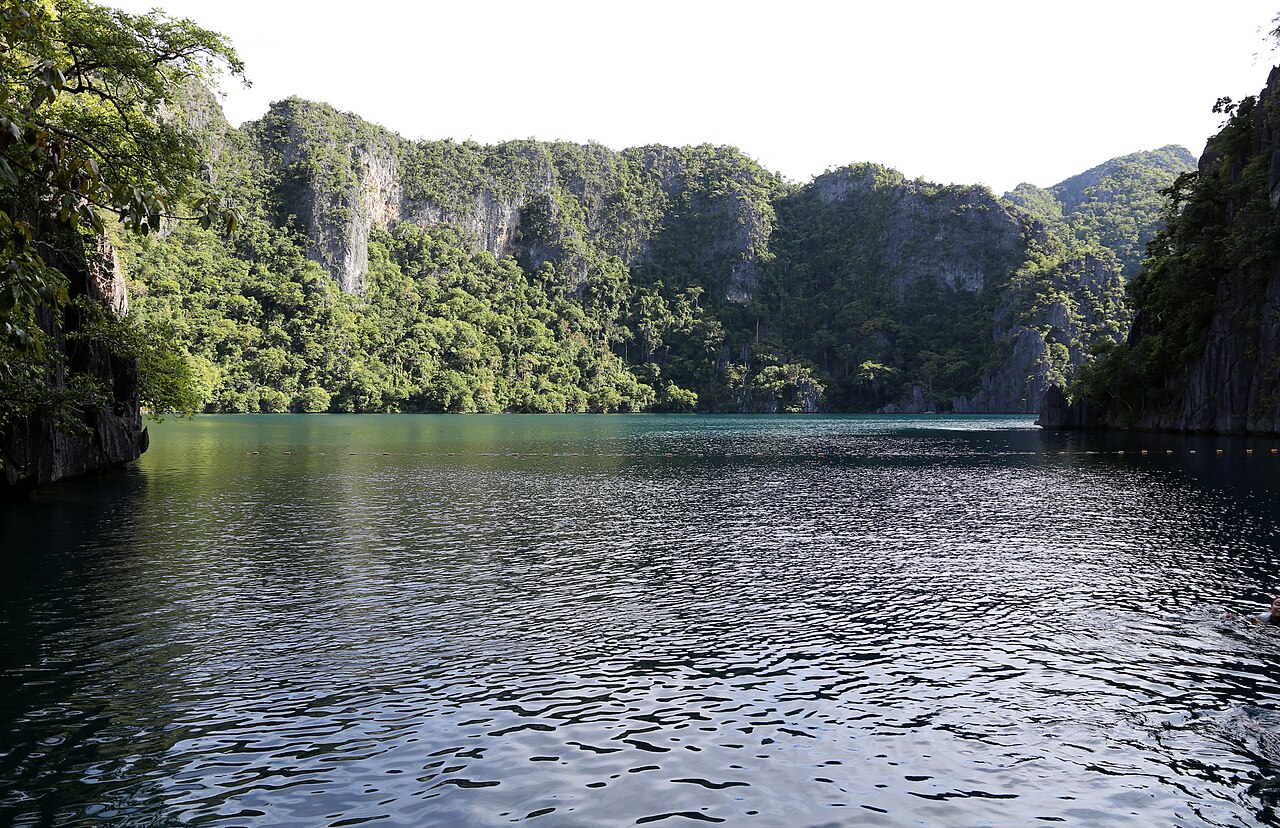
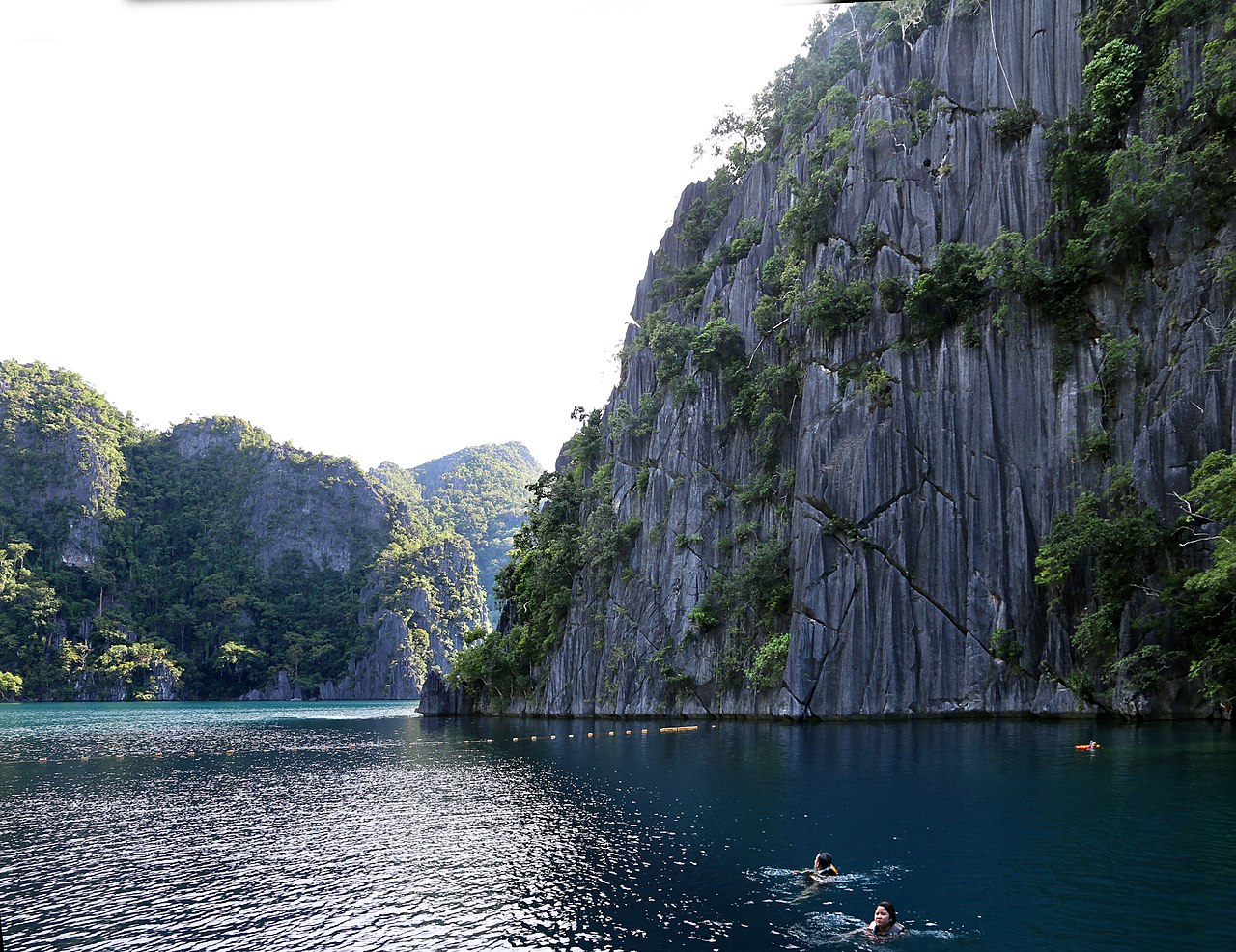
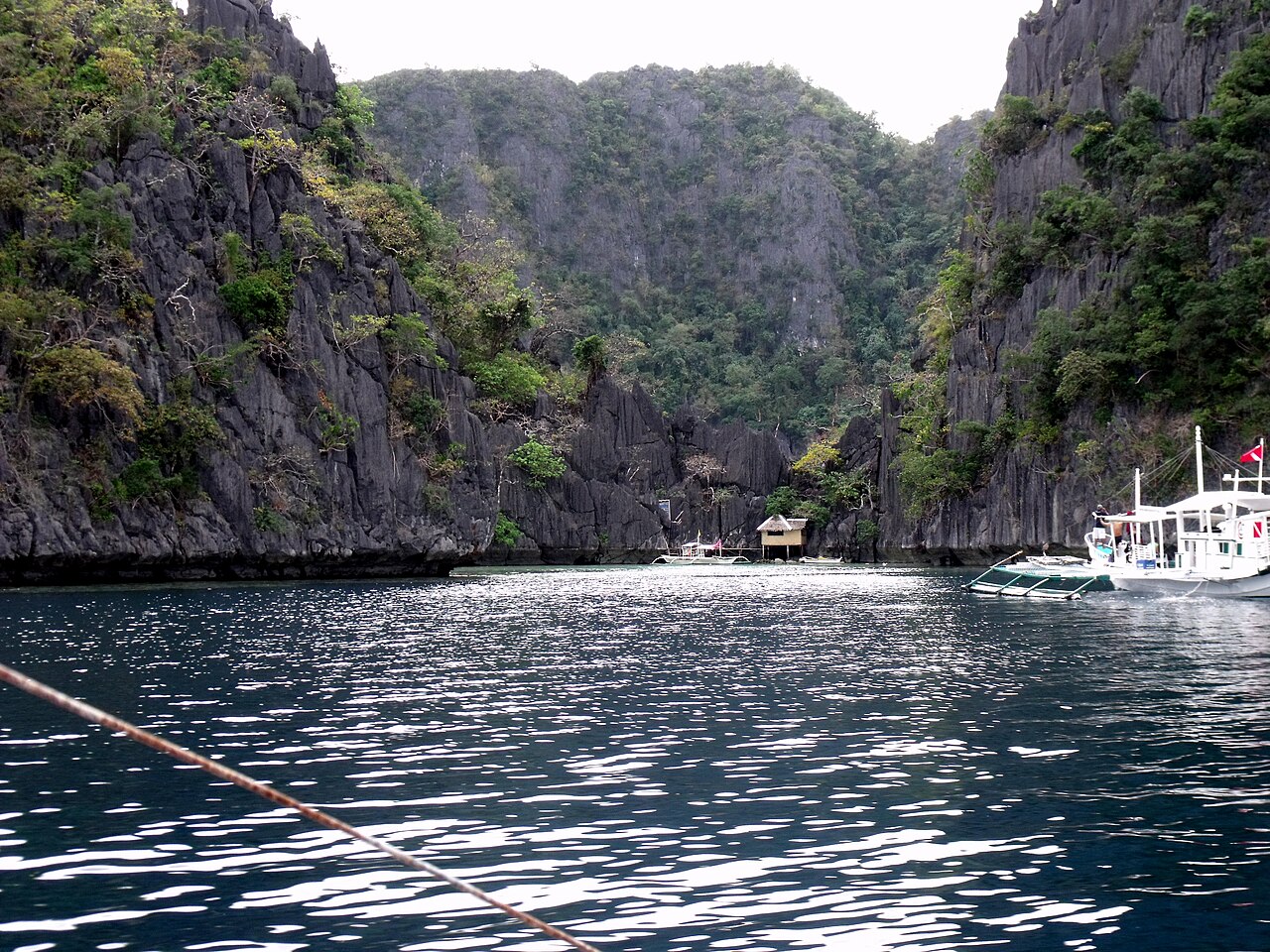
Barracuda Lake sits inside a ring of limestone cliffs on Coron Island, Palawan — a fully enclosed body of water with no swell, no current and controlled boat traffic, which is why freedivers treat it as both a training pool and a film set. The lake bottoms out around 40m, with most diving done to roughly 35m, and its signature is a thermocline near 14m where the water jumps from about 28°C to 38°C as fresh water gives way to salt. Visibility is typically a clear 15–30m depending on conditions, but drops sharply below 35m where a brown silt layer begins. As of 2026, schools such as Freediving Coron and PalaOne Freediving run Molchanovs, AIDA and PADI-track courses year-round, and a zone is set aside for divers and freedivers away from the snorkelling crowds.
The thermocline and halocline around 14m — the shimmering, oil-like blur where fresh meets salt water and the temperature swings from 28°C to 38°C
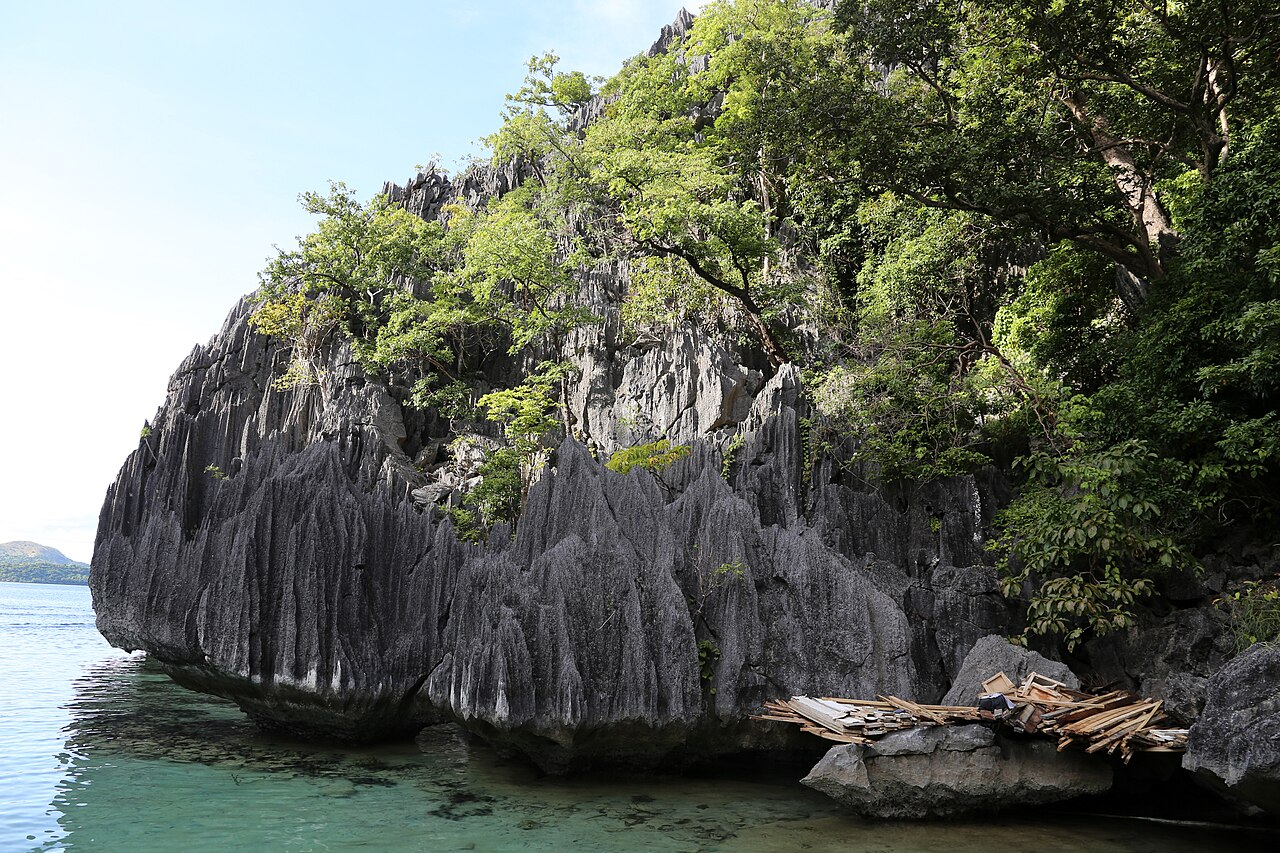
Saw-toothed limestone spires and cliff walls continuing below the waterline, the backdrop behind most of the lake's well-known freediving imagery
A glass-flat, fully sheltered surface that makes line work unusually easy — entry-level students commonly reach 15–20m within a day or two
Average depths around 20m with room for repeated descents, enough to support intermediate deep training
The silt layer and darkening floor below 35m — not somewhere to go, but the feature that gives the lake its strange geology
Pairing the lake with nearby sites such as Twin Lagoons for a day trip across contrasting water types
Good to know
SafetyNever dive alone here. Shallow water blackout and loss of motor control strike without warning, usually during the ascent, and without a buddy or dedicated safety diver watching the surface they turn straight into a drowning. In November 2024 a 27-year-old American man died at this lake after failing to resurface while freediving with friends. The busy, tourist-friendly setting is exactly what leads people to underestimate the risk.
SafetyBuoyancy changes abruptly as you pass from fresh into salt water. A weight belt set for the ocean will leave you over-buoyant near the surface or sinking faster than expected mid-water, so reset your weighting on site and start with a shallow check dive. The 38°C layer raises your heart rate and dehydrates you quickly, increasing both oxygen consumption and blackout risk.
SafetyDo not make deep descents without a downline and lanyard. Below roughly 35m the brown silt layer kills visibility and light, and disorientation comes fast. Run deep sessions only with a team using a line, buoy, lanyard and a counterballast system ready, and avoid touching the bottom or stirring up silt.
SafetyAccess is by a steep limestone staircase over sharp rock — carrying gear up and down brings a real risk of slips and cuts, so wear footwear that protects your feet. Medical support is limited: a hyperbaric facility has been reported in Coron, but its operational status varies, so confirm through your school before you travel what is currently running and what the evacuation path looks like (serious cases are typically flown to Manila).
RulesFreedive through a qualified school or guide. Most operators restrict line sessions to course participants or certified divers, and scuba diving requires separate certification. Travel insurance frequently excludes freediving and other underwater activities by default — check the wording and any depth limits before you buy rather than assuming you are covered.
SeasonNovember to May is the most reliable window; from June to October, typhoons and strong winds cancel bangka boat departures on some days. Timing within the day matters too — tour groups arrive from late morning and churn up the surface, so an early entry is worth arranging.
MannersCoron Island is sacred ground managed by the indigenous Tagbanua community, and their access rules and restricted areas are to be followed as given. Don't grab or stand on the limestone and submerged formations, and use reef-safe sunscreen or cover up with a rash guard instead.
Practical info
Fly domestically from Manila or Cebu to Busuanga Airport (USU), transfer overland to Coron town, then take a bangka boat roughly 20–30 minutes to a wooden dock and climb the staircase to the lake. Courses typically run over two days and dry-season slots (November–May) fill early, so book ahead. Entrance, environmental and guide fees are collected separately on behalf of Coron Island and the Tagbanua community, and both the amounts and how they're collected change often — always confirm current fees and operating hours with your school or a local operator when you book.
On-site reviews📍 Verified on-site
No reviews yet. If you are here, be the first to leave one.