The Colossi of Memnon are two enormous seated statues on the west bank of the Nile at Luxor, carved more than 3,400 years ago to depict Pharaoh Amenhotep III of the 18th Dynasty. They once guarded the gateway of his mortuary temple, the largest of its age, and became famous in Greco-Roman times when an earthquake cracked one figure and it reportedly 'sang' at dawn, drawing pilgrims and even Roman emperors. Thanks to the nearly three-decade Colossi of Memnon and Amenhotep III Temple Conservation Project, further colossal statues inside the temple were re-erected and unveiled in December 2025, so a 2026 visit now reveals a far richer site rising behind the two roadside giants. As a free, open-access landmark, it makes an easy first stop on any West Bank tour.
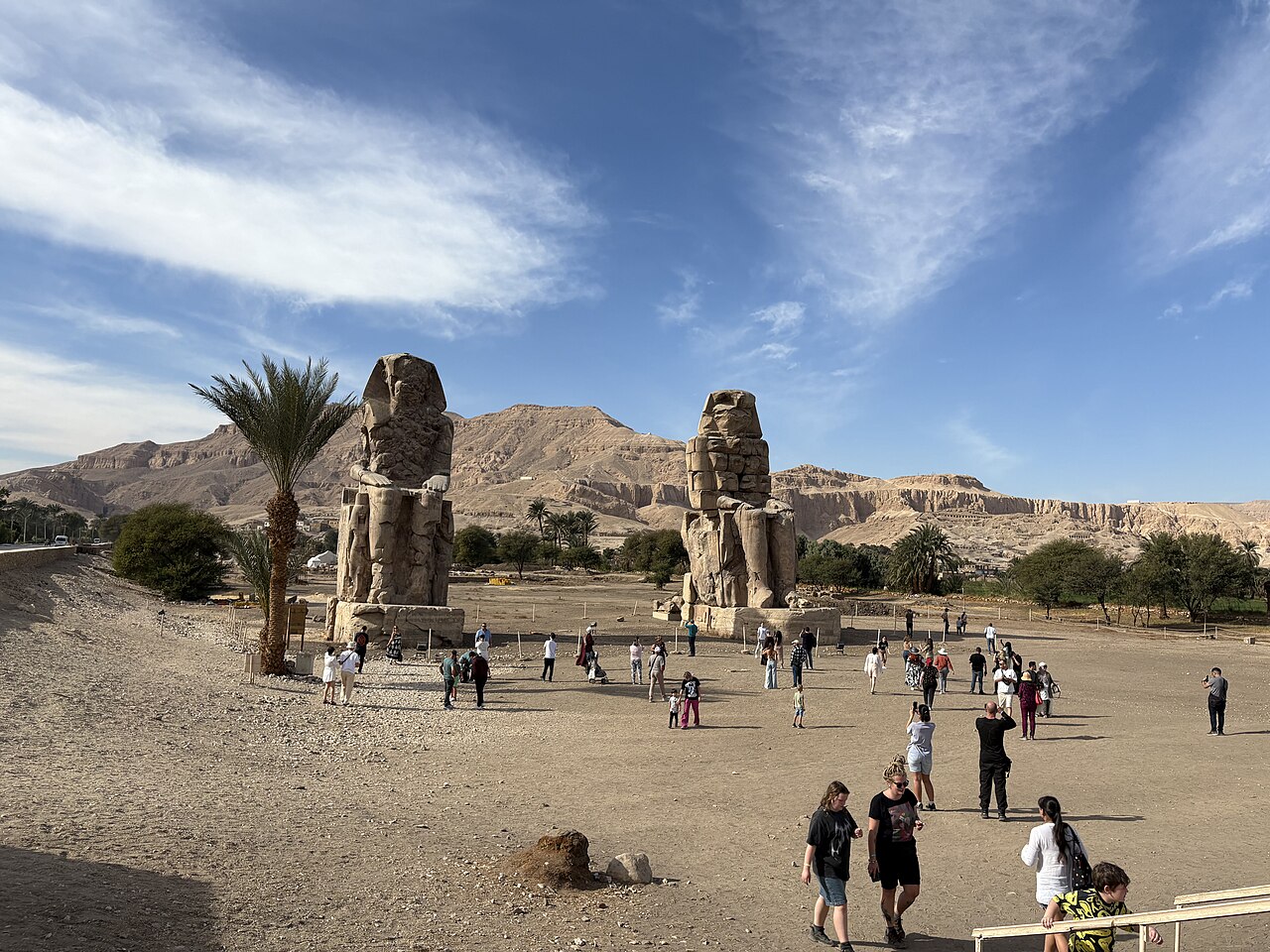
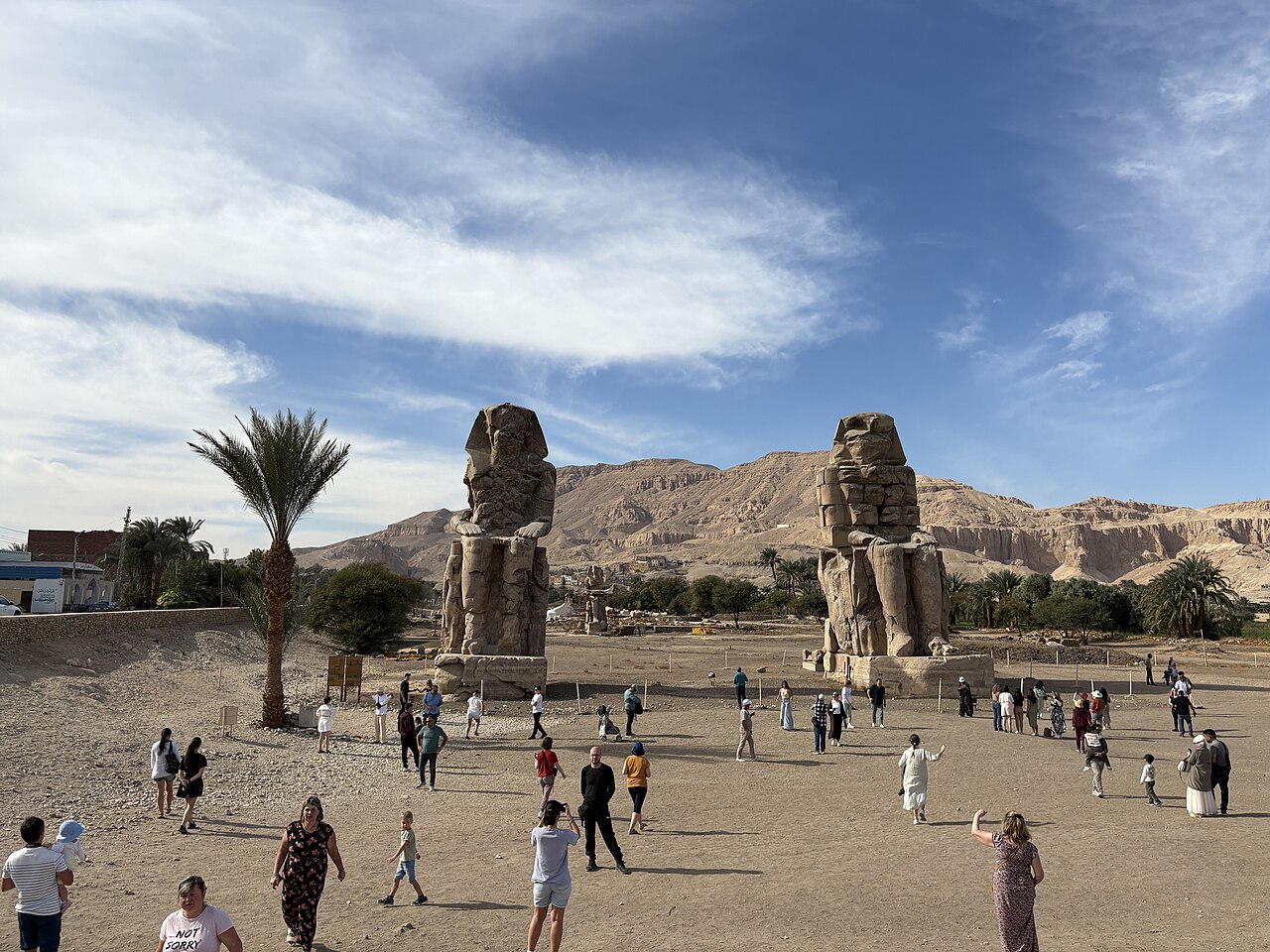
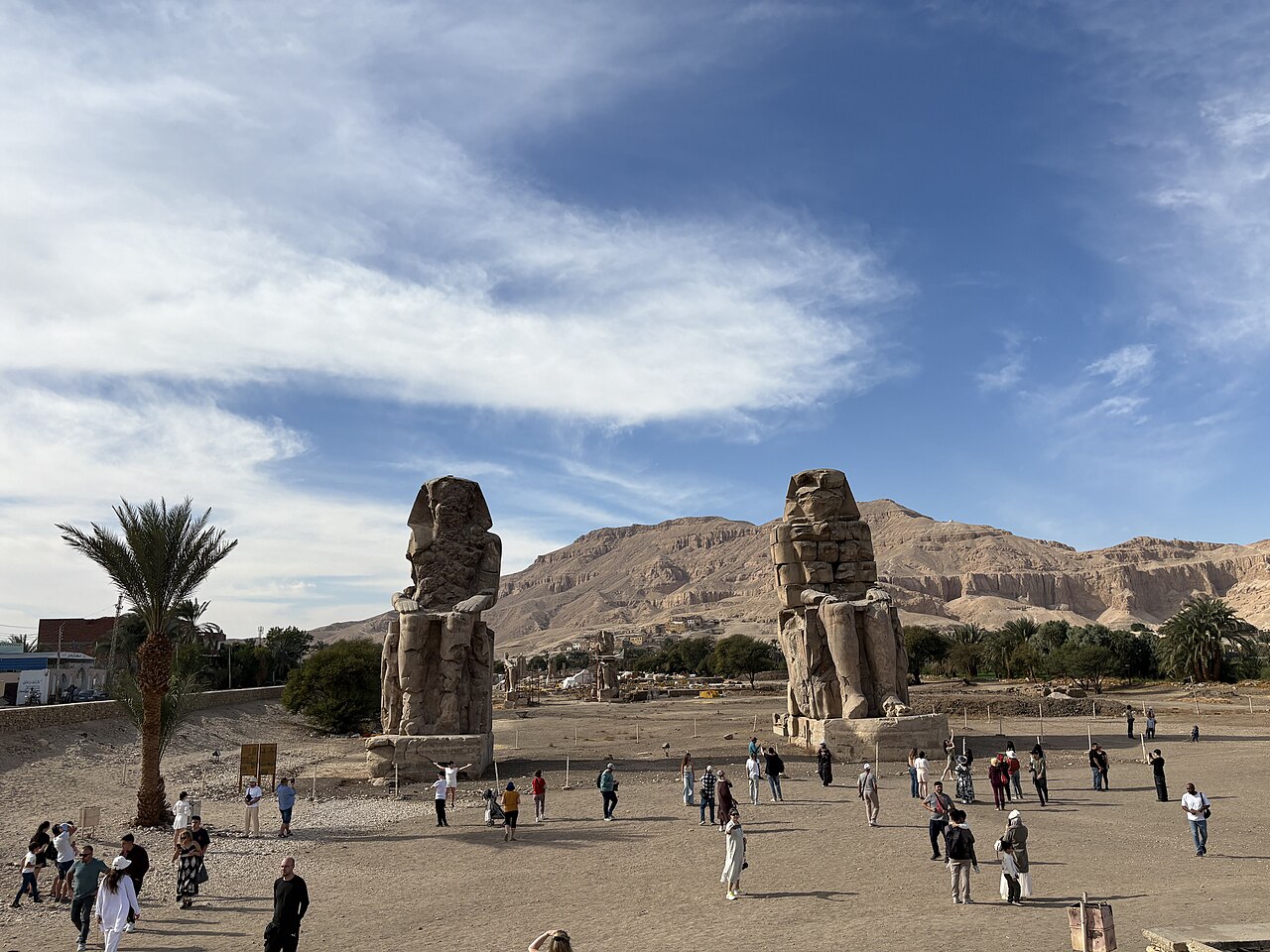
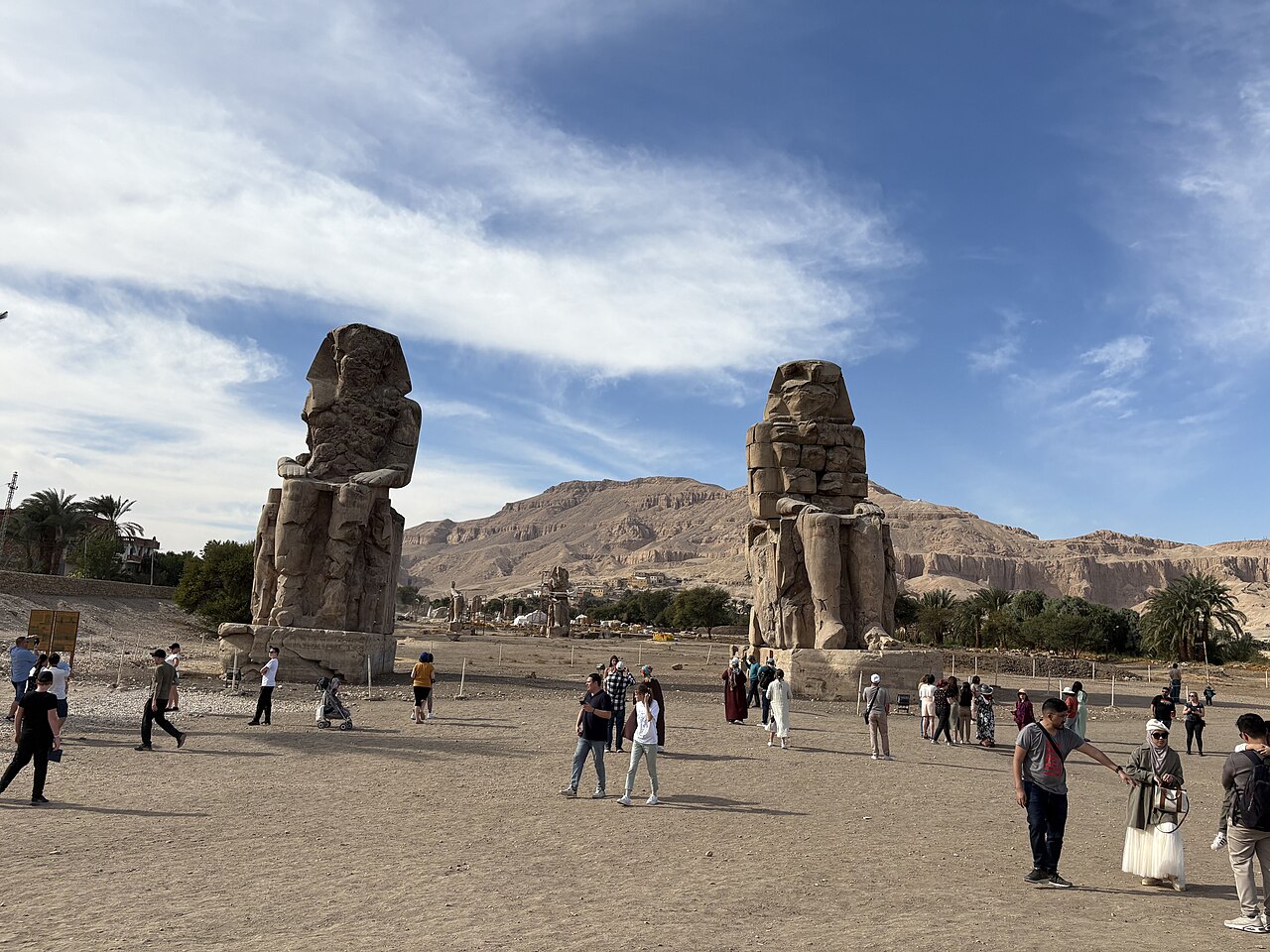
The sheer scale — each figure roughly 18 m tall including its pedestal and about 700 tons — seen head-on as the pair gaze east toward the sunrise
Reliefs of the pharaoh's mother, Queen Mutemwiya, and his wife, Queen Tiye, carved beside his legs, with the knotted 'union of the Two Lands' motif on the thrones
The northern colossus of 'singing statue' legend, said to have fallen silent after Roman emperor Septimius Severus repaired it
Ancient Greek and Roman graffiti inscribed on the bases — messages left by antiquity's own tourists, including the entourage of Emperor Hadrian
Behind the colossi, the recently restored Amenhotep III temple field (Kom el-Hettan) with its newly re-erected statues
Good to know
SeasonThe site is a fully open plain with almost no shade, and summer midday heat routinely tops 40°C. Come early (around 7 a.m.) for cooler air and better light, and bring a hat, sunscreen, and water.
CautionCamel/carriage photos or souvenirs are often offered as 'free,' then a tip (baksheesh) is demanded. Decline firmly up front if you're not interested, and agree a price before accepting anything.
SafetyTaxis and carriages have no fixed fares, so haggling is the norm. Settle destination and price before you get in; if you plan to see several West Bank sites, hiring a car for the day is cheaper than paying per trip.
RulesThe Colossi themselves are free, but nearby sites such as the Valley of the Kings, Hatshepsut Temple, and Medinet Habu need separate tickets. Confirm current prices, hours, and any combined pass before you go.
MannersEgypt is fairly conservative, so covering shoulders and knees at monuments and in nearby villages is respectful. Ask permission before photographing local people.
SafetyWhere crowds gather there is a pickpocket risk, so carry bags in front, and keep cash in small denominations split up to handle the widespread tipping culture.
Practical info
Most visitors cross the Nile from Luxor's east bank by public ferry (a few minutes) and then take a taxi or a day-hire car, combining the Colossi with West Bank sites like the Valley of the Kings and Hatshepsut Temple. The statues can be viewed for free from the roadside at any time and 20–45 minutes is usually enough, but check the latest opening hours and any ticket prices for the surrounding sites before you go.
On-site reviews📍 Verified on-site
No reviews yet. If you are here, be the first to leave one.