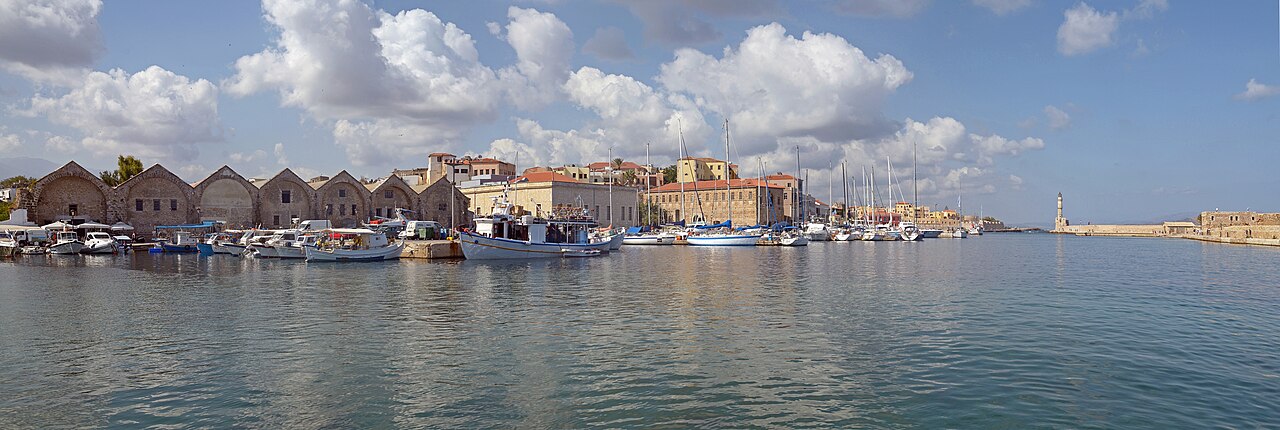
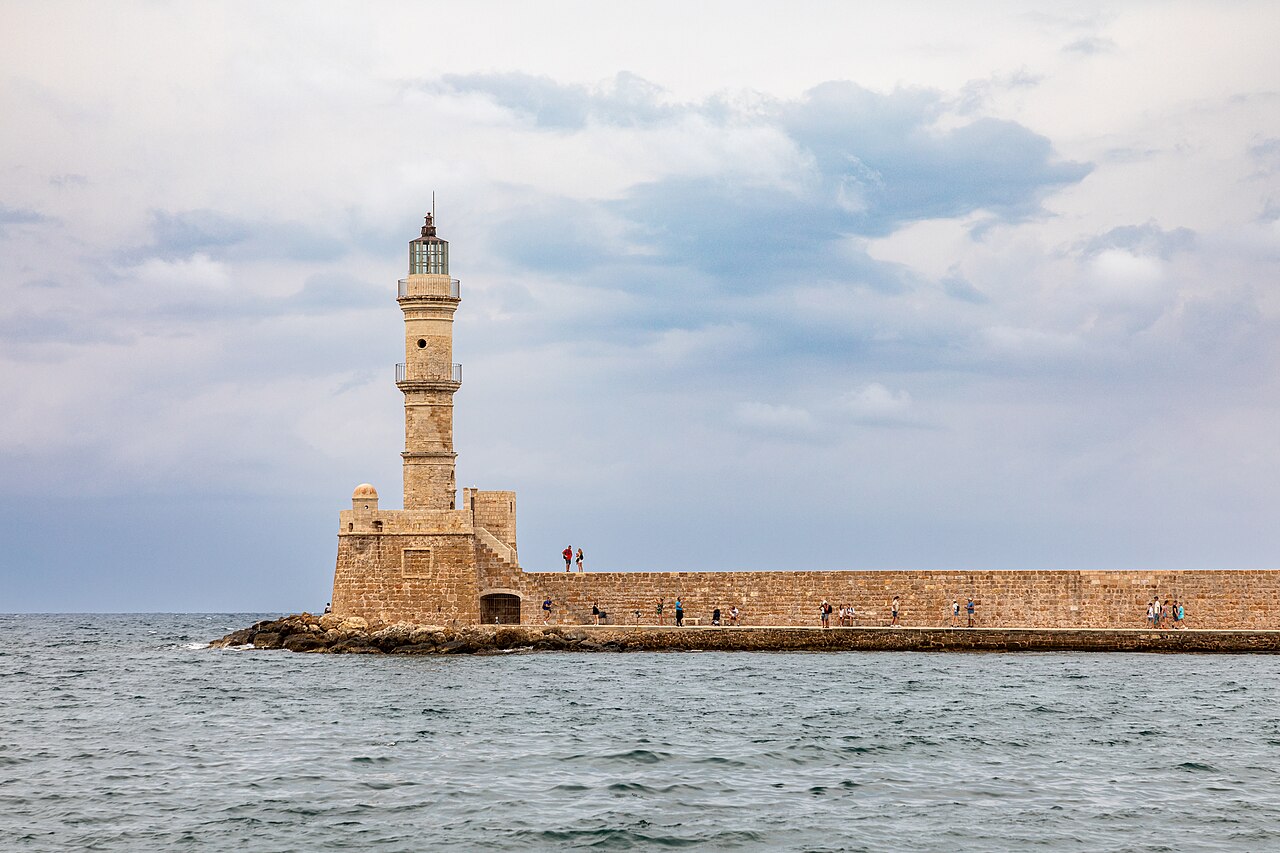
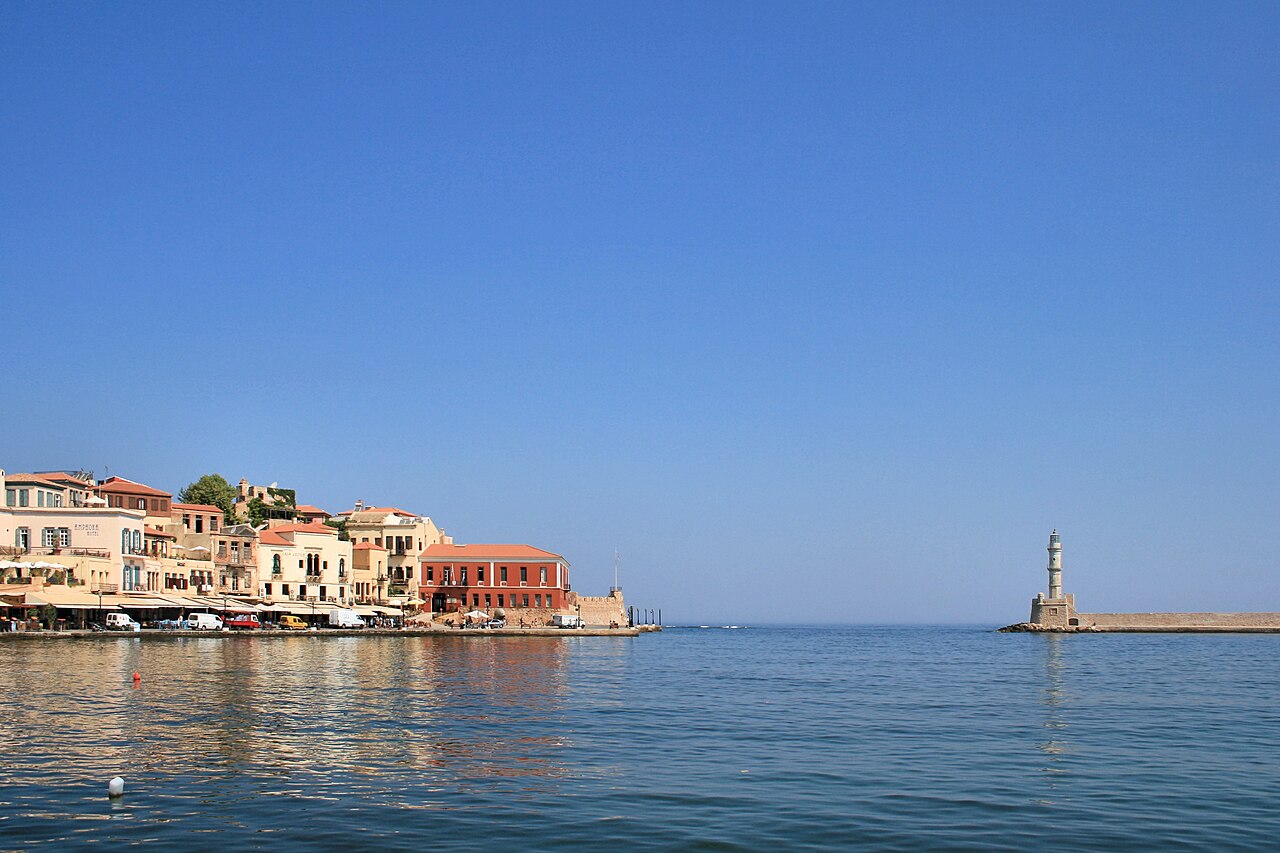
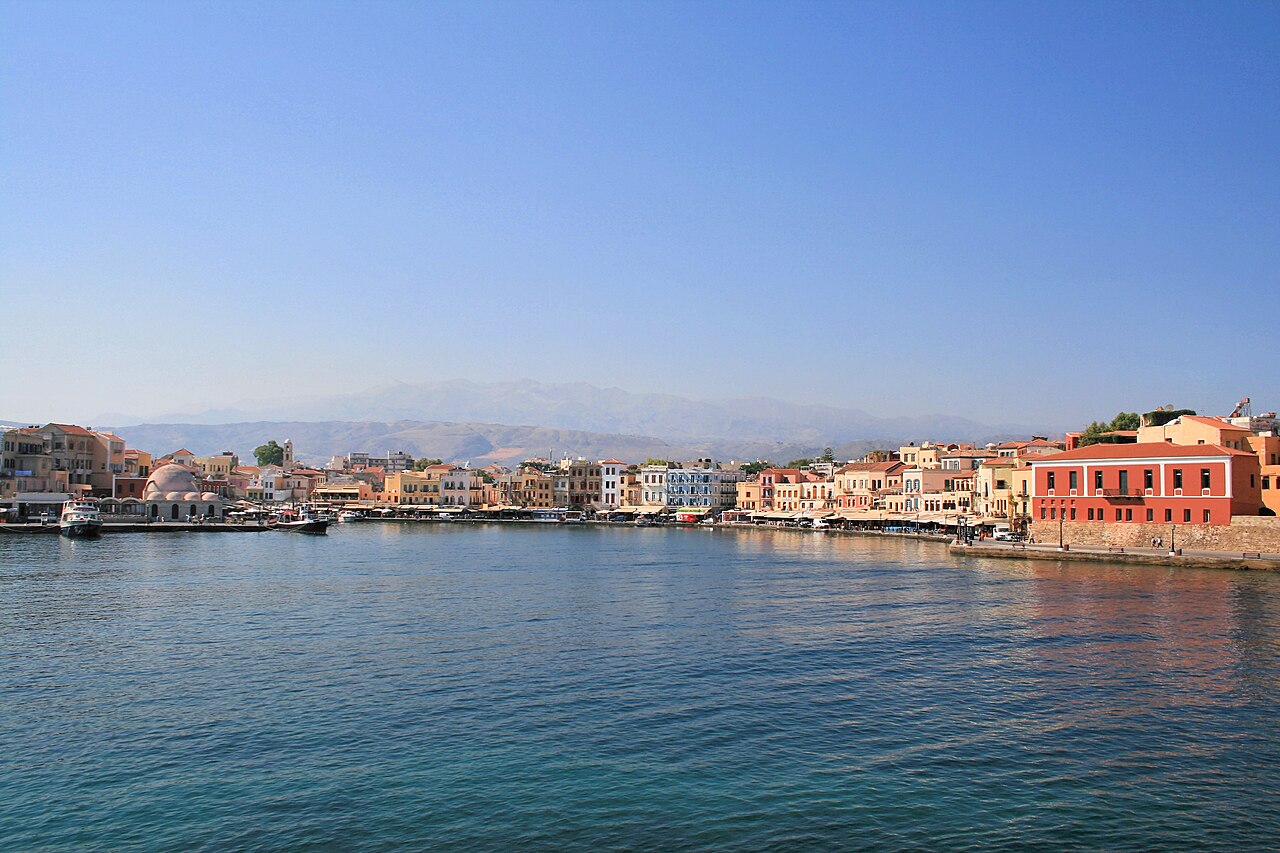
Chania's Venetian Harbour is the emblem of the old town on Crete, built by the Venetians in the 14th century (c. 1320-1356) when it ranked as one of the most important ports of the eastern Mediterranean, second only to Venice itself for the Republic. At the tip of its long breakwater stands the Egyptian-era lighthouse (rebuilt in the 19th century, about 21 m tall), one of the oldest surviving lighthouses in the world and the symbol of Chania. In 2026 it remains a lively waterfront hub lined with pastel-hued old buildings, cafes and tavernas that stay busy from morning until late night, best enjoyed on an early-morning or sunset stroll out along the mole to the lighthouse.
The lighthouse at the end of the breakwater — rebuilt in a minaret shape by the Egyptians and now the icon of Chania. You cannot go inside, but walking the mole rewards you with a sweeping view over the whole port.
Firka Fortress (the red bastion) and the Maritime Museum of Crete — the Venetian fort that guarded the harbour entrance, today home to exhibits on Cretan naval history and the Battle of Crete.
Yali Tzamii — the only surviving Ottoman-era mosque, carefully restored and now used as an exhibition space showcasing Islamic architecture.
The Grand Arsenal (Neoria) — imposing 16th-century Venetian shipyards and arsenal buildings standing along the eastern side of the harbour.
The waterfront promenade and pastel facades — especially photogenic at sunset and when the harbour is lit at night.
Good to know
CautionFront-row harbour restaurants can post tourist-inflated bills and vague cover charges. Confirm prices before ordering, ask about seafood sold by weight (per kg), and check the bill before paying. Walking two or three streets back usually brings better food at lower prices.
SafetyIn the summer peak the waterfront gets crowded and distraction theft is the main risk. Keep your bag in front of you in tight spaces, do not hang purses on chair backs, and do not leave your phone on tables near the walkway while taking photos of the lighthouse.
SeasonJuly combines high summer heat with peak crowds. Visit in the early morning or evening rather than midday, and bring water, a hat and sun protection — the breakwater and lighthouse walk offer almost no shade.
MannersAt Yali Tzamii and nearby Orthodox churches, keep quiet and dress modestly with covered shoulders and knees. In the narrow residential lanes, be considerate about photographing people's homes and doorways.
RulesThe mole out to the lighthouse has no shade, can be windy, and the surface may be slippery; entry into the lighthouse itself is not permitted. Comfortable shoes are essential on the old town's cobblestones.
CautionTaxi pricing can be vague, so ask for the meter or agree a fare in advance. The KTEL airport bus (check the latest fare) is a cheaper alternative between the airport and town.
Practical info
Crete has no railway, so access is by bus or car. From Chania Airport, the KTEL airport bus reaches the town's central bus station (corner of Kidonias and Kelaidi) in about 30-40 minutes, from where it is roughly a 10-minute walk down Chalidon Street to the harbour. The harbour is an open public space, free and accessible 24 hours; the Maritime Museum of Crete in Firka Fortress has seasonal opening hours and a small admission fee (roughly around €3), so always confirm the latest prices and times. Free and paid parking is available just outside the old town walls (e.g. Talos Square, East Moat).
On-site reviews📍 Verified on-site
No reviews yet. If you are here, be the first to leave one.