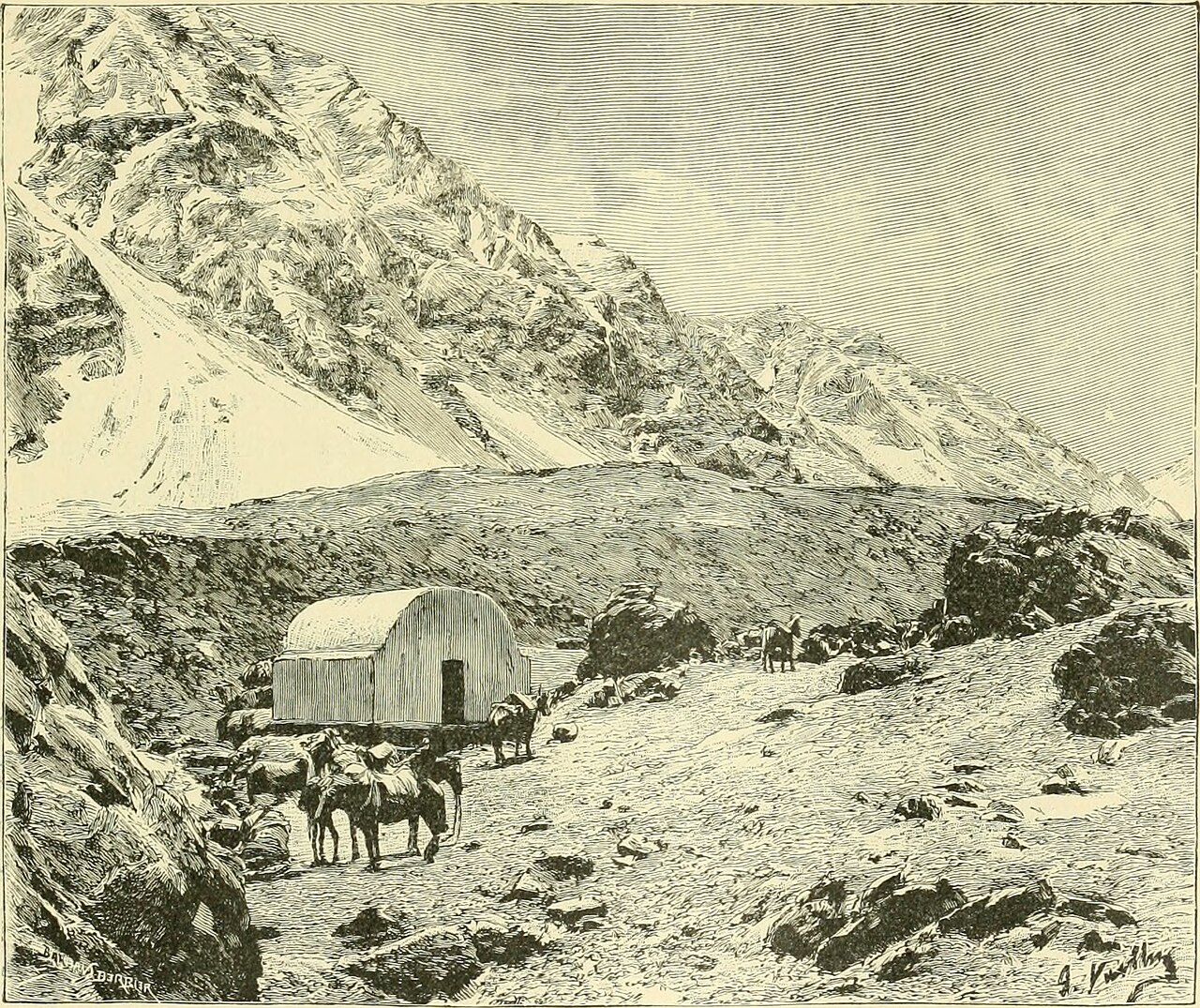
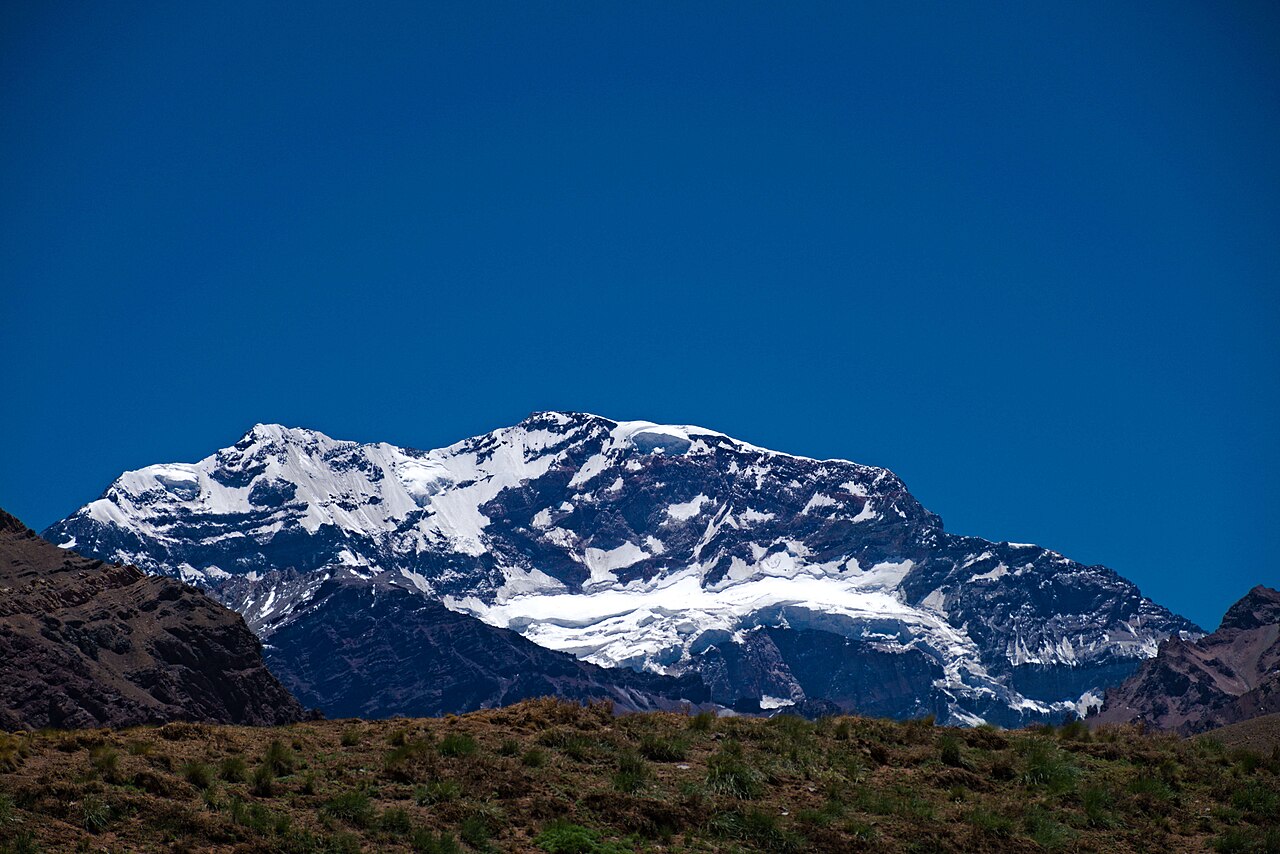
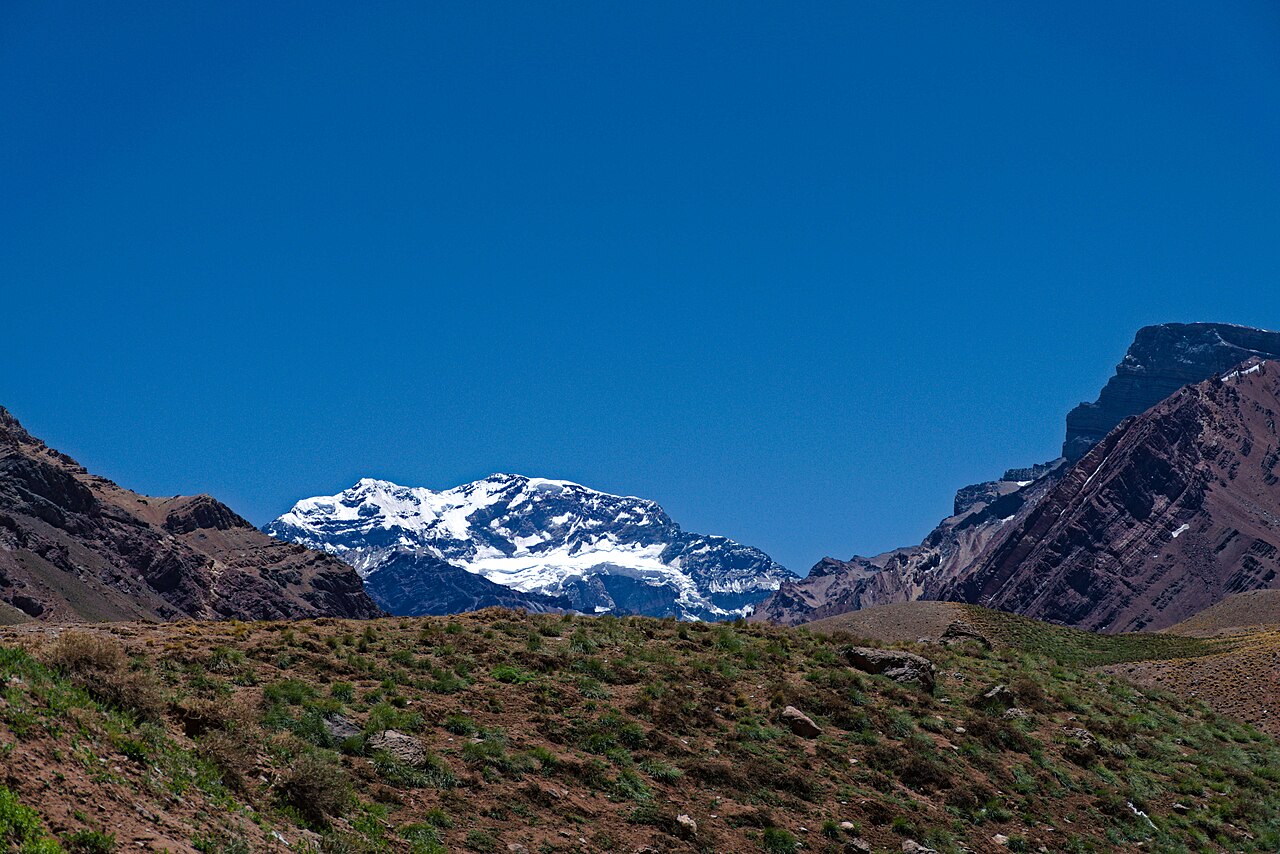
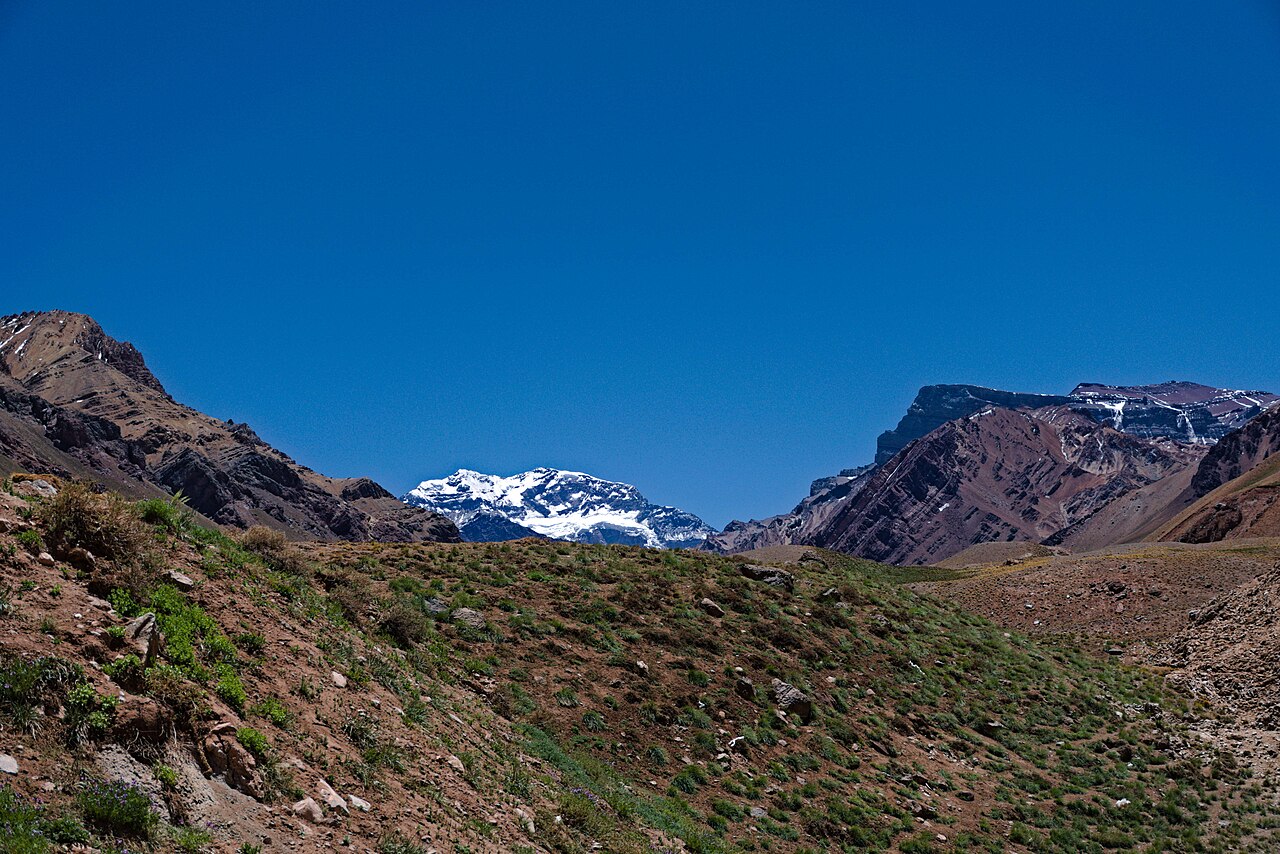
Mount Aconcagua rises to roughly 6,961 m, making it the highest mountain in the Americas and the highest peak outside Asia — the tallest in both the Western and Southern Hemispheres. It stands in the Andes of Mendoza Province, Argentina, about 15 km from the Chilean border, and was an Inca ceremonial site now inscribed as part of the UNESCO World Heritage Qhapaq Ñan (Inca road network). The entire area is protected as Aconcagua Provincial Park, whose 2025-2026 season runs through 30 April 2026. Most ordinary travelers do not attempt the summit; instead they take short day treks to Laguna de Horcones and Confluencia, or view the immense south face from the international road.
Laguna de Horcones: a short walk from the park gate to a lake that mirrors Aconcagua's south face — the premier photo stop
The South Face (Pared Sur): a nearly 3,000 m wall of ice and rock, one of the great objectives in world mountaineering
Confluencia day trek: a roughly 4-6 hour round trip from the entrance into glacial valley terrain
Inca heritage: the mountain was a sacred Inca site with high-altitude mummies and artifacts, part of the Qhapaq Ñan World Heritage route
Puente del Inca: a red, sulphur-stained natural stone bridge near the park, a classic stop on the Alta Montaña tour from Mendoza
Good to know
RulesEntry and trekking permits must be booked and paid online in advance — they are NOT sold at the park gate. Carry your passport and the reservation ticket (printed or on your phone). Fees and sales channels: verify the latest.
SeasonThe park season typically runs 1 November to 30 April (Southern Hemisphere summer); it is closed and weather is severe outside that window. Confirm opening status and forecast before you go.
SafetyEven a day hike sits above 2,900 m, so altitude sickness is a real risk. Summit climbs (Ascenso) and long treks (Trekking Largo) legally require medical-evacuation and assistance insurance. Prepare for intense UV, strong wind, and sharp temperature drops.
MannersPack out all trash, stay on marked trails, and protect wildlife and fragile high-altitude vegetation. Never touch or remove Inca archaeological remains, stones, or artifacts.
SafetyThe normal summit route is non-technical but extreme altitude and the 'viento blanco' (whiteout wind storm) cause fatalities every year. Avoid solo or unpermitted attempts and allow ample days for acclimatization.
CautionWhen booking tours or transport in Mendoza, avoid unlicensed operators and large cash prepayments. Change money at official rates and watch for inflated parking or 'guide' charges around tourist spots.
Practical info
Access is from Mendoza city westward along National Route 7 (RN7) for about 180 km, past Uspallata, to the Horcones entrance near Puente del Inca and Las Cuevas. Self-drive, intercity buses (Mendoza-Uspallata-Las Cuevas), or a full-day Alta Montaña tour from Mendoza are the usual options. Opening dates, entry fees, and permit categories should be checked on Mendoza province's official reservation site for the latest information.
On-site reviews📍 Verified on-site
No reviews yet. If you are here, be the first to leave one.