Paraty's Historic Center (Centro Histórico de Paraty) is the exceptionally well-preserved colonial heart of a 17th-century Portuguese port on Brazil's Costa Verde (Green Coast), south of Rio de Janeiro. It flourished in the 18th century as the terminus of the Caminho do Ouro (Gold Route) and today keeps its original street grid, low whitewashed houses with brightly painted trim, and irregular 'pé-de-moleque' cobblestones almost intact. In 2019 UNESCO inscribed it as part of 'Paraty and Ilha Grande – Culture and Biodiversity,' Brazil's first mixed (cultural and natural) World Heritage site; because the core is a car-free pedestrian zone, the whole quarter feels like a living open-air museum. In 2026 it remains a lively arts town of ateliers, cachaça distilleries, galleries and small inns, and every July the international literary festival FLIP (24th edition, 22–26 July 2026) fills the streets. With the added spectacle of seawater flooding the lanes at high tide, it is a place best enjoyed slowly, on foot.
Four colonial churches: the oldest Santa Rita (housing the Sacred Art Museum), the humble Rosário e São Benedito built by and for enslaved Africans, Our Lady of Sorrows, and the main church of Our Lady of Remedies on the central square
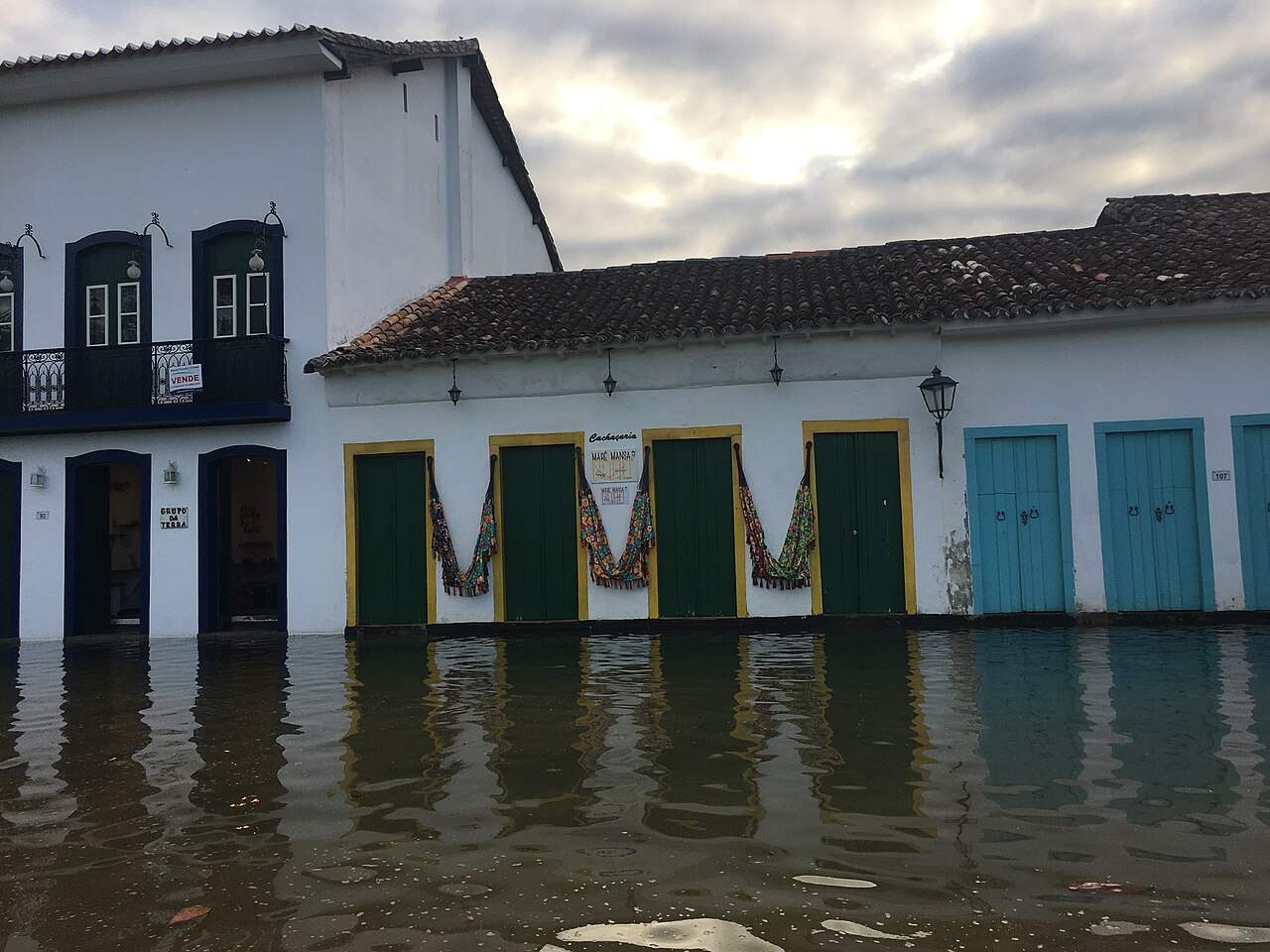
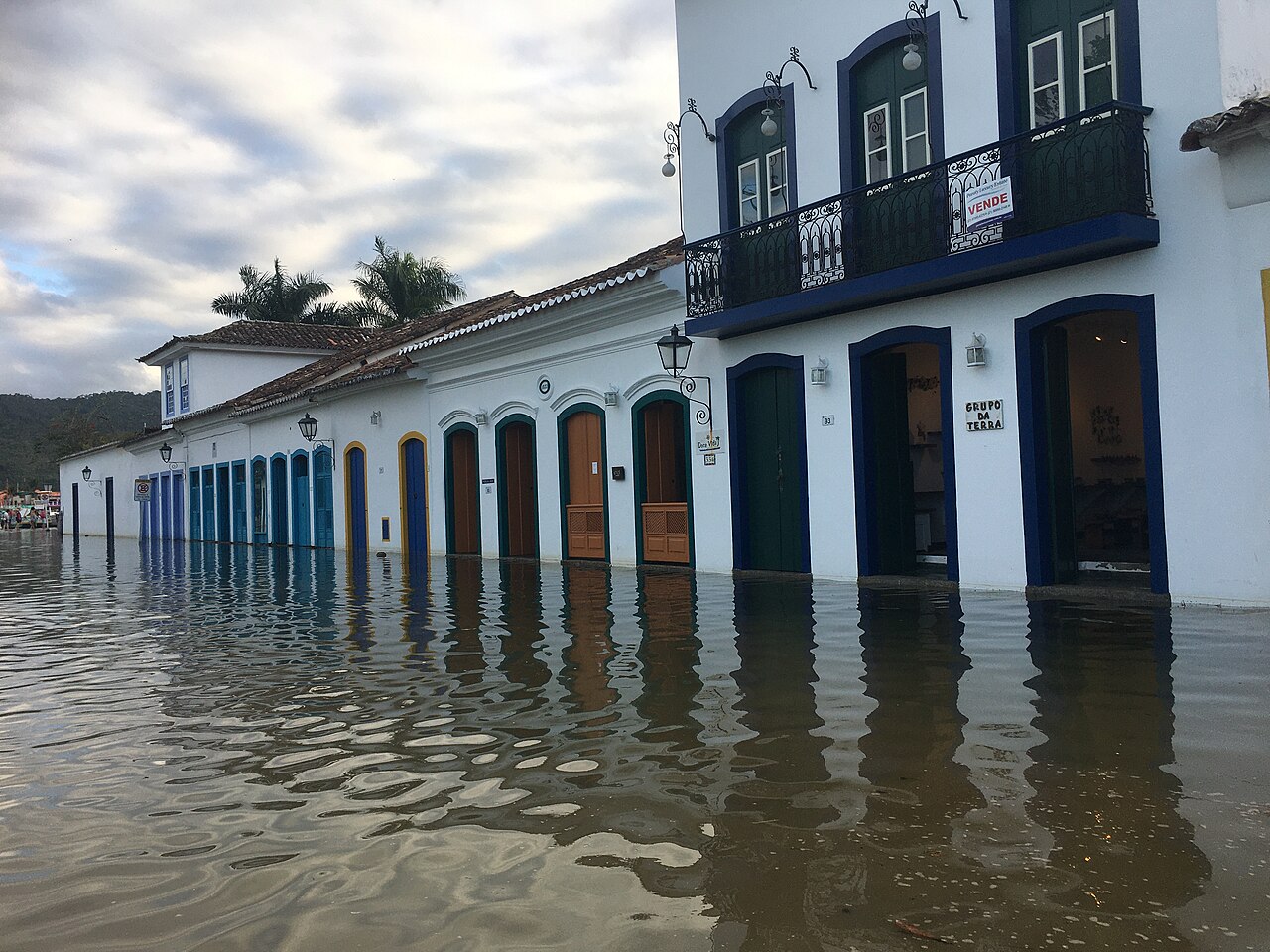
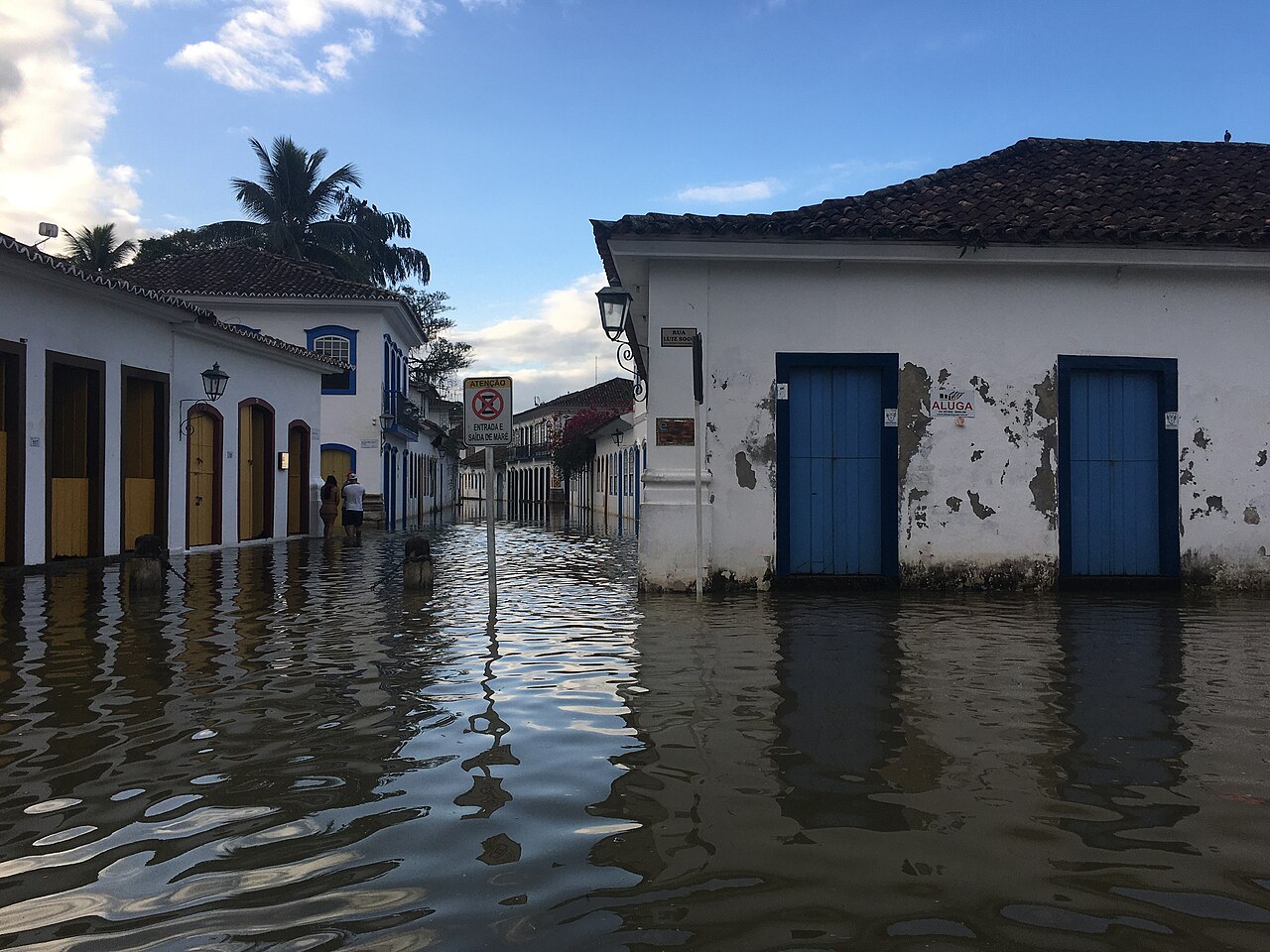
The car-free lanes paved with 'pé-de-moleque' stone, lined with low whitewashed colonial houses and colorful window frames
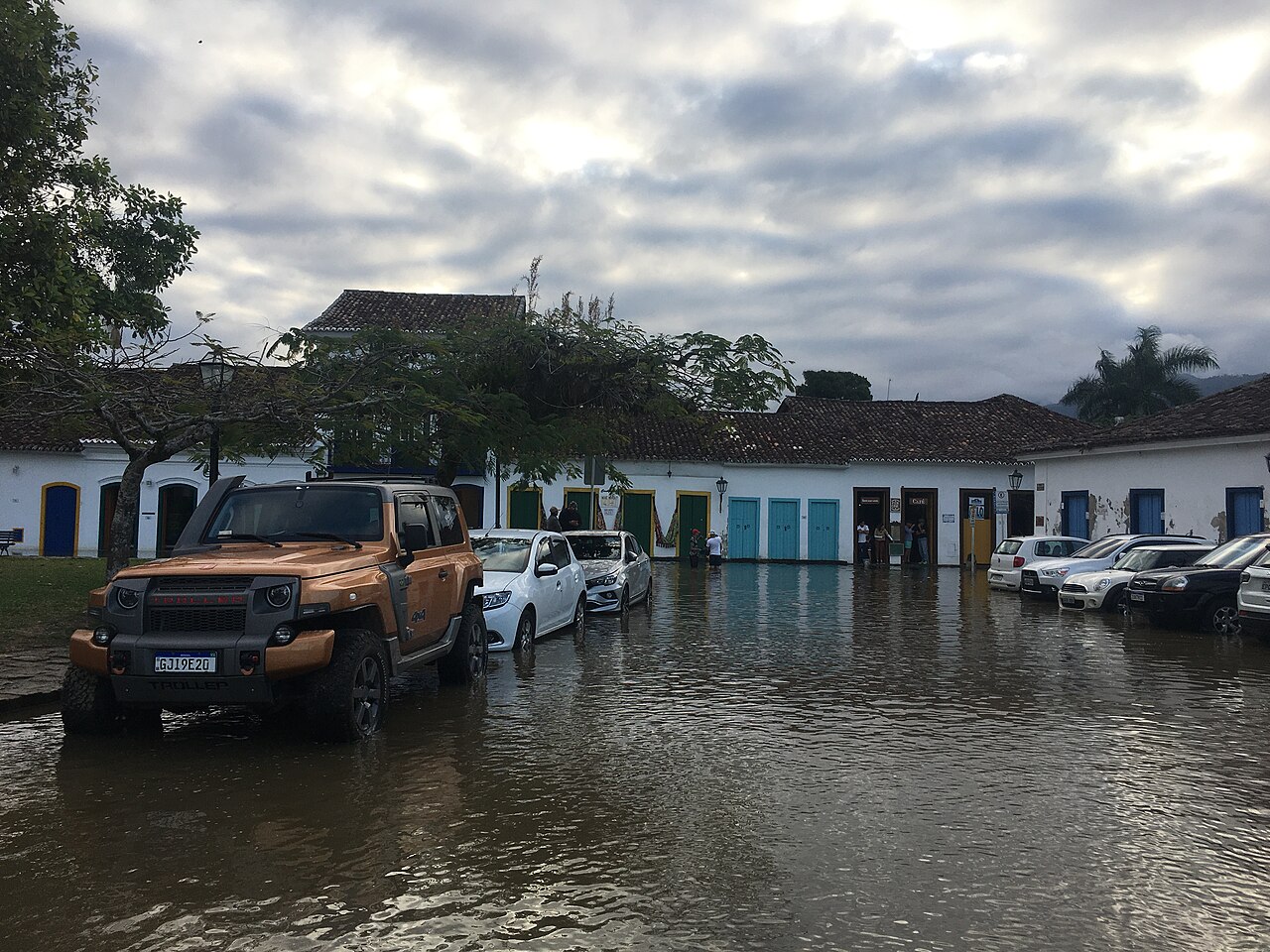
The 'maré cheia' spectacle, when seawater flows into the streets at the high spring tides of full and new moons, mirroring the old houses
Traditional cachaça distilleries (alambiques) producing Paraty's signature sugarcane spirit, alongside artist ateliers and galleries
The waterfront square and schooner pier, the historic gateway linking the old town to the bay's islands and beaches
Good to know
SeasonAlways check the tide table. The highest tides come from May to August and flood the center's lanes, especially around full and new moons; you may step out of a restaurant into ankle-deep water, so plan around it.
SeasonThe dry season (May–September, driest June–August) is the best time to visit. During the December–March wet season, downpours and flooding are frequent and the stones get very slippery, so bring waterproof footwear and a rain layer.
MannersThe rounded, uneven cobblestones make heels and loose flip-flops a poor choice. Wear closed, non-slip shoes or secured strap sandals, and tread carefully on wet stone.
RulesThe historic core is a vehicle-free pedestrian zone. Use the Paraty bus terminal (about a 10-minute walk) or nearby parking for luggage, and confirm the latest opening hours and ticket prices for churches and museums before visiting.
MannersThe churches are still active places of worship. Keep quiet, avoid revealing clothing, and respect any limits on photography or during Mass. Restaurant and tour bills usually already include a 10% service charge.
SafetyTake normal precautions for a Brazilian tourist town. Watch for pickpockets in crowded squares and during the FLIP festival, and don't flash phones or valuables after dark; leave your passport at your lodging and carry a copy.
CautionDuring FLIP and peak season (July–August, year-end), lodging and tour prices spike, so book and lock in prices in advance. Agree fares before boarding boats or taxis, and compare prices to avoid inflated tourist rates in shops and tours.
Practical info
Intercity buses are the practical gateway: the Paraty bus terminal is about a 10-minute walk from the historic center, roughly 4 hours from Rio de Janeiro on Costa Verde coaches, with direct services also from São Paulo. The historic center itself is an open pedestrian area that is free to wander, while opening hours and admission for individual sites such as the Santa Rita Sacred Art Museum change often, so verify the latest details before your visit.
On-site reviews📍 Verified on-site
No reviews yet. If you are here, be the first to leave one.