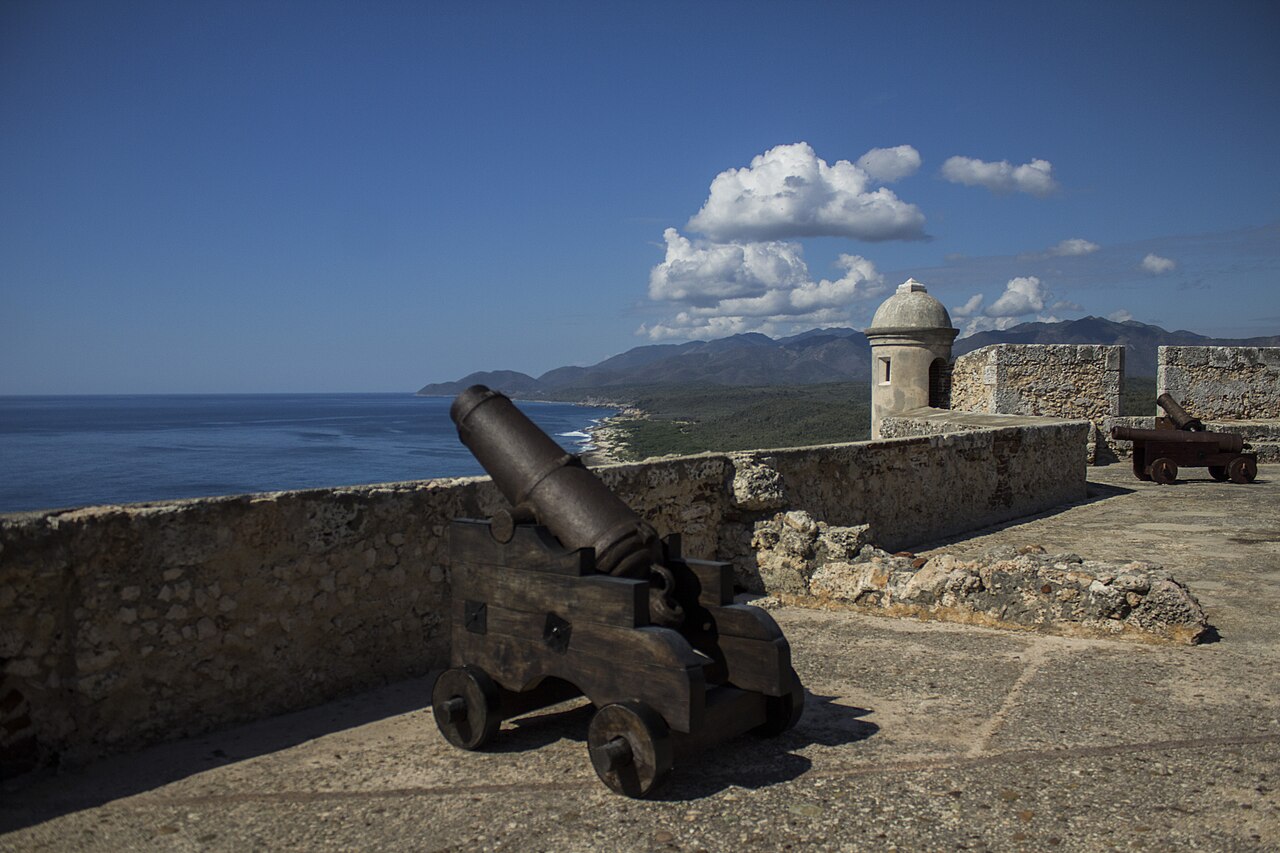
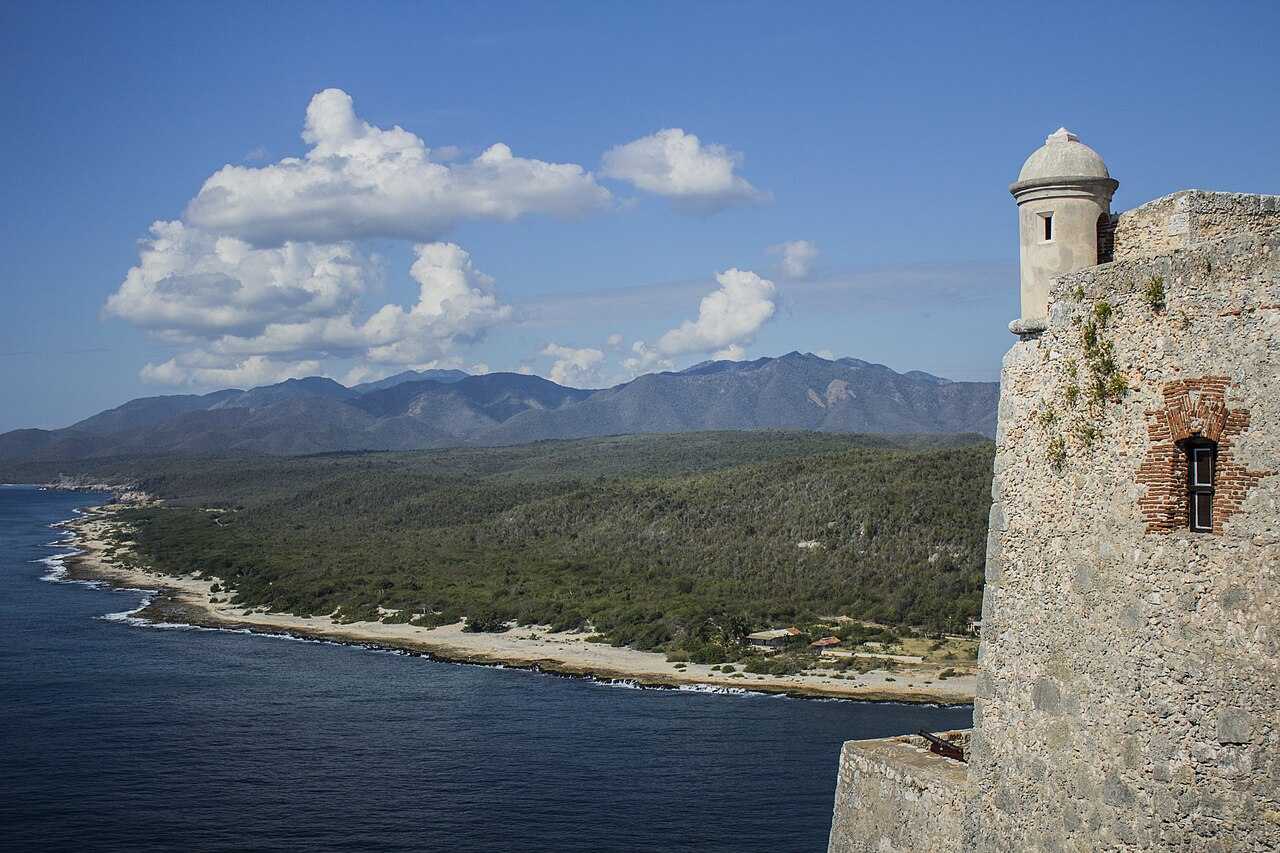
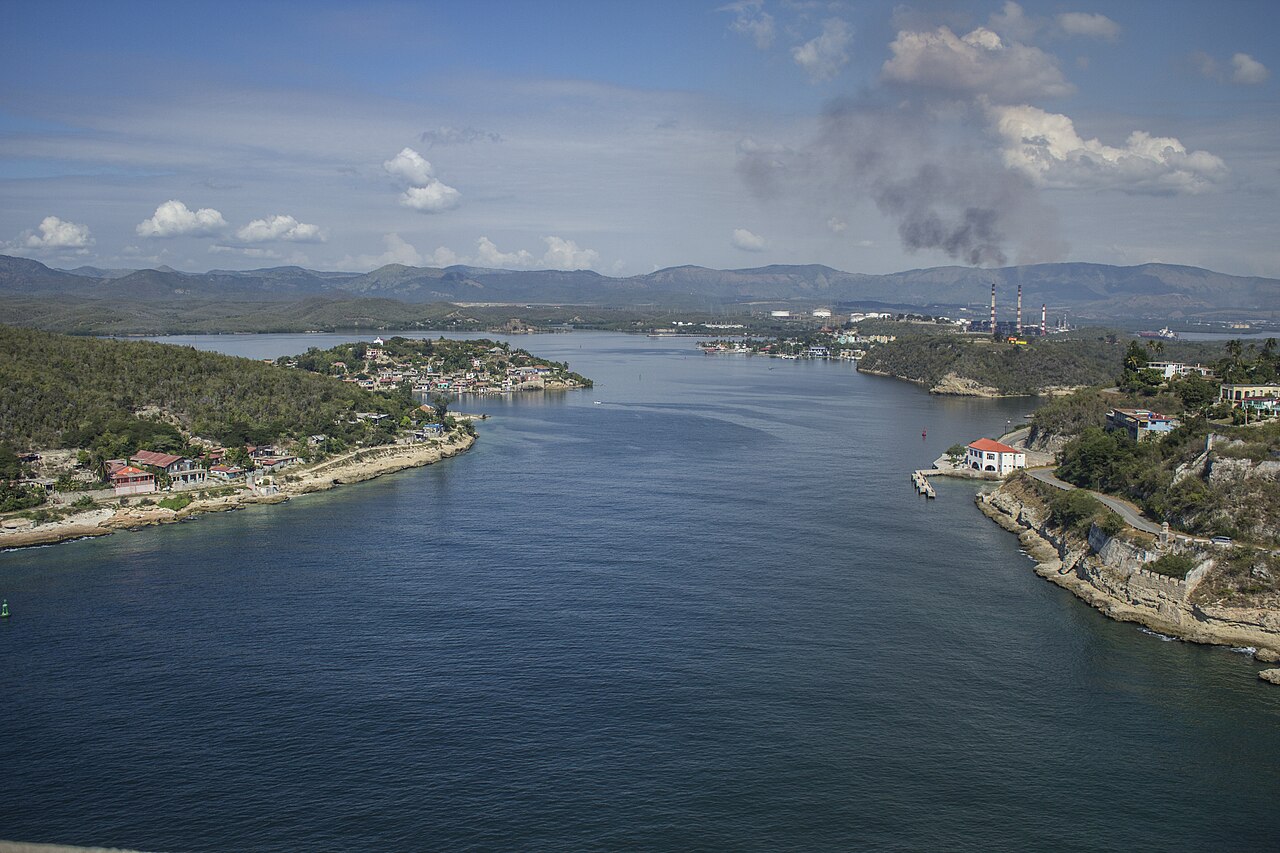
The Castillo de San Pedro de la Roca (El Morro) is a 17th-century Spanish fortress built in terraces atop a roughly 60 m cliff at the entrance to Santiago de Cuba Bay. Designed by the Milanese-Italian military engineer Giovanni Battista Antonelli and constructed from 1638 over some six decades, it defended the harbor against the pirates and rival empires that plagued the Caribbean. UNESCO inscribed it as a World Heritage Site in 1997, calling it the best-preserved and most complete example of Spanish-American military engineering. In 2026 it remains one of eastern Cuba's flagship attractions and one of Santiago's most-visited monuments, prized for sweeping views over the bay, the Caribbean and the Sierra Maestra, and for its sunset cannon ceremony.
The multi-tiered bastioned layout stepping down the cliff — gun batteries, ramparts, a drawbridge and storerooms and passages carved into the rock
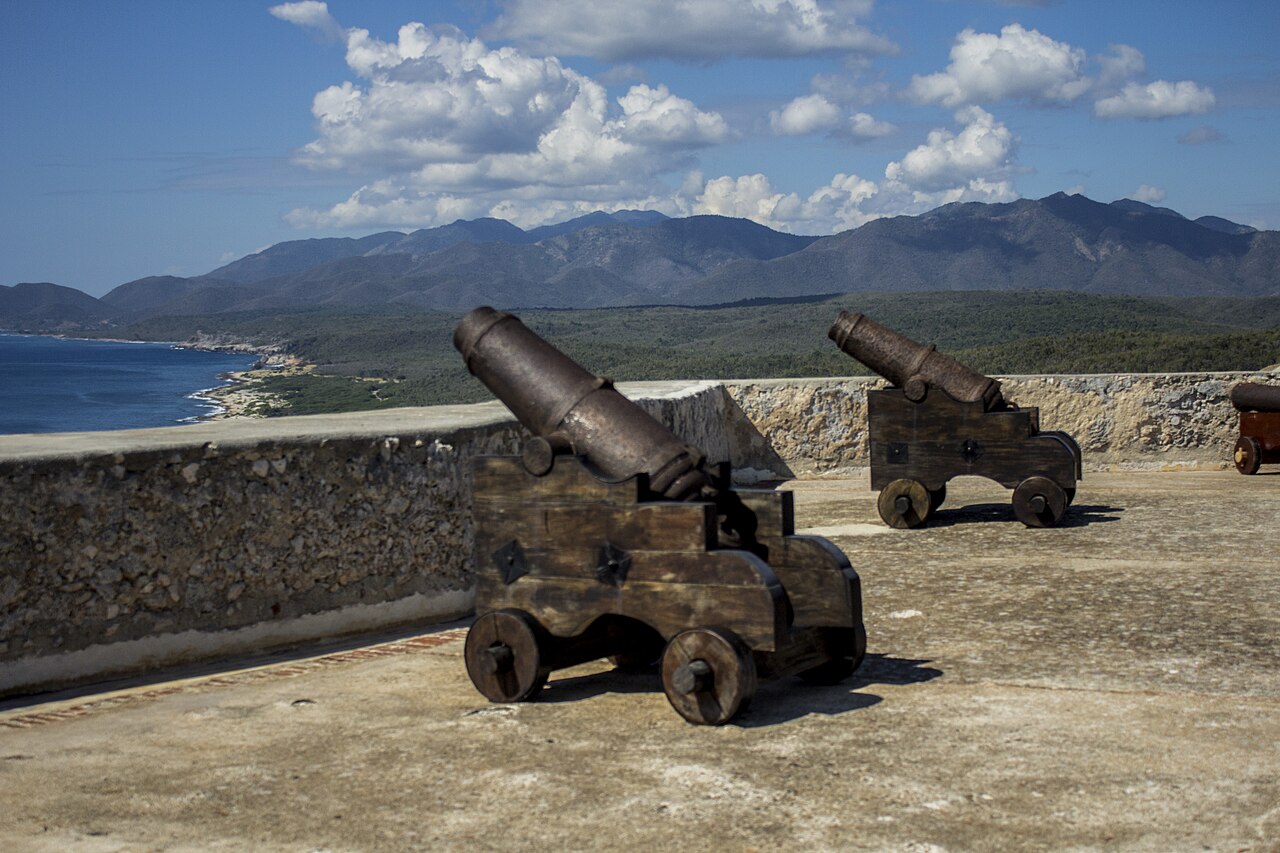
Panoramic views from the upper terraces over the bay mouth, the Caribbean coastline and the Sierra Maestra
The Museo de la Piratería (Piracy Museum) housed inside the fort since 1978, with five permanent halls on the fortress's history and Caribbean pirates and corsairs
The lighthouse (faro) that still guides ships into the harbor
The 'Cañonazo' ceremony at dusk, re-enacted by performers dressed as 19th-century Mambí independence fighters
Former dungeons and political-prison chambers hewn into the rock, with cannons displayed throughout
Good to know
SeasonJune to November is the Atlantic hurricane season; heavy rain or strong winds can restrict access. Check the weather and opening status before you go.
SeasonThe ramparts and terraces offer little shade and strong sun. Bring a hat, sunscreen and water, and prefer the morning or sunset over midday.
SafetyThe stone stairways and ramps up and down the fort are steep and lack railings in places. Wear non-slip shoes; children and older travelers should take special care.
SafetyThe site sits about 10 km southwest of the city with limited public transport. Agree a round-trip and waiting fare with a taxi in advance so you have a ride back, keep belongings on you, and avoid moving around after dark.
CautionAlways settle the price with taxis and informal guides before you start. Watch for tourist mark-ups and street currency-exchange scams, and change money only at official offices.
RulesA separate photography fee may apply, and admission is usually paid in cash in local currency. US-issued cards do not work due to sanctions, so carry enough cash; confirm current fees and hours before visiting.
MannersSmall tips are customary for the performers and guides who stage the cannon ceremony. Be respectful when taking photos.
Practical info
The castle lies about 10 km southwest of central Santiago de Cuba, roughly a 20-30 minute taxi ride, with limited public transport. It is generally open daily from morning to evening, with the Cañonazo ceremony around sunset, but opening hours, admission, the photo fee and the ceremony time change often, so verify the latest details before your visit.
On-site reviews📍 Verified on-site
No reviews yet. If you are here, be the first to leave one.