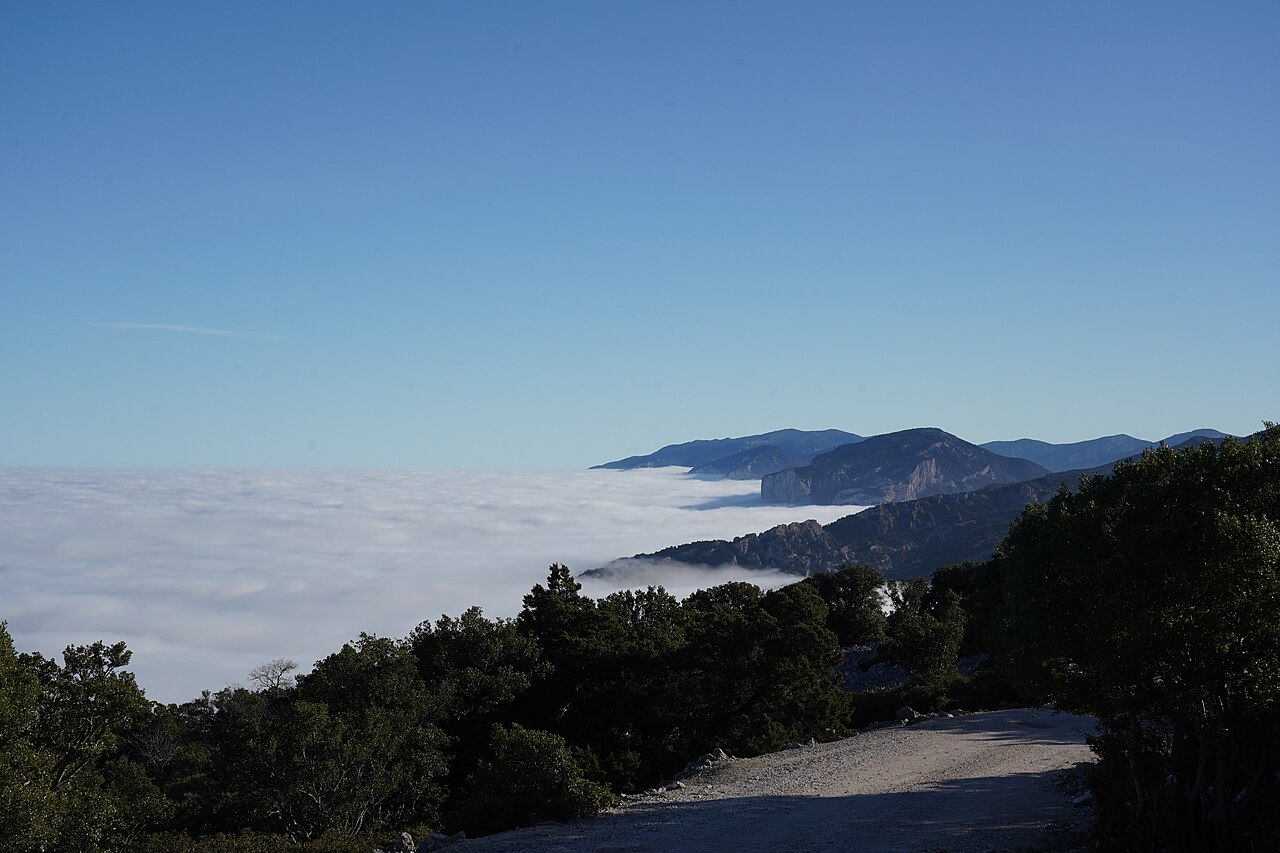
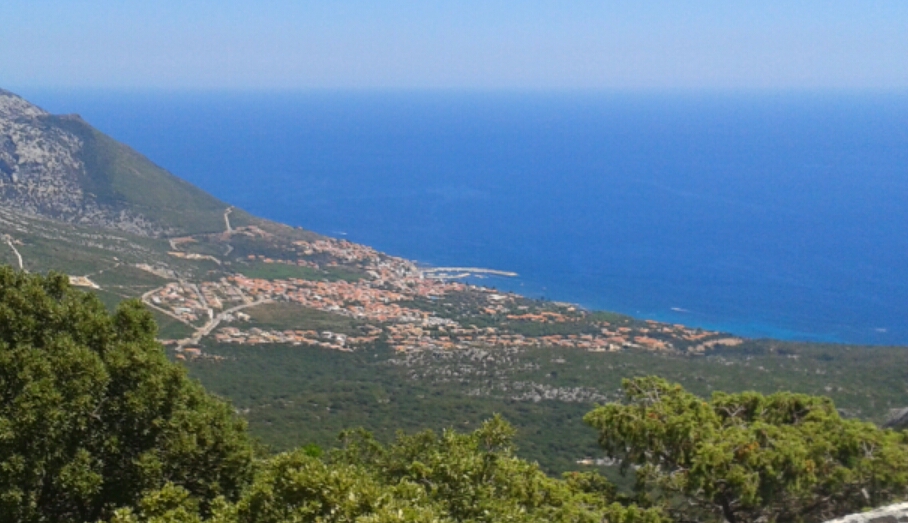
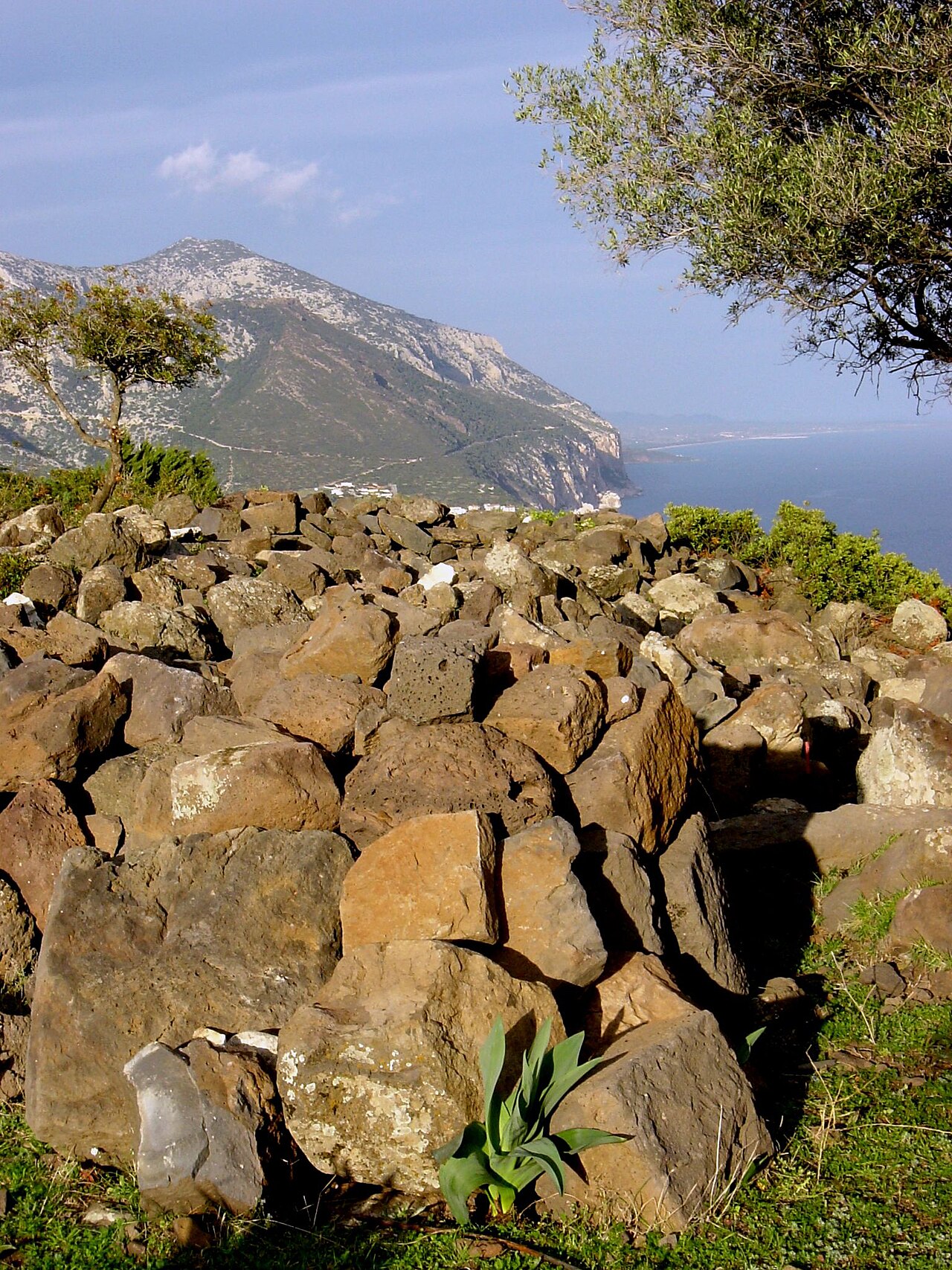
Cala Gonone is a small harbour town set midway along the Gulf of Orosei, on Sardinia's east coast, where roughly 40 km of limestone cliff drops straight into the sea. The wall keeps going underwater, so the bottom falls past 40 m only a short run from the moorings — which is why deep lines here need very little boat time and why the town has become one of Italy's more accessible freediving bases. Summer visibility typically runs 25–40 m and the sea reaches 23–26 °C from June to September, though it sits nearer 17–20 °C in May–June and October. As of 2026 the local schools run a staged progression from a 12 m introduction through 24 m to a 30 m certification across an April–October season, while the gulf's headline beaches (Cala Luna, Cala Mariolu) operate under app-based booking and daily visitor caps.
Cliff-to-abyss topography — the limestone wall continues below the surface, so a 30 m line can be rigged minutes out of the harbour instead of an hour offshore
Grotta del Bue Marino, the gulf's signature sea cave — the show section is visited on foot by ticketed guided boat, while the central branch is fully submerged and strictly cave-diver territory
The inner coves — Cala Luna, Cala Mariolu, Cala Sisine — where white pebble beaches meet a drop-off within metres of shore, putting shallow and deep water in one frame
Glassy early mornings from June to September, before the afternoon breeze fills in: the best window for line work and for photography
Posidonia meadows and the rocky drop-offs at their edge, with barracuda schools, dusky grouper (cernia) and the shallow Mediterranean life that comes with them
The schools' staged course structure, building free immersion, constant weight and mouthfill equalisation over several days rather than in a single session
Good to know
SafetyMost freediving fatalities come from shallow water blackout and loss of motor control, not from depth itself. Clear, shallow-looking water changes nothing: never dive alone, run strict one-up-one-down with a surface watcher, and keep eyes and hands on your buddy for at least 30 seconds after they surface. Hyperventilating before a dive raises blackout risk and should not be done.
SafetySea caves and arches are overhead environments — a blackout inside one cannot be resolved by floating up. Do not enter or transit any passage without a qualified guide, and do not enter at all unless you can see the exit and know the distance. The central branch of Grotta del Bue Marino is a fully flooded cave system and is not a freediving objective under any circumstances.
SafetyDeep line sessions past roughly 20 m belong in a proper setup only: wrist lanyard, rigged counterballast, and a safety diver meeting you at the right depth. A lanyard is mandatory whenever visibility drops or current is running. Trying to set a personal best inside a short holiday window is the classic accident pattern here and everywhere else.
SeasonWhen the mistral blows from the northwest, the sea outside the gulf builds fast and boats stop running — budget spare days into the trip. In May–June and October the water sits at 17–20 °C, calling for a 5 mm suit and hood, and even in high summer a thermocline below about 20 m can sharply change both your comfort and your equalising.
RulesTourist boats and kayaks work this coast heavily in peak season. Always deploy a float with a dive flag and stay within its radius — a freediver at the surface is nearly invisible from a moving boat, so avoid crossing established boat lanes to reach a spot.
RulesThe Golfo di Orosei–Capo Monte Santu marine protected area has been designated but is not yet fully operational; protection currently runs through the Natura 2000 site and Dorgali/Baunei municipal rules. For 2026, Cala Luna and Cala Mariolu require advance booking through the official app with daily caps (around 700 people at Mariolu, around 900 at Luna) plus a small environmental fee, and anchoring on posidonia beds is prohibited. These conditions change season to season — verify before you go.
CautionSome 'cave tour plus freediving' packages sold on the quayside are boat hire and snorkelling with no certified freediving guide and no safety cover. Before booking, confirm in writing the instructor's agency credential (AIDA, SSI, PADI, Molchanovs), whether a dedicated safety diver is assigned, whether oxygen is carried on board, and what the insurance actually covers.
Practical info
Olbia (OLB) is the practical gateway at roughly 106 km and about 1h30 by road; there is no direct bus, so a hire car or private transfer is the realistic option. The season runs April–October with June–September the strongest window, and schools commonly ask for a health questionnaire or medical certificate plus freediving-specific insurance — confirm current prices, operating hours, group limits and beach booking rules directly with the school and the Comune di Dorgali before you travel.
On-site reviews📍 Verified on-site
No reviews yet. If you are here, be the first to leave one.