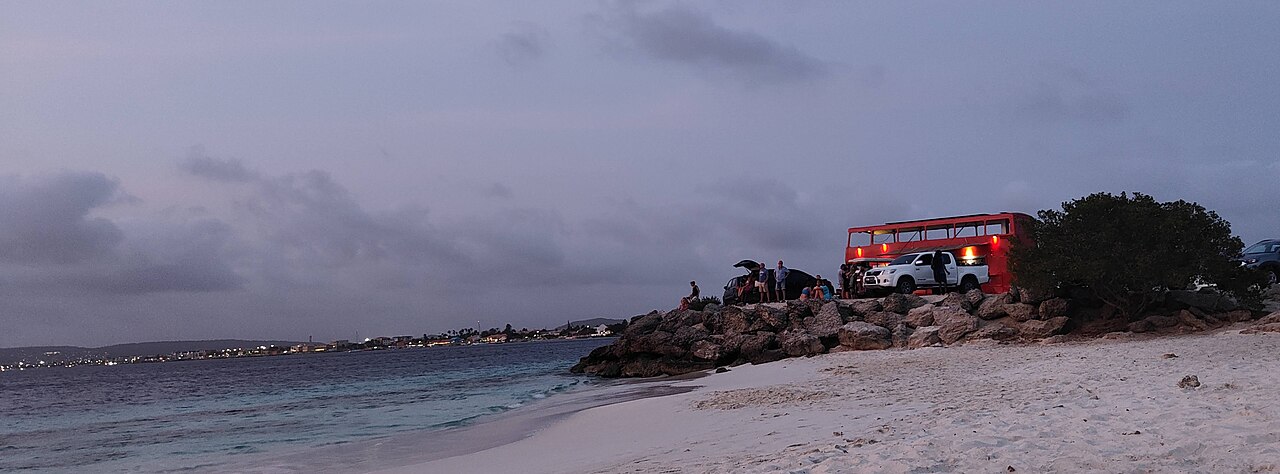
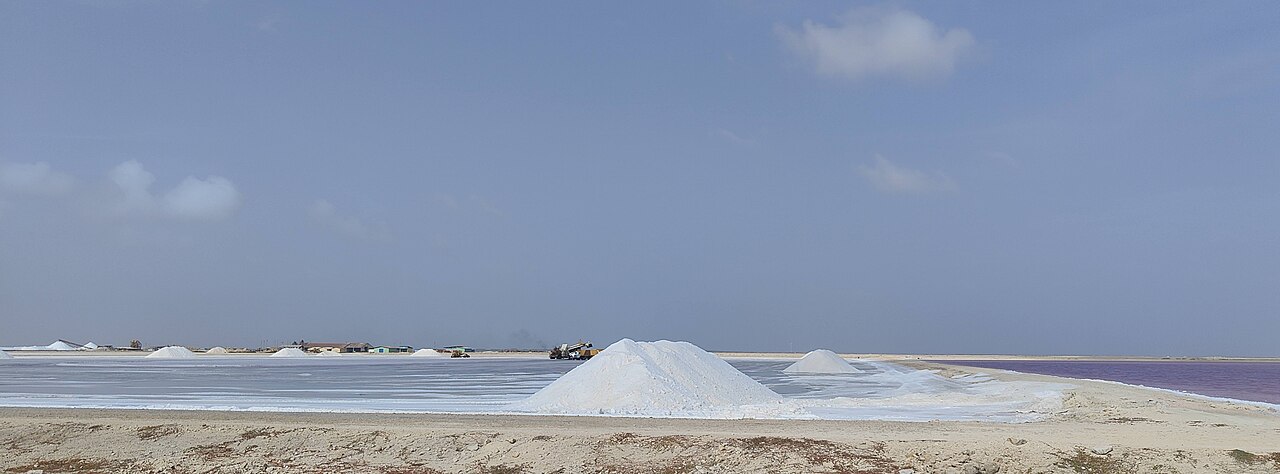
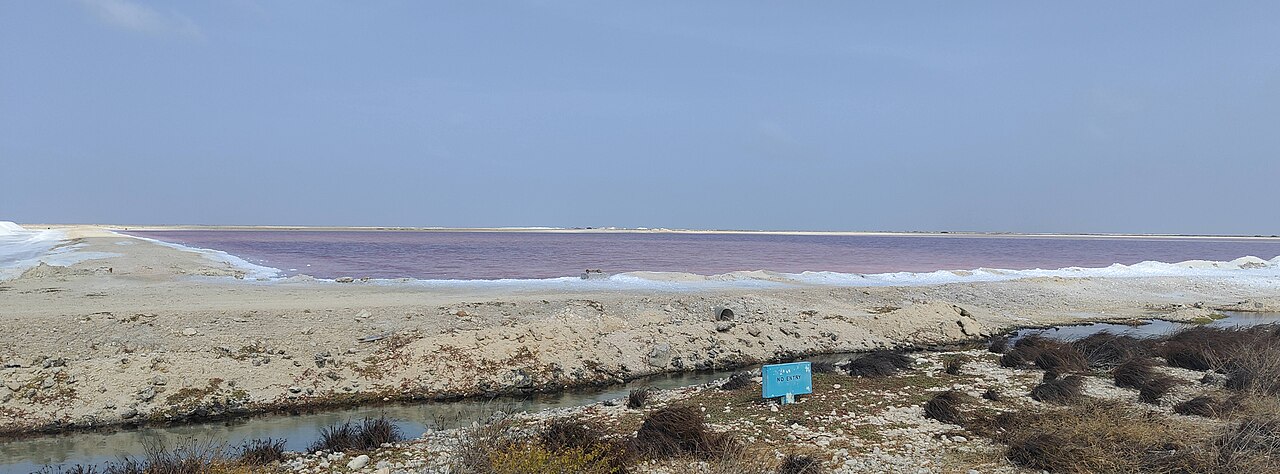
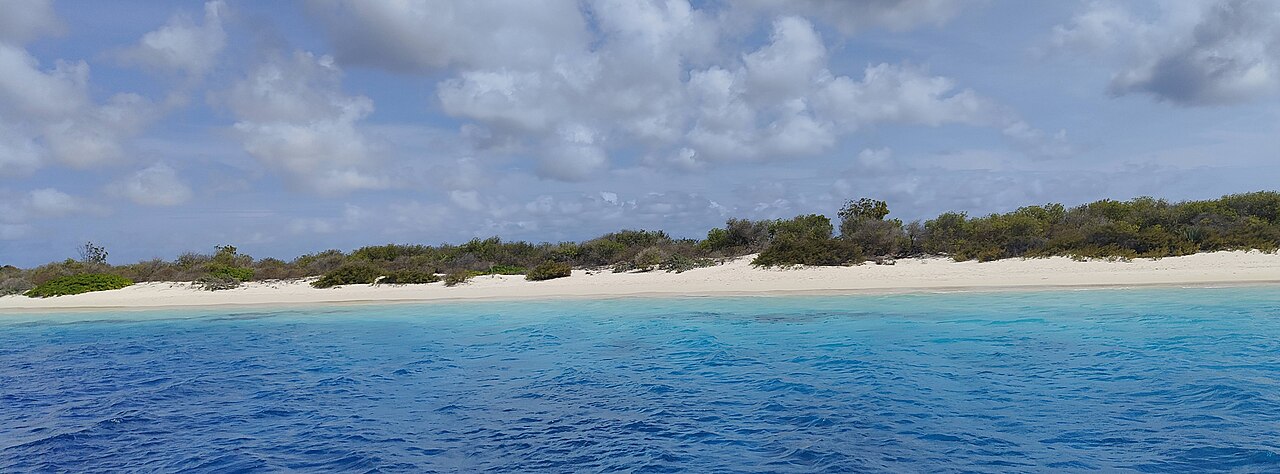
Bonaire, a small Dutch Caribbean island, is the rare freediving destination where you can effectively walk to depth. The sheltered west coast drops off steeply just metres from shore, so a training line can be hung without a long boat transit — and after world-record holder Carlos Coste relocated here in 2014 and opened his schools, a cluster of centres with permanent platforms and dedicated boats took root around Harbour Village Marina in Kralendijk. Water sits around 26–29°C, visibility averages 25–30m, current ranges from soft to none, and the island lies outside the hurricane belt, so seasonal swing is small. As of 2026 the island still runs AIDA and PADI courses through instructor level plus Deepsea Challenge-style competitions and workshops, but the entire coastline is national marine park and paying the Nature Fee before you enter the water is a legal requirement.
Blue Classroom's permanent freediving platform, moored off the north entrance of Harbour Village Marina — line sessions start without a boat transit, which makes stacking several sessions a day realistic
A drop-off that begins almost at the shoreline: the coral slope falls straight into deep water, so warm-up shallows and the deep line are barely any distance apart
A genuine record site — in September 2016 Jeanine Grasmeijer of the Netherlands set the women's Free Immersion world record at 92m during the Bonaire Deepsea Challenge, and in 2012 Brazil's Karol Meyer took the traditional Skandalopetra discipline to 68.9m here
The Hilma Hooker wreck, whose upper structure sits around 20m, is the classic single-breath target on the island — the interior, however, is an overhead environment and is not a freediving objective
Resident coaching, including Carlos Coste — CWT and FIM technique sessions, youth programmes and instructor tracks all run from the same island
Good to know
SafetyGood conditions are not the same as safe conditions. Clear, flat water actually makes shallow water blackout (SWB) and loss of motor control harder to spot, not easier. Never take a line alone: dive with a buddy or safety diver whose eyes stay on you, wear a lanyard, and have counterballast rigged before you descend. The last 10m of the ascent and the first 30 seconds on the surface are where things go wrong.
SafetyThe bottom disappears within metres of the beach, and the exceptional visibility creates a genuine illusion that you are shallower than you are — beginners routinely go deeper than they intended. Add depth once per day at most, never rush an ascent, and turn immediately at the point where equalisation stops working. Forcing an equalisation is how lung and sinus squeezes happen.
SafetyThere is a recompression chamber at San Francisco Hospital in Kralendijk, but it closed for several months in 2023 after its physician retired. Confirm it is staffed and operating before you travel, plan around the fact that serious cases are flown to Curaçao, and carry insurance that names freediving/apnea explicitly — standard travel policies frequently exclude it.
RulesPaying the STINAPA Nature Fee before entering the water is a legal obligation. It has recently run as a flat annual e-tag (QR) of roughly US$40 for all users, covering both the marine park and Washington Slagbaai National Park. Amounts, payment channels and validity change from year to year, so buy from stinapabonaire.org after checking the current terms.
RulesMarine park rules are strict and enforced: no contact with coral, sponges or other marine life, no anchoring, and no gloves (with narrow exceptions such as wreck diving). Spearfishing has been banned island-wide since 1971 — even lionfish culling is limited to authorised operators using park-approved gear. Assume that spearfishing simply is not available to you here.
SafetyTraining water sits close to the marina approach and the Kralendijk cruise berth, so boat traffic is a real hazard rather than a theoretical one. Always deploy a buoy or float, keep a dive flag up, and keep a spotter watching even during surface intervals — a group hanging on a line with no surface marker is the worst-case setup.
SeasonDiving runs year-round, but 'always calm' is an overstatement. Intermittent northwest swells reach the lee shore in winter (roughly December to February) and can rough up the west coast or close sites for days. Competition and workshop periods also fill platform lines and instructor slots early, so book ahead if your dates are fixed.
Practical info
Fly into Flamingo International Airport (BON) via a direct service from Amsterdam, a connection through a major US hub, or a 30–40 minute hop from Curaçao or Aruba. The season is effectively year-round, and courses generally require you to be 18 or older (16–17 with guardian consent) and able to swim 100m non-stop. Course prices, platform hours, the Nature Fee amount and chamber availability all change, so verify each directly with the schools and STINAPA's official channels shortly before you travel.
On-site reviews📍 Verified on-site
No reviews yet. If you are here, be the first to leave one.