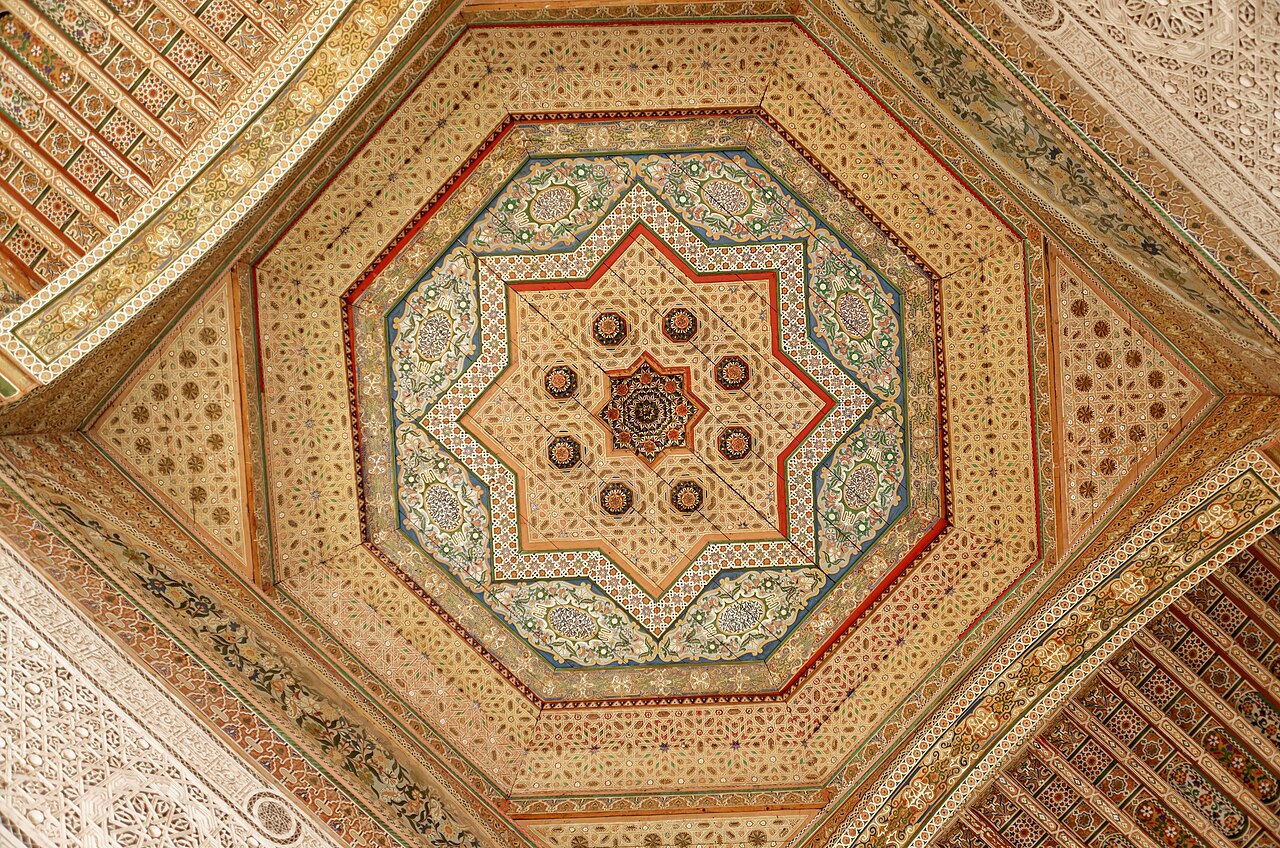
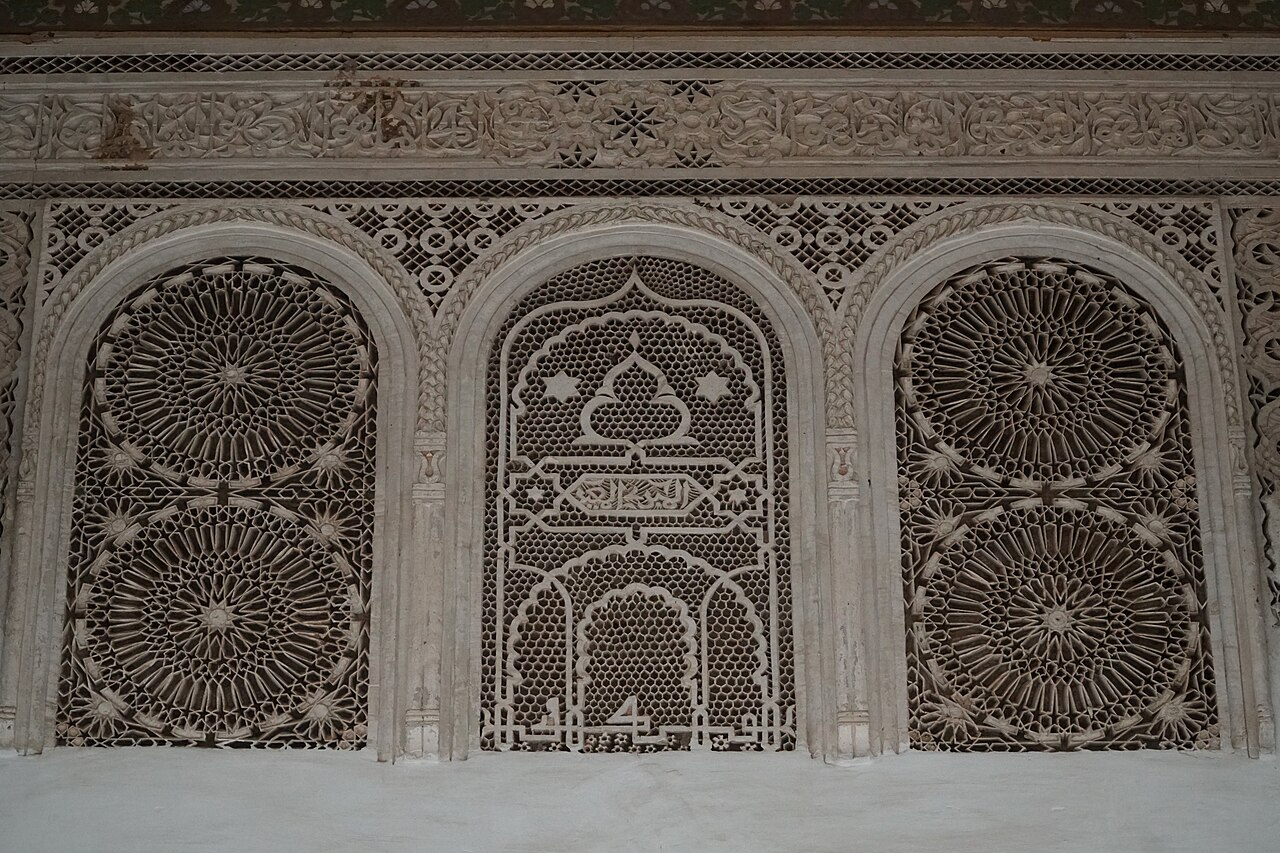
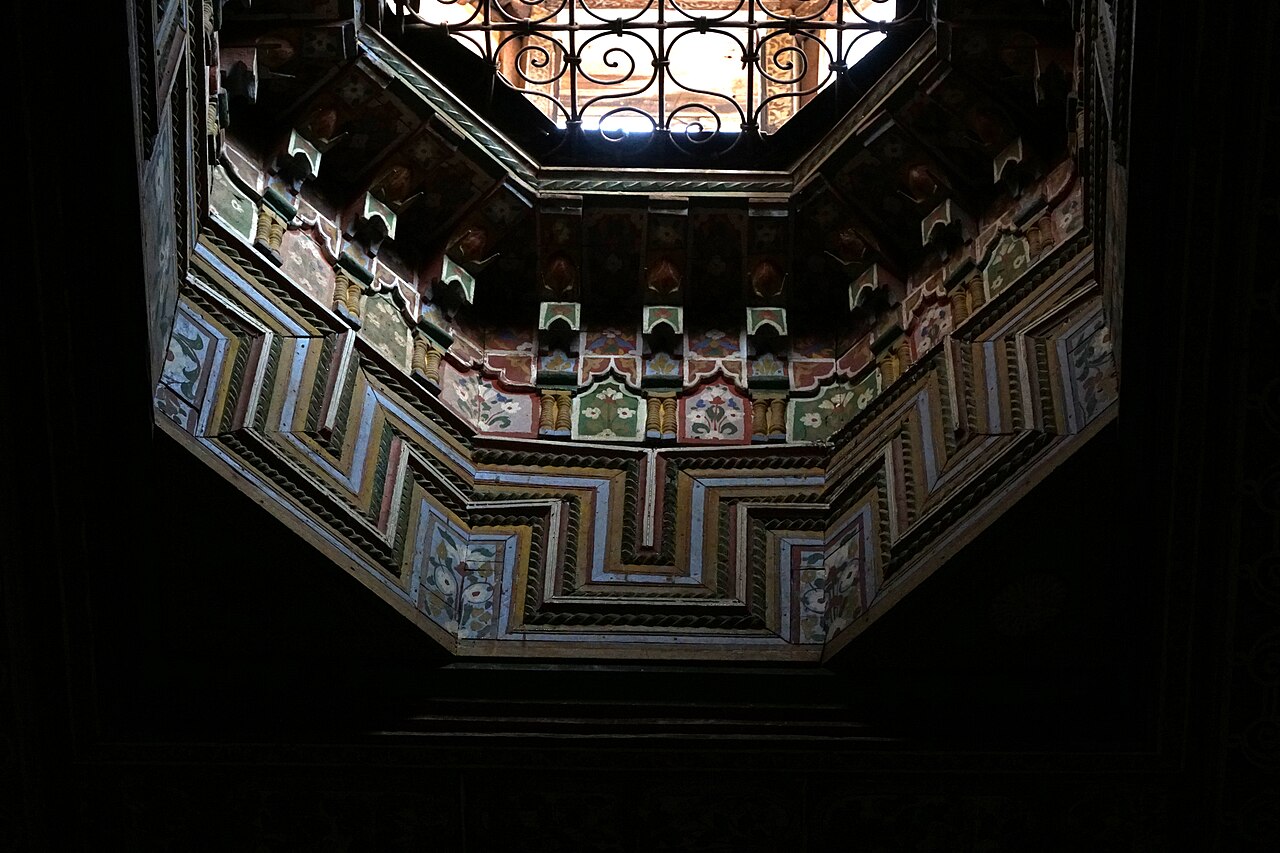
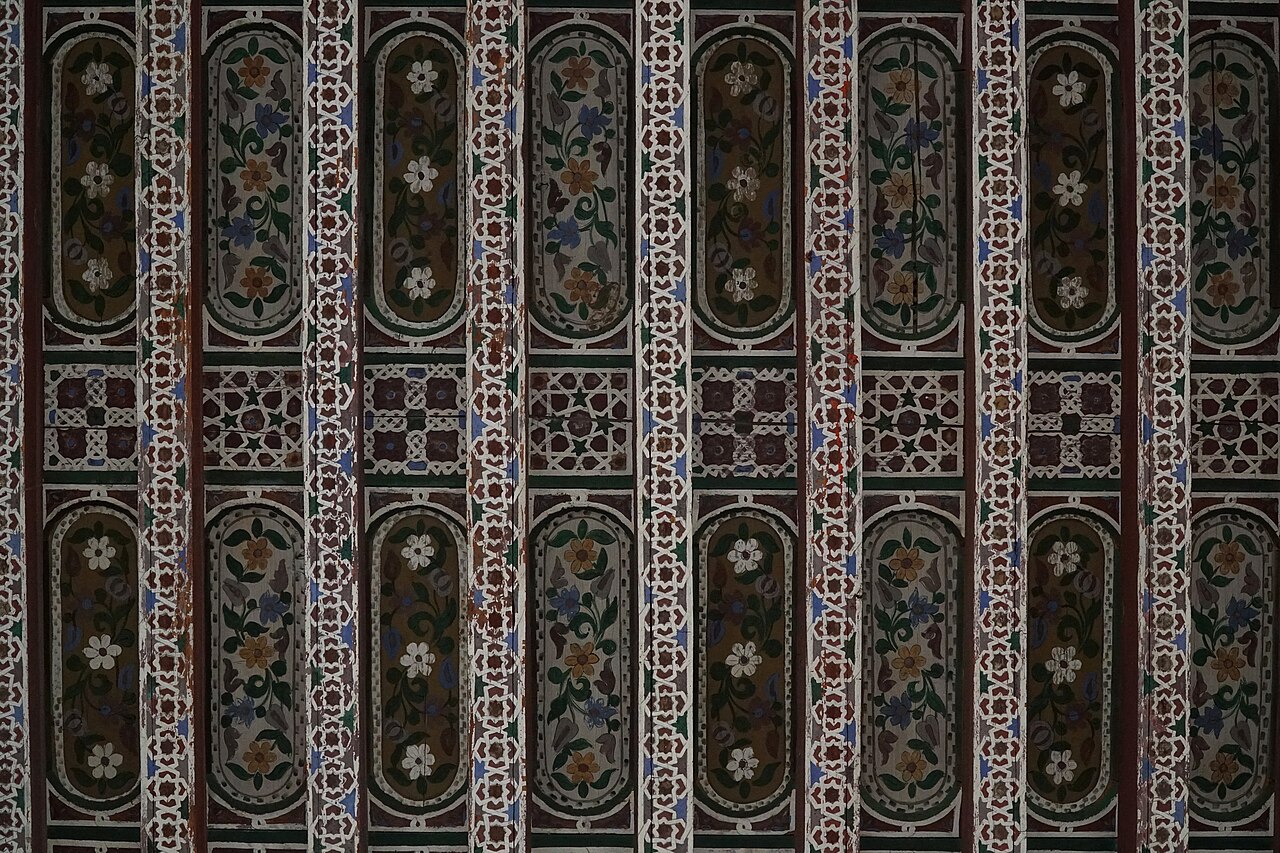
The Bahia Palace (قصر الباهية, meaning 'the brilliant' or 'the beautiful') is a late-19th-century Moroccan-style palace in the medina of Marrakech, spread across roughly eight hectares with some 150 rooms linked by a succession of courtyards and riad gardens. Grand vizier Si Moussa began it in the 1860s, and his son Ba Ahmed, the era's effective ruler as grand vizier, greatly expanded and embellished it between 1894 and 1900. It is celebrated as a showcase of Moroccan craftsmanship: painted cedar ceilings, carved stucco, and vivid zellij (mosaic tilework). Following earthquake damage in 2023 the palace has stayed open while undergoing restoration, so in 2026 some sections may be screened off or under conservation work.
The Grand Courtyard (about 50 x 30 m) paved in Italian Carrara marble and ringed by an ornate wooden gallery
The Petit Riad, a symmetrical garden courtyard framed by richly decorated galleries
The Grand Riad, the palace's oldest section, built around a large planted garden
Hand-painted cedar ceilings, sculpted stucco, and zellij tile patterns that differ from room to room
The former harem quarters and council rooms that reveal how the vizier's court once lived
Good to know
CautionBeware self-appointed guides near the entrance who claim the palace is 'closed today' or offer to show a 'shortcut,' then demand a large tip. Buy tickets only at the official counter or the Ministry of Culture's online portal.
CautionUnofficial ticket touts, dubious currency exchange, and inflated prices are common. Confirm the posted fare versus what you are charged; haggling is expected in medina shops.
SafetyThe medina's narrow lanes call for care against pickpockets and fast-moving motorbikes and bicycles. Carry your bag in front and keep valuables and passport separated.
RulesBring cash in local currency (dirham) for admission, as card payment is often unreliable at the gate. Tripods and drones may be restricted.
MannersIn this Muslim country, modest dress covering shoulders and knees is advisable, and it is courteous to ask before photographing locals or nearby mosques.
SeasonIn July and August Marrakech regularly tops 40 C, so visit right after opening. During Ramadan (roughly mid-February to mid-March in 2026) hours are shortened.
Practical info
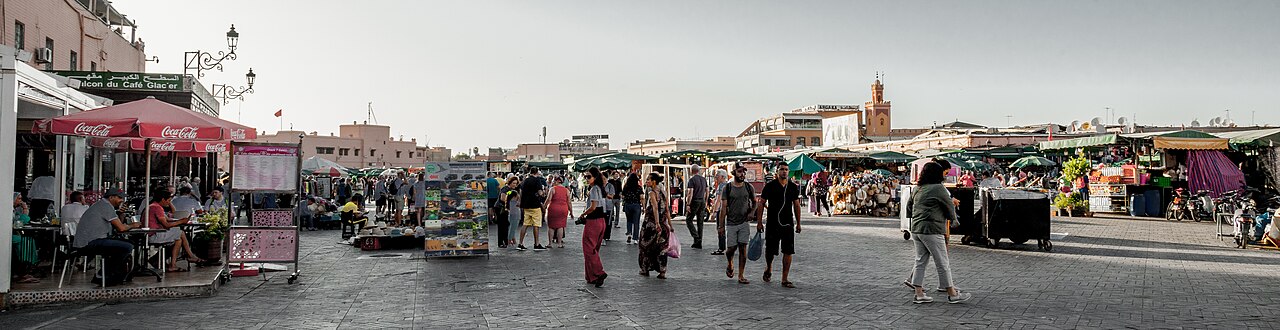
Set inside the medina about a 10-15 minute walk from Jemaa el-Fna square (near the Mellah, the old Jewish quarter); Marrakech has no metro, so reach it on foot or by petit taxi. It opens daily 9:00-17:00 (reduced during Ramadan) with foreign-adult admission around 100 dirham, and online booking is available via the Ministry of Culture e-services portal, but confirm current fares, hours, and any closed sections before you go.
On-site reviews📍 Verified on-site
No reviews yet. If you are here, be the first to leave one.