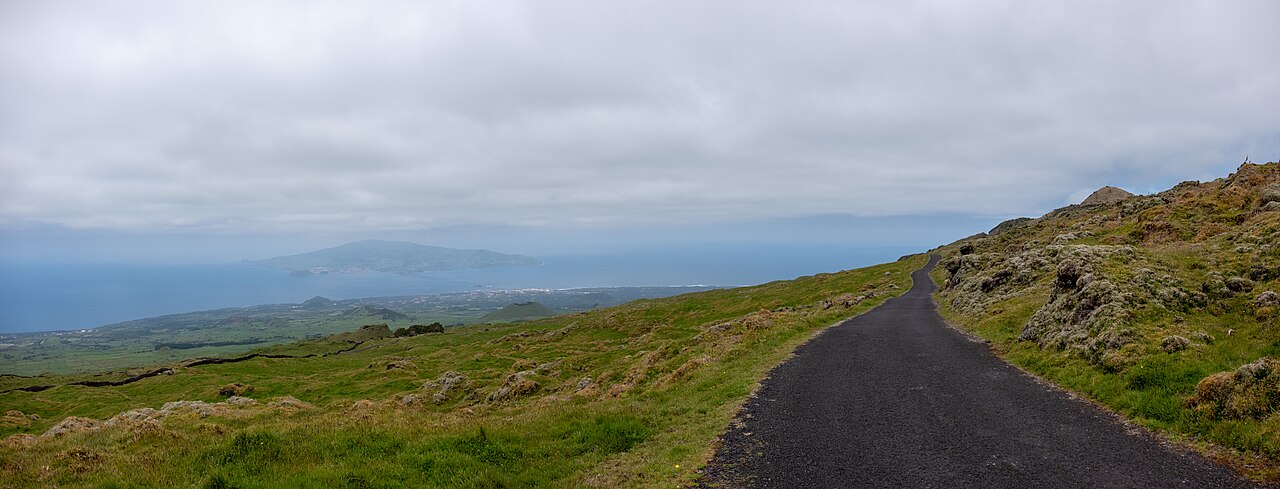
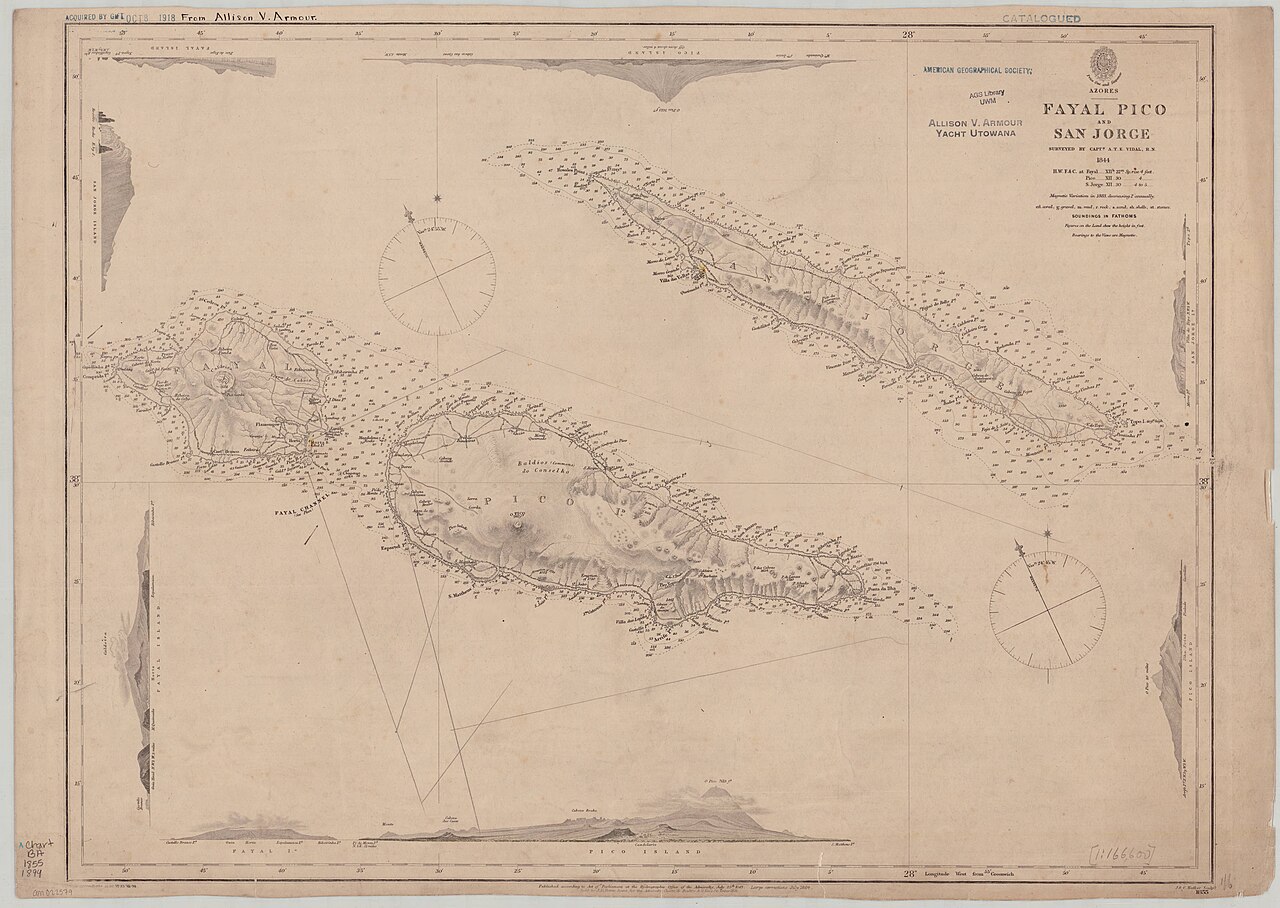
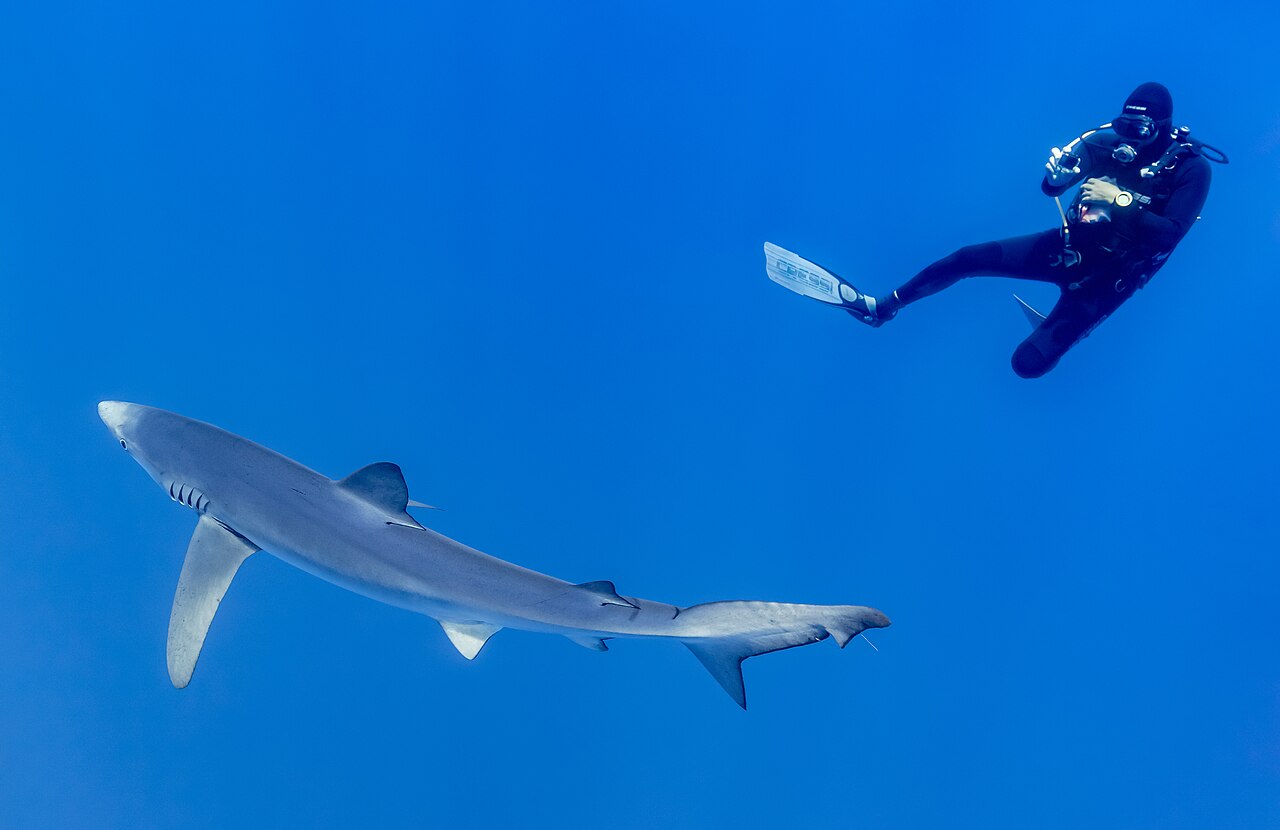
Faial and Pico, two volcanic islands in the middle of the North Atlantic, offer the most reliable pelagic freediving in Europe. Blue sharks rise into the 5–10 m blue water over Condor Bank, roughly 35 km southwest of Faial, while Princess Alice Bank — a seamount that climbs from over 2,000 m to a summit around 35 m, about two hours by boat from Horta — draws groups of 20 to 40 giant mobula rays in mid-summer. Summer water sits at 20–25°C with visibility often past 25–30 m, and the coastline is stitched with lava arches, tunnels and canyons. The archipelago's first dedicated freediving center relocated from Santa Maria to Faial in June 2025, so as of 2026 the scene is centered on Horta.
Blue shark sessions on Condor Bank — a 180 m seamount where fishing is banned, dived in open blue water at around 5–10 m
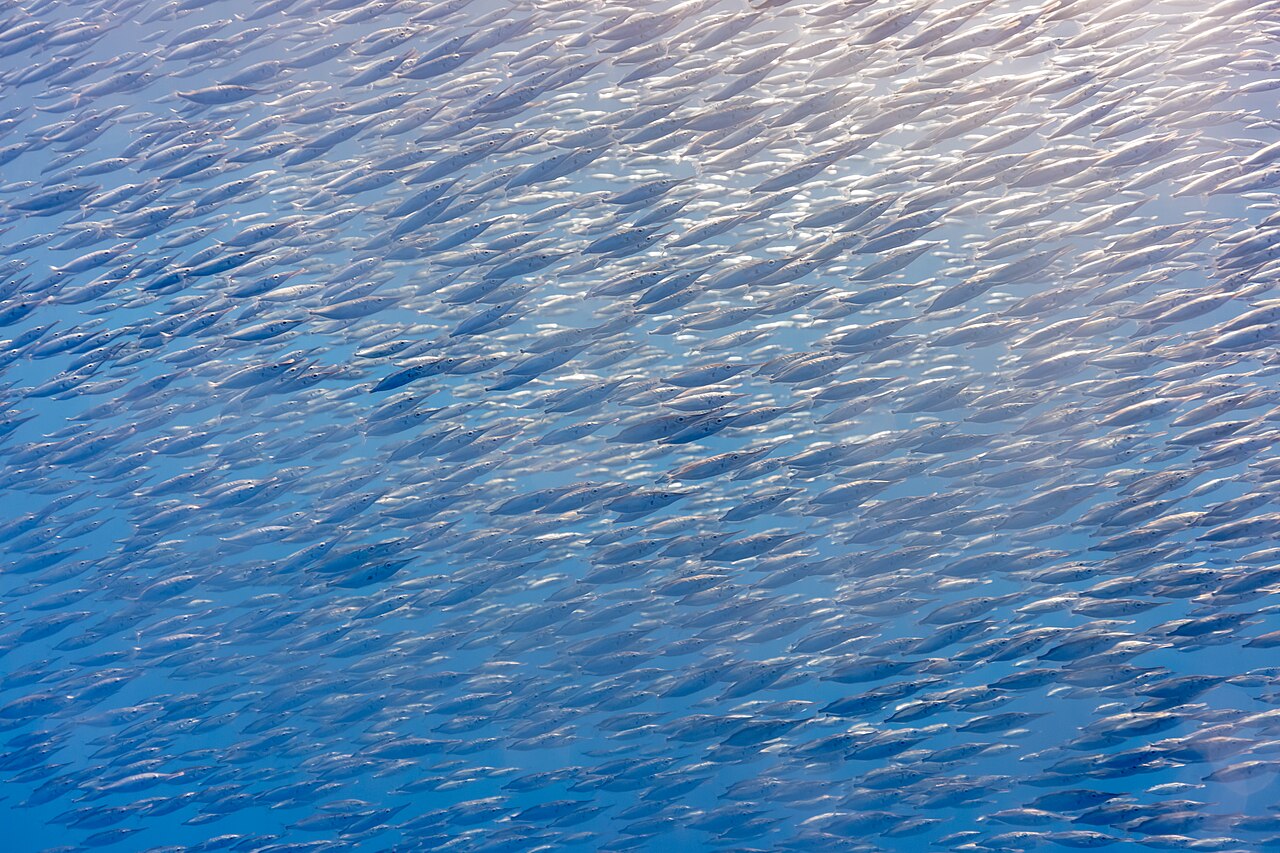
Princess Alice Bank — the signature site, where Mobula tarapacana carousel in schools of 20–40 from July to September, alongside barracuda, amberjack and skipjack tuna, with occasional whale shark sightings in August
Boca das Caldeirinhas and Monte da Guia — a flooded crater mouth inside a marine reserve, with a 10 m platform dropping down a vertical wall to about 30 m, patrolled by moray eels, ornate wrasse and dusky grouper
Lava arches, tunnels and canyons plus the Praia Formosa wreck, all sites that reward looking down a line from the surface rather than penetrating
The Faial–Pico channel and the Espalamaca volcanic vents, and long blue-water freefalls in 30 m-plus summer visibility
Good to know
SafetyShallow water blackout and LMC arrive without warning and are the leading cause of freediving deaths. Never dive alone, run strict one-up-one-down buddy rotations, and have your buddy watch you from the ascent through at least 30 seconds of surface recovery. Never dive with a snorkel in your mouth.
SafetyBlue water gives you no visual bottom reference, so depth and orientation awareness degrade fast. Use a down line and lanyard, and only dive deep with a team that has counterballast or an equivalent retrieval plan. Chasing a personal best while on holiday is how trips go wrong.
SafetyOffshore seamounts like Princess Alice and Condor are fully exposed to strong current and swell. The two-hour crossing each way and a full-day schedule (roughly 07:30–17:30) drain you before you dive, and operators explicitly require good physical condition. Bring seasickness medication, hydration and thermal protection, and clip onto the boat's safety line when current is running.
SafetyBlue shark encounters are baited: operators chum with fish blood and offal, though the sharks are not fed directly. That changes shark behaviour, so do not wave hands or fins, never chase an animal, stay aware of approaches from behind and outside your field of view, and follow the guide's distance rules exactly. Drifting away from the group for a photo is the classic incident pattern.
SafetyArches, tunnels and caves are overhead environments where a freediver cannot make a direct vertical escape. Treat penetration as off-limits unless you are with a specialist guide on a short, well-known passage with ample margin. The Faial–Pico channel also carries heavy boat and ferry traffic, so a surface buoy and dive flag are mandatory.
RulesOffshore seamount programs typically require AIDA 3 (or Apnea Academy / SSI / Molchanovs Level 2) certification, a minimum age of 18, and personal freediving-specific insurance. Shark trips may also ask for logged dives and a medical certificate. Requirements vary by operator and season — confirm the current conditions directly before booking.
SeasonThe season runs June to October and is most dependable from July to September. Even then, mid-Atlantic weather cancels departures regularly, so build in at least a week with spare days if offshore trips are the reason you are coming.
Practical info
There are no direct flights from Korea; the usual route is via Lisbon with a roughly 2h30m hop to Horta (HOR), or into Pico (PIX) followed by the 30-minute Madalena–Horta ferry that runs about 4–10 times a day depending on season — total travel time exceeds 20 hours. Portugal is in the Schengen Area, so short tourist stays are visa-free. Peak-season boats and courses fill early, so book ahead, and always verify prices, operating hours, certification and insurance requirements, and ferry timetables with the operator and official sources before you travel.
On-site reviews📍 Verified on-site
No reviews yet. If you are here, be the first to leave one.