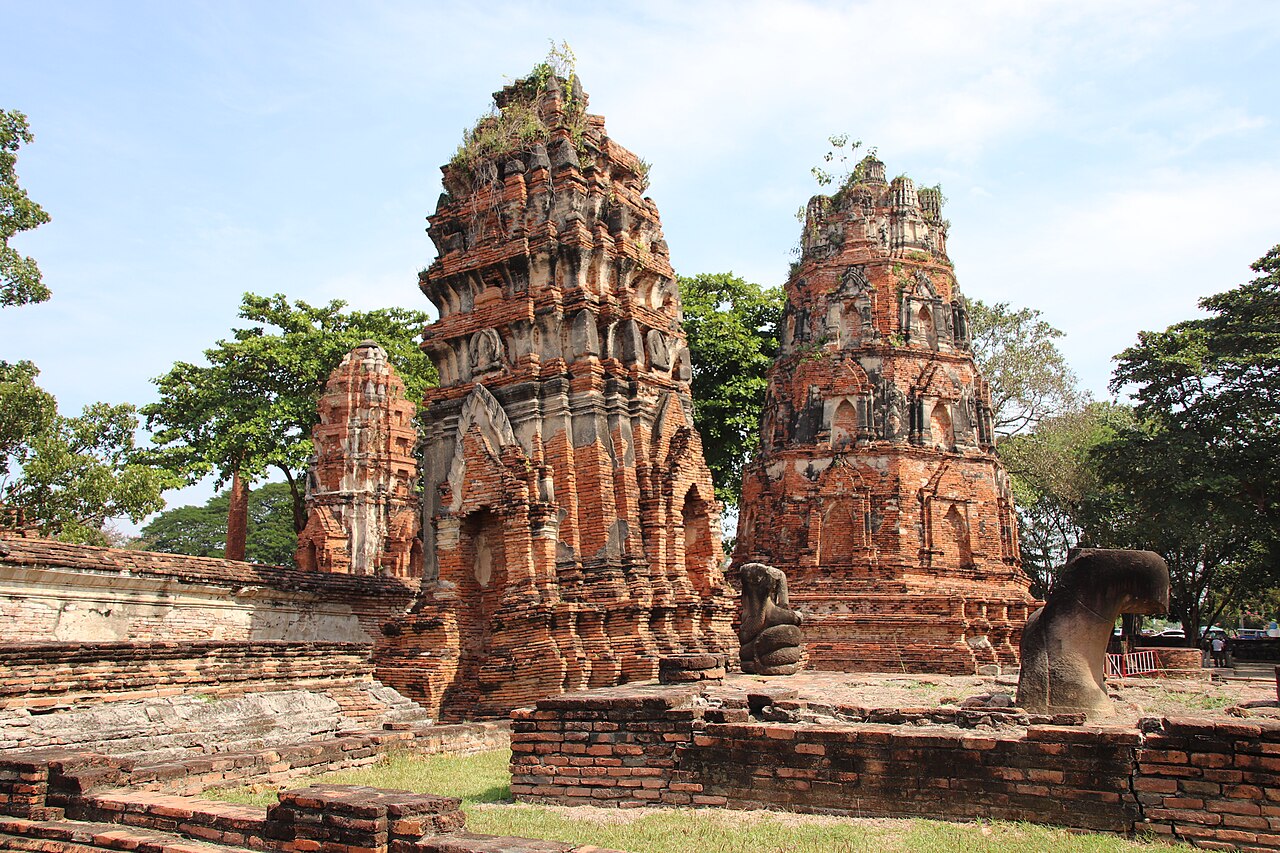
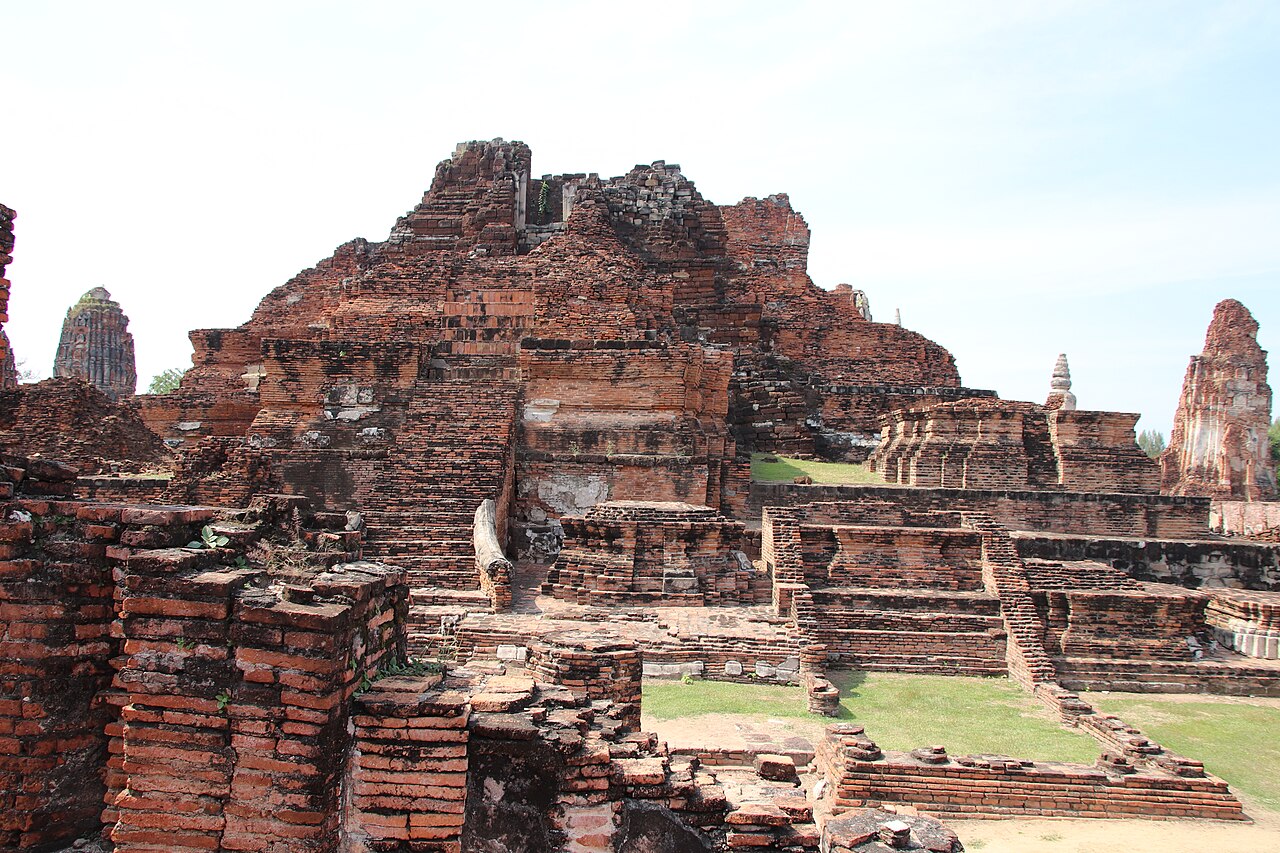
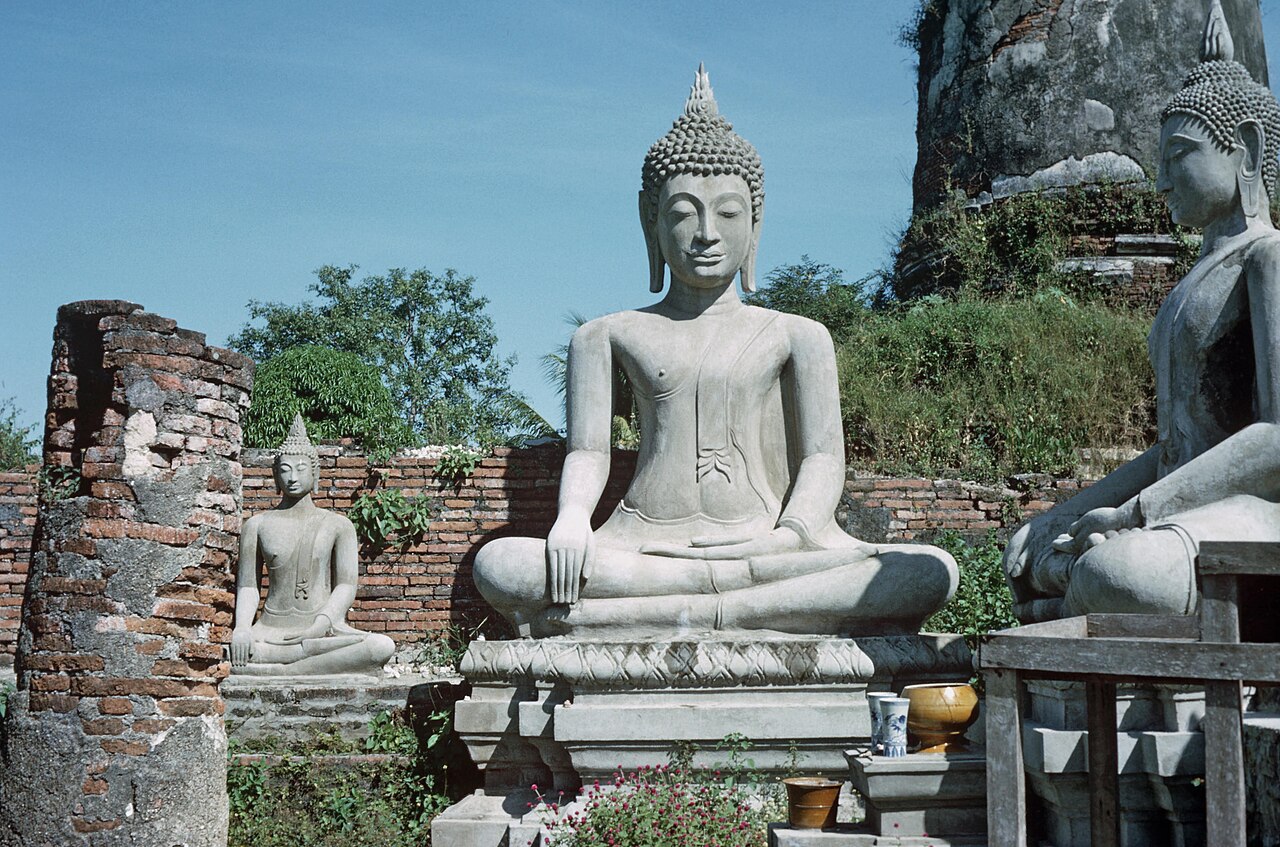
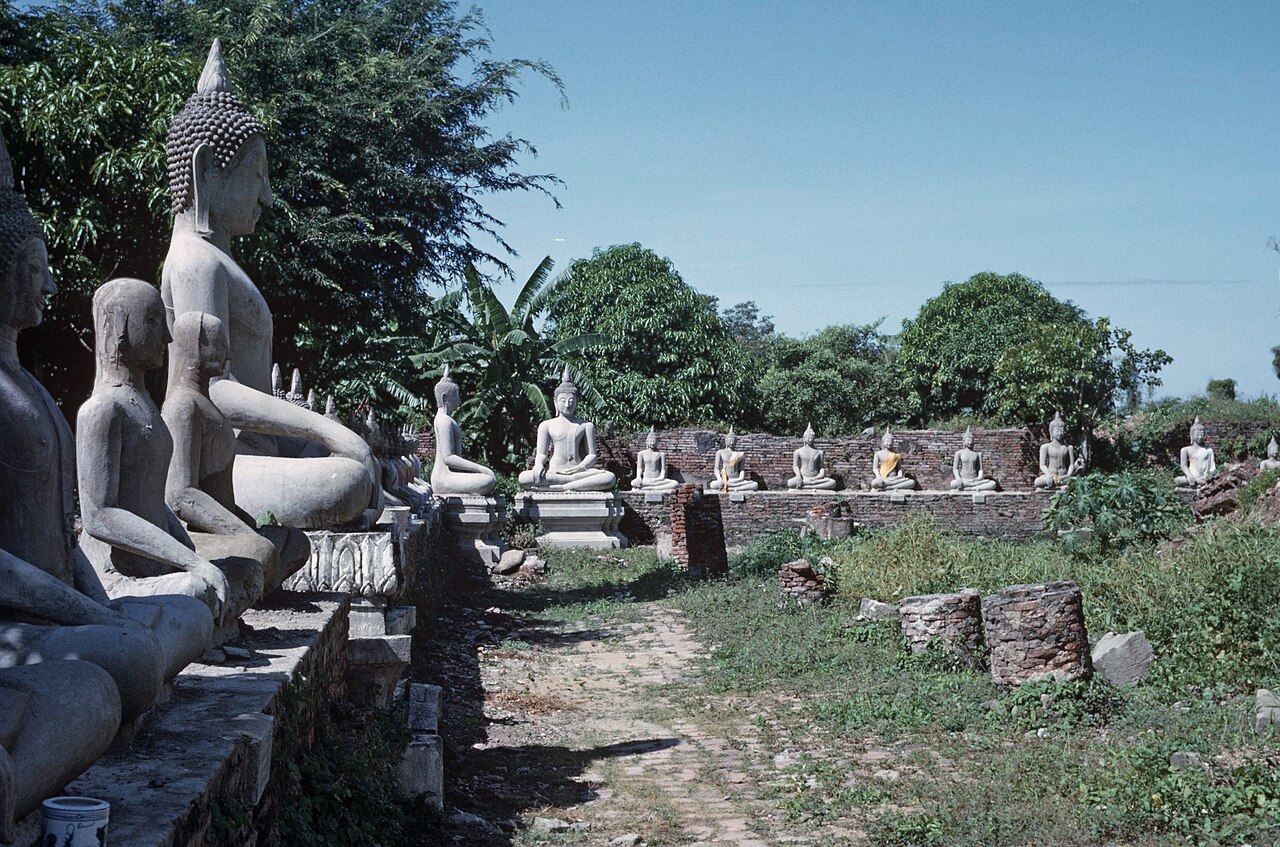
Ayutthaya Historical Park preserves the ruins of the former Siamese capital, founded in 1351 and one of the world's most prosperous cities before its destruction in the 18th century; it was inscribed as a UNESCO World Heritage Site in 1991. Spread across roughly 289 hectares, the park holds numerous temple ruins, prangs (towers) and Buddha images, with Wat Mahathat, Wat Phra Si Sanphet and Wat Chaiwatthanaram among the highlights. Lying about 80 km north of Bangkok, it is a popular day trip.
The stone Buddha head entwined in banyan tree roots at Wat Mahathat — one of Thailand's most iconic images
The three bell-shaped chedis of Wat Phra Si Sanphet, the former royal temple beside the palace grounds
Khmer-style Wat Chaiwatthanaram, especially striking at sunset and under evening illumination
The underground crypts of Wat Ratchaburana, with surviving 15th-century murals
Touring the island by bicycle or river boat to link the scattered ruins (walk / bike / boat combinations)
Good to know
RulesTemples require shoulders and knees to be covered. Sleeveless tops, short shorts, mini-skirts and ripped jeans may be refused entry, and major sites such as Wat Mahathat and Wat Phra Si Sanphet actively enforce this. Sarongs can be hired at entrances for about 20–50 THB.
MannersWhen photographing the Buddha head at Wat Mahathat, crouch so your head stays lower than the Buddha's — this is expected etiquette. Do not climb on or touch the ruins, and remove shoes and hats before entering any chapel or hall with a Buddha image.
MannersPhysical contact with monks is taboo, especially for women. To offer something, place it within the monk's reach rather than handing it over directly.
CautionTuk-tuk and taxi drivers may over-quote fares or push overpriced 'special' tours. Always agree the price before boarding, buy tickets only at official counters, and walk away from hard-sell pressure.
SafetyIn the hot season (Mar–May) temperatures reach 34–38°C with almost no shade among the ruins. Visit early in the day, and bring a hat, sunscreen and plenty of water. The rainy season (Jun–Oct) can bring heavy downpours and flooding.
MannersElephant-riding attractions here are ethically contentious, with welfare groups citing spinal harm and abuse. Prefer observation-only, ethical sanctuary-style experiences over riding. (Confirm fees, hours and rules before you go.)
Practical info
Entering the park area is generally free, but major temples charge individual admission (about 50 THB for foreign visitors); a combined ticket for the six main temples is around 220 THB (valid 30 days). Major paid temples typically open 08:30–16:30. From Bangkok it is about 1.5–2 hours by train or minivan. Confirm fees, hours and rules before visiting.
On-site reviews📍 Verified on-site
No reviews yet. If you are here, be the first to leave one.