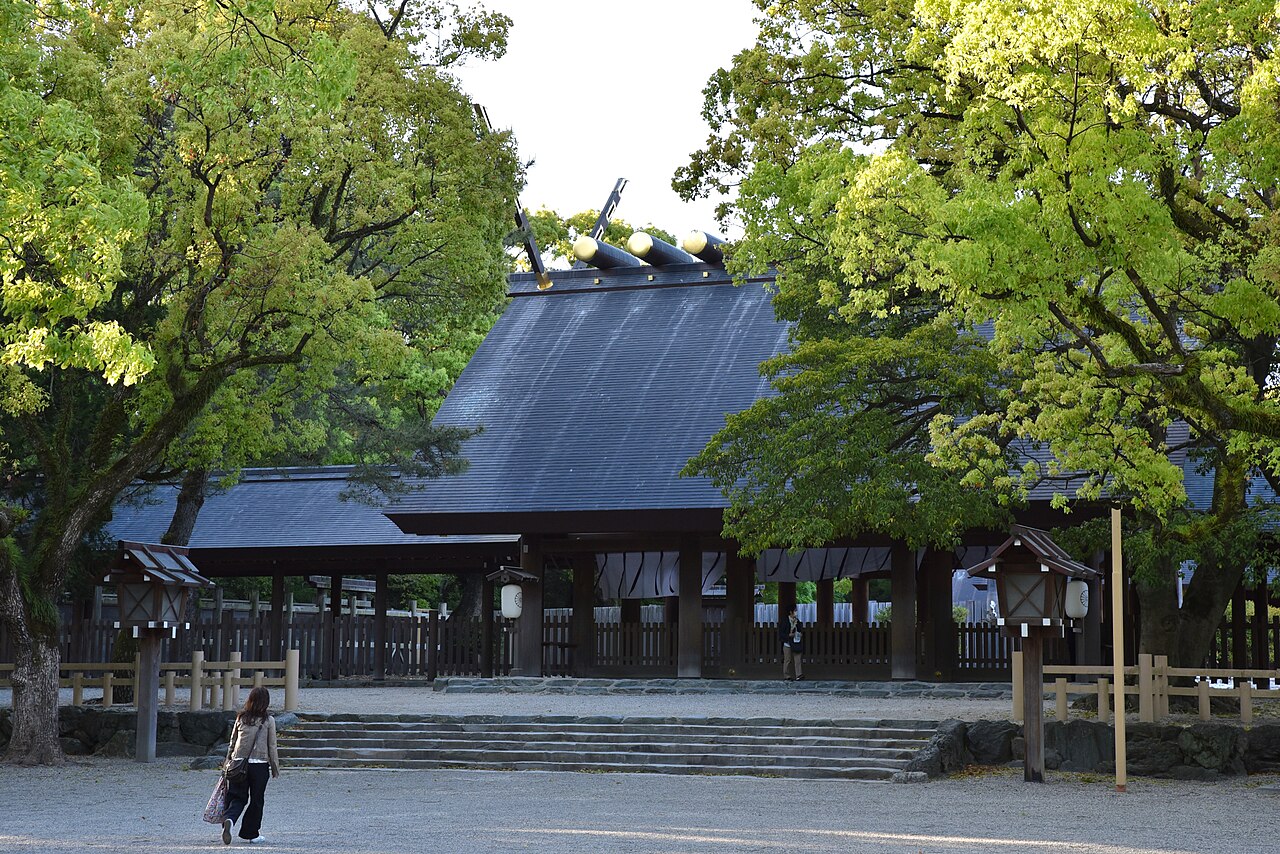
Atsuta Shrine (Atsuta Jingu) is a Shinto shrine in Nagoya, Aichi Prefecture, revered as one of Japan's most sacred sites, second only to the Grand Shrine of Ise. It is traditionally said to enshrine the Kusanagi-no-Tsurugi (the Grass-Cutting Sword), one of the Three Imperial Regalia of Japan, and its history spans roughly 1,900 years. The 200,000-square-metre wooded precinct in the heart of the city draws millions of worshippers each year.
The main hall enshrining the sacred sword Kusanagi-no-Tsurugi, one of the Three Imperial Regalia — the sword itself is never displayed to the public
The Treasure Hall and the Kusanagi-kan museum (opened June 2021), holding over 4,000 relics and exhibits on the legendary sword and Japanese blades
An ancient camphor tree (Ohkusu) said to be over 1,000 years old, set amid the atmospheric forest of the grounds
The Nobunaga Wall (Nobunaga-bei), traditionally donated by Oda Nobunaga, and the Nijugocho-bashi bridge celebrated in Edo-period folk songs
Local Nagoya specialties on the grounds: Miya Kishimen flat noodles and the shrine's Kiyome-mochi sweets
Good to know
MannersWorship uses the standard 'two bows, two claps, one bow' form (same as Ise Jingu) — not the four-clap form used at Izumo Taisha.
RulesPhotography is prohibited inside the main sanctuary and during priestly rituals. Tripods and selfie sticks are generally not allowed except on parts of the main approach; check the posted signs.
MannersFor the goshuin (here called go-shin-in), the proper order is to worship first, then receive the seal. Do not simply collect the stamp without paying respects at the main hall.
SeasonNew Year hatsumode (Jan 1–3) draws about 2.3 million visitors over three days and is extremely crowded. For a calmer visit, come early morning (6–8am) or after dark.
SeasonThe Atsuta Matsuri (Rei-sai) on June 5 draws roughly 250,000 people over two days with lanterns and fireworks. Expect heavy crowds and check schedules and access restrictions in advance.
RulesSome auxiliary shrines within the grounds (e.g. Ichinomisaki Shrine) can only be visited between about 9am and 4pm. Confirm opening times before you go.
Practical info
The precinct is open 24 hours and worship is free. Amulet and go-shin-in reception desks generally operate from around 7am until sunset. Paid facilities such as the Treasure Hall and Kusanagi-kan (fees and hours to be confirmed at the latest source) are typically open around 9:00–16:30. Access: about 3 min walk from Meitetsu Jingu-mae Station (East Gate), or 5–7 min from Denmacho Station on the Meijo subway line (South Gate). Free visitor parking is available but public transport is recommended in peak seasons. Verify exact fees, hours, and rules on the official website before visiting.
On-site reviews📍 Verified on-site
No reviews yet. If you are here, be the first to leave one.