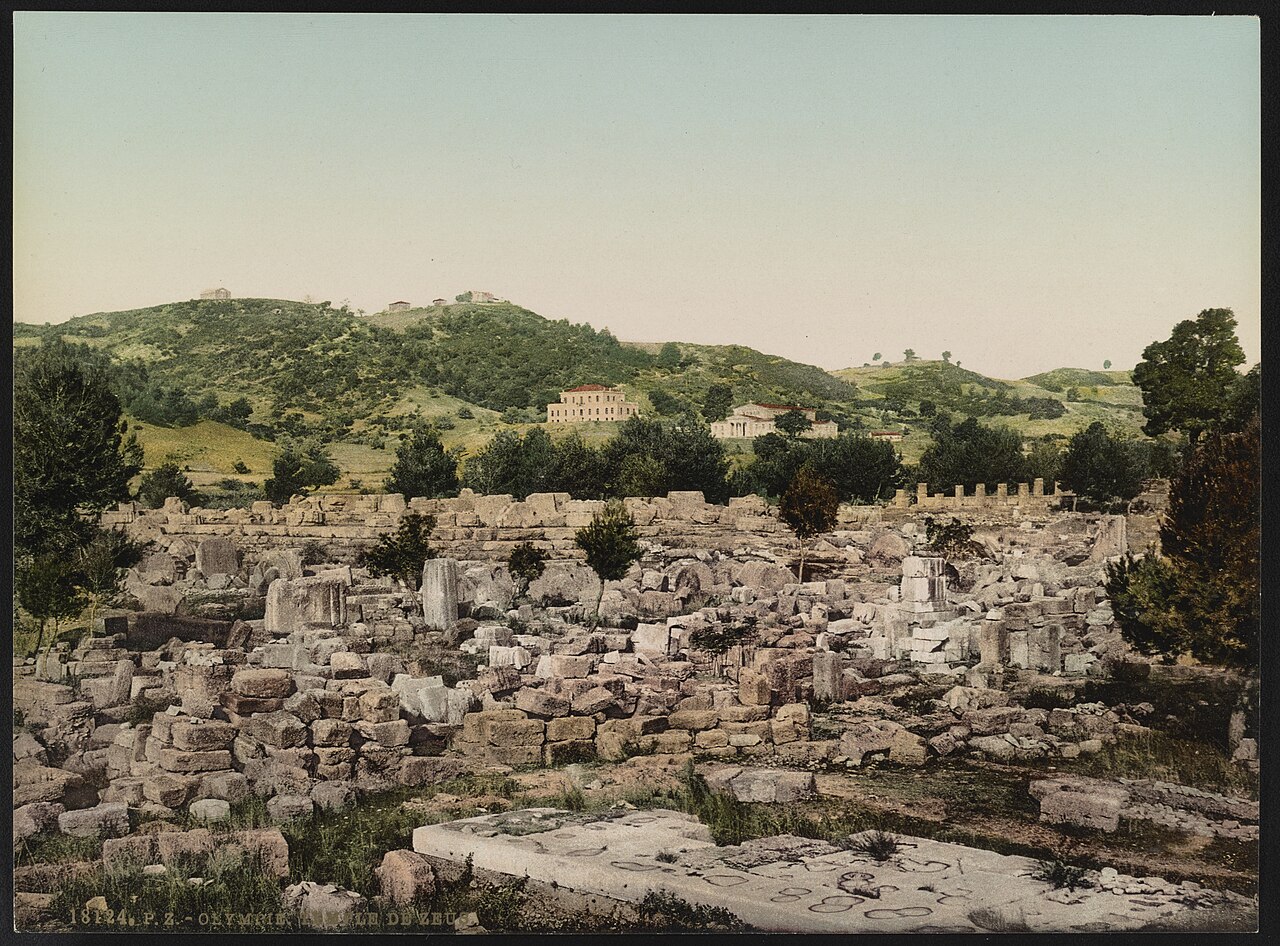
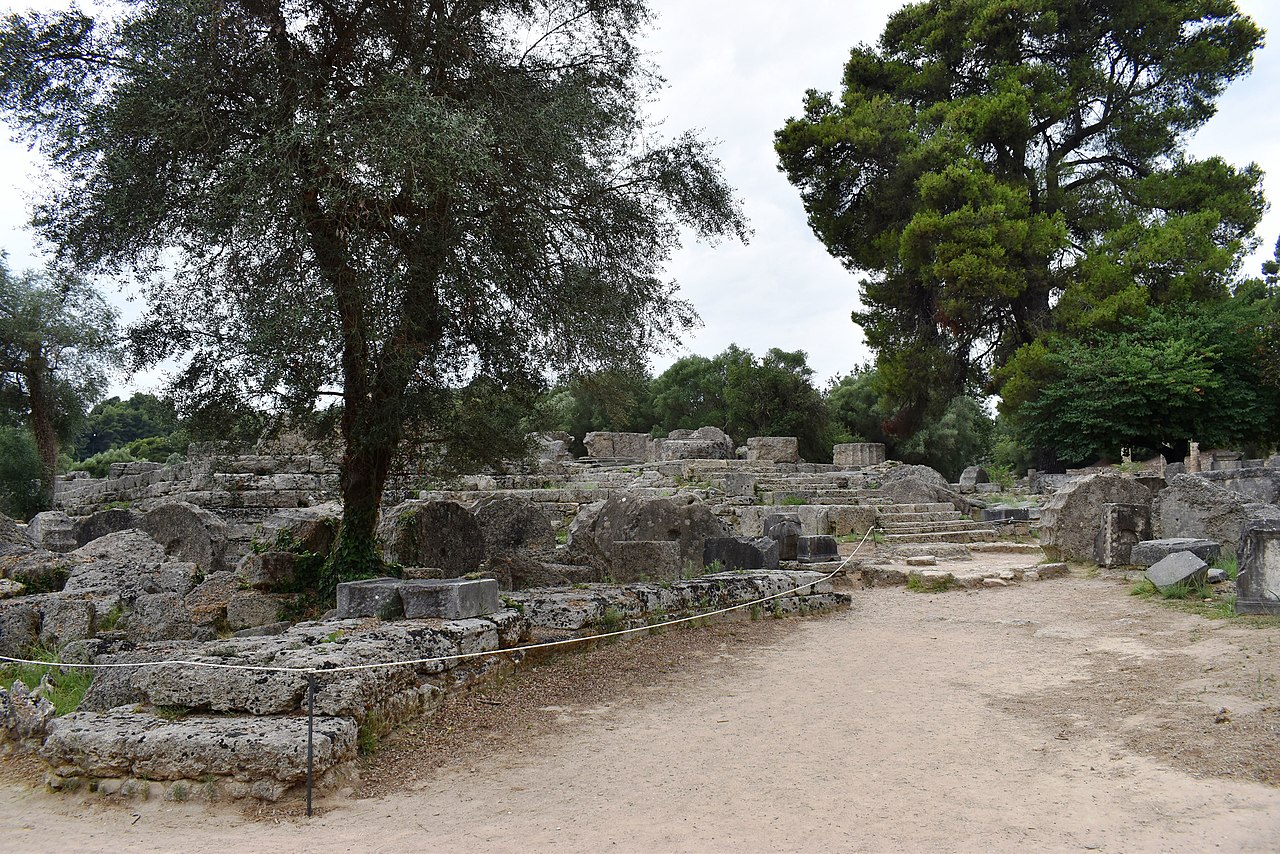
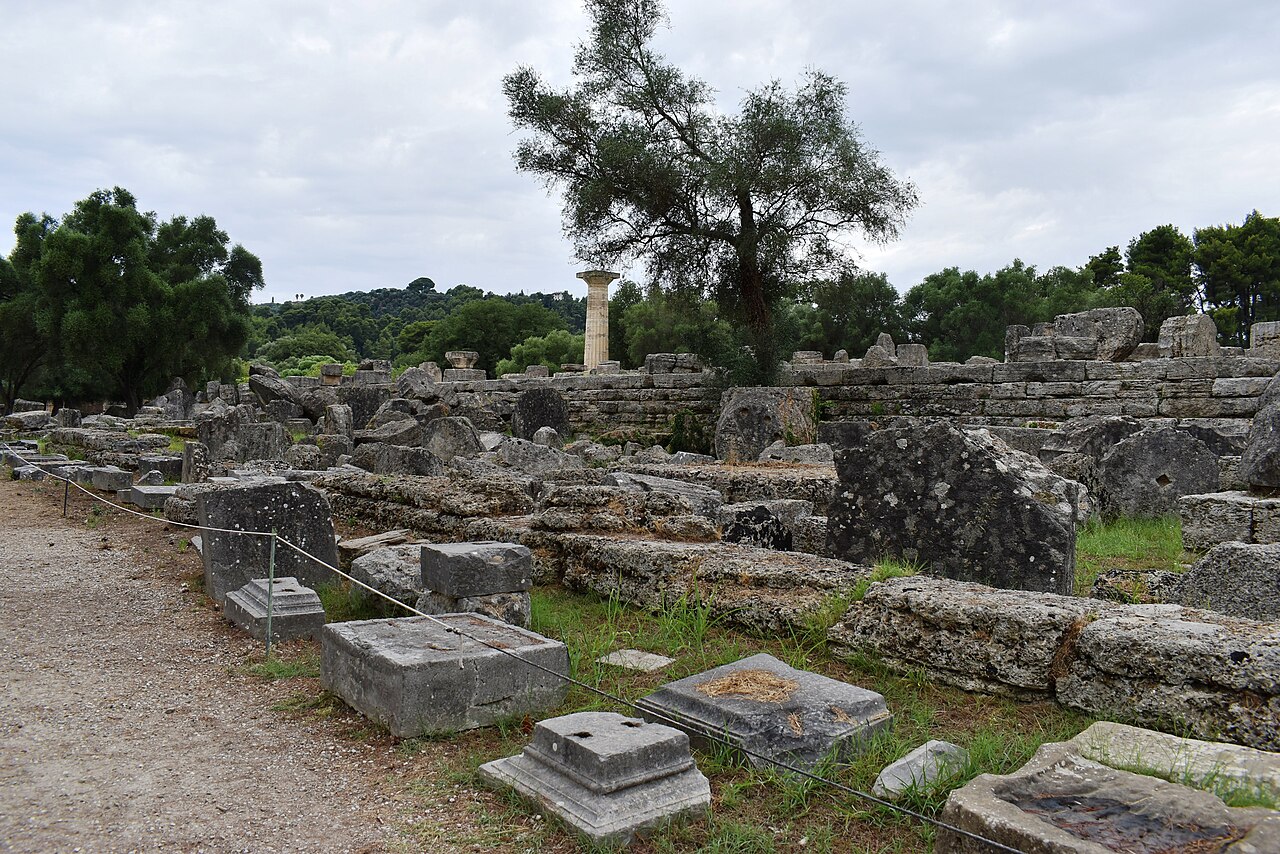
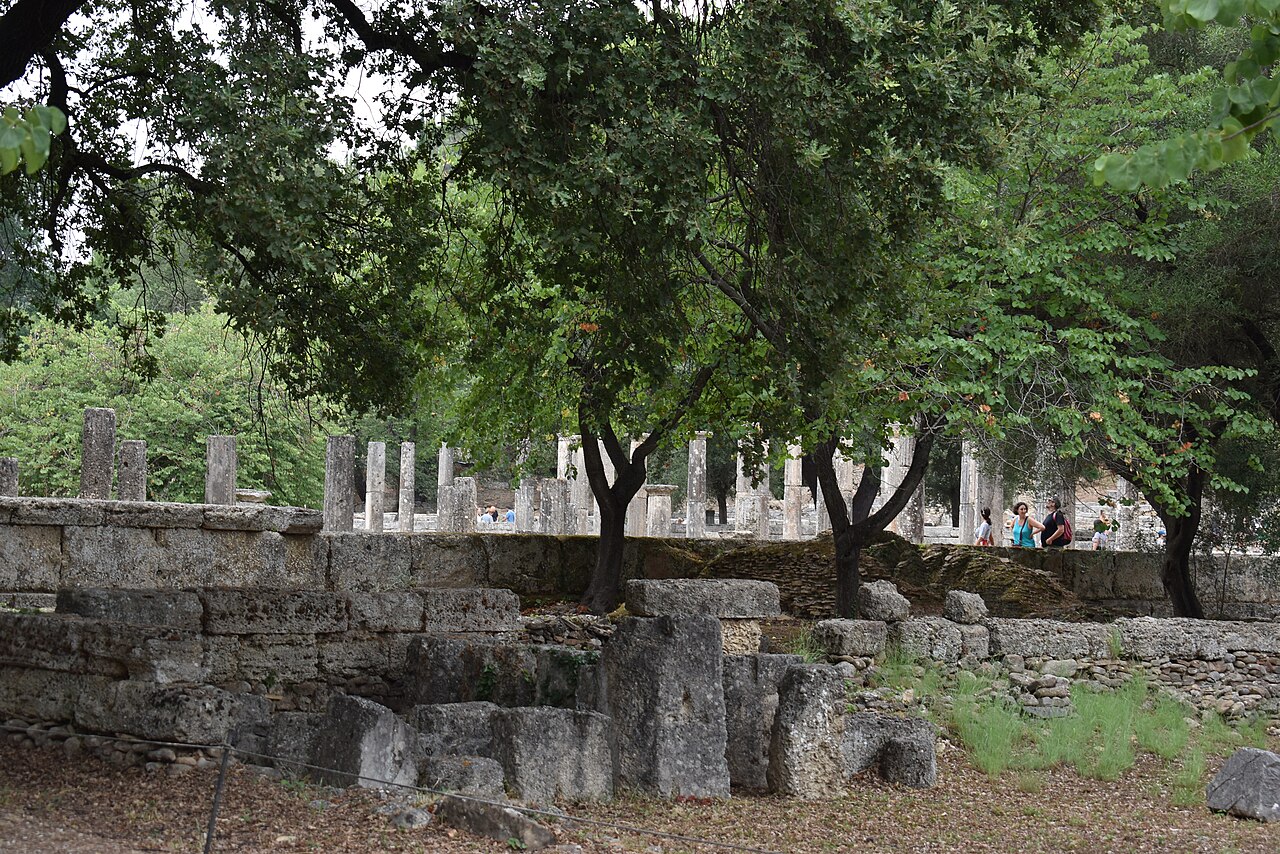
Ancient Olympia is the Sanctuary of Zeus where the ancient Olympic Games were held every four years from the 8th century BC until AD 393, making it one of the most important Panhellenic sites of the classical world. Inscribed as a UNESCO World Heritage Site in 1989, it remains the symbolic place where the modern Olympic flame is kindled in front of the Temple of Hera. As of 2026 the site is fully open, though Greek authorities are stepping up climate measures—installing fire sensors and drawing up protection plans—to shield the monuments from heatwaves and wildfires. Set among pine-covered hills, it is a sprawling open-air site where you can walk the ancient stadium and stand on its original starting line.
Temple of Zeus - the great Doric temple (mid-5th century BC) that once housed Pheidias' colossal chryselephantine statue of Zeus, one of the Seven Wonders of the Ancient World
Temple of Hera (Heraion) - the oldest temple on site (c. 600 BC) and the spot where the Olympic flame is still lit today using sunlight
Ancient Stadium - entered through a vaulted passage, with its original start and finish lines still visible to stand on
Palaestra and Gymnasium - colonnaded complexes where athletes trained for wrestling and track events
Philippeion and Workshop of Pheidias - the circular monument of the Macedonian royal family and the workshop where the statue of Zeus was crafted
Archaeological Museum of Olympia - home to the Hermes of Praxiteles, the Nike of Paionios, and the pediment sculptures from the Temple of Zeus
Good to know
SeasonJuly and August bring extreme heat and heavy crowds, swelled by cruise day-trippers. Aim for right after opening or late afternoon; spring and autumn are far more comfortable.
SafetyMost of the site is open ground with little shade—bring a hat, sunscreen and water. Summer is Greece's wildfire season, so short-notice closures or reduced hours are possible on extreme-heat or fire-risk days; check the latest notices before you go.
RulesA single combined ticket covers both the archaeological site and the museum. Last admission is 20 minutes before closing, and climbing on the monuments, crossing rope barriers, or flying drones is prohibited.
MannersThis is an ancient sanctuary—do not touch or climb the temples and sculptural remains, and keep to marked paths. You may walk on the stadium field, but respect the roped-off excavation areas.
CautionTaxis from Katakolon port or Pyrgos may quote inflated flat fares—agree the price in advance or ask for the meter. Buy tickets at the official booth or the e-ticket site (hhticket.gr) to avoid resale markups.
SafetyThe ground is uneven and worn marble can be slippery, so sturdy walking shoes are essential. The town is small and some shops are cash-only, so carry some euros.
Practical info
From Athens, take a Peloponnese-line train or a KTEL bus from the Kifissos terminal to Pyrgos (17 km from Olympia) and change there; from Katakolon cruise port, a Hellenic Train branch line reaches Olympia in about an hour. In the 2026 summer season (from 1 April) the site and museum open daily 08:00–20:00 (last admission 20 minutes before closing), with the combined ticket around €12 (reduced €6) in high season (Apr–Oct), but always verify current fares and hours.
On-site reviews📍 Verified on-site
No reviews yet. If you are here, be the first to leave one.