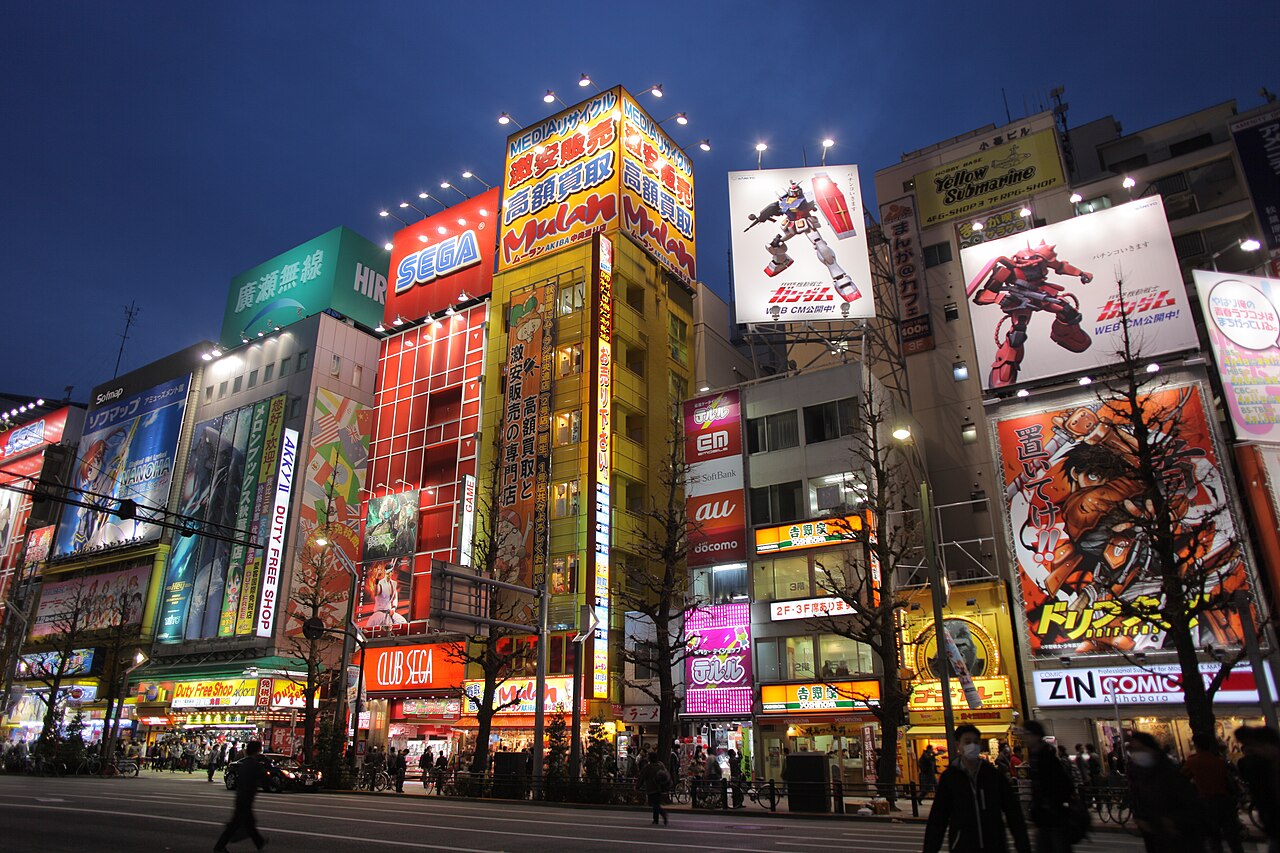
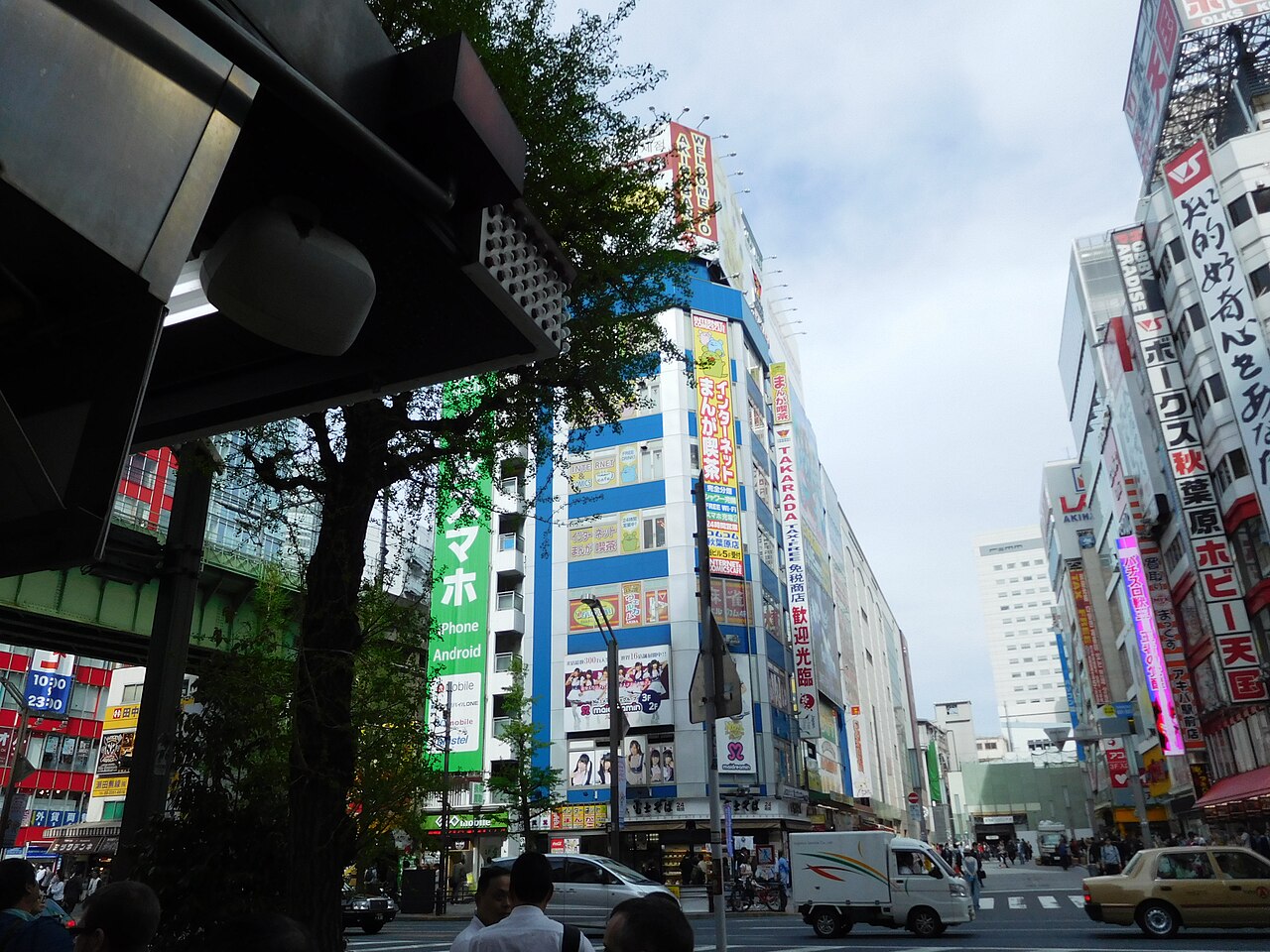
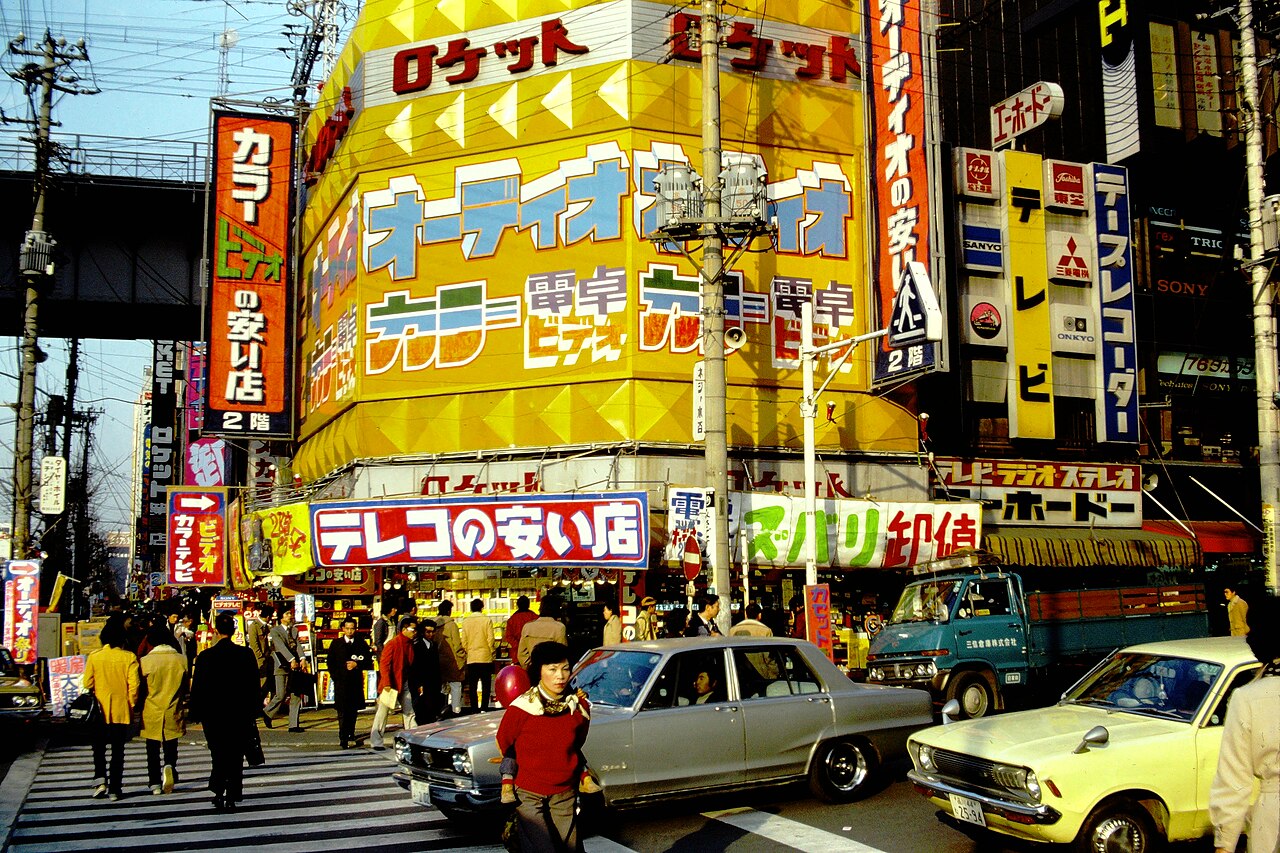
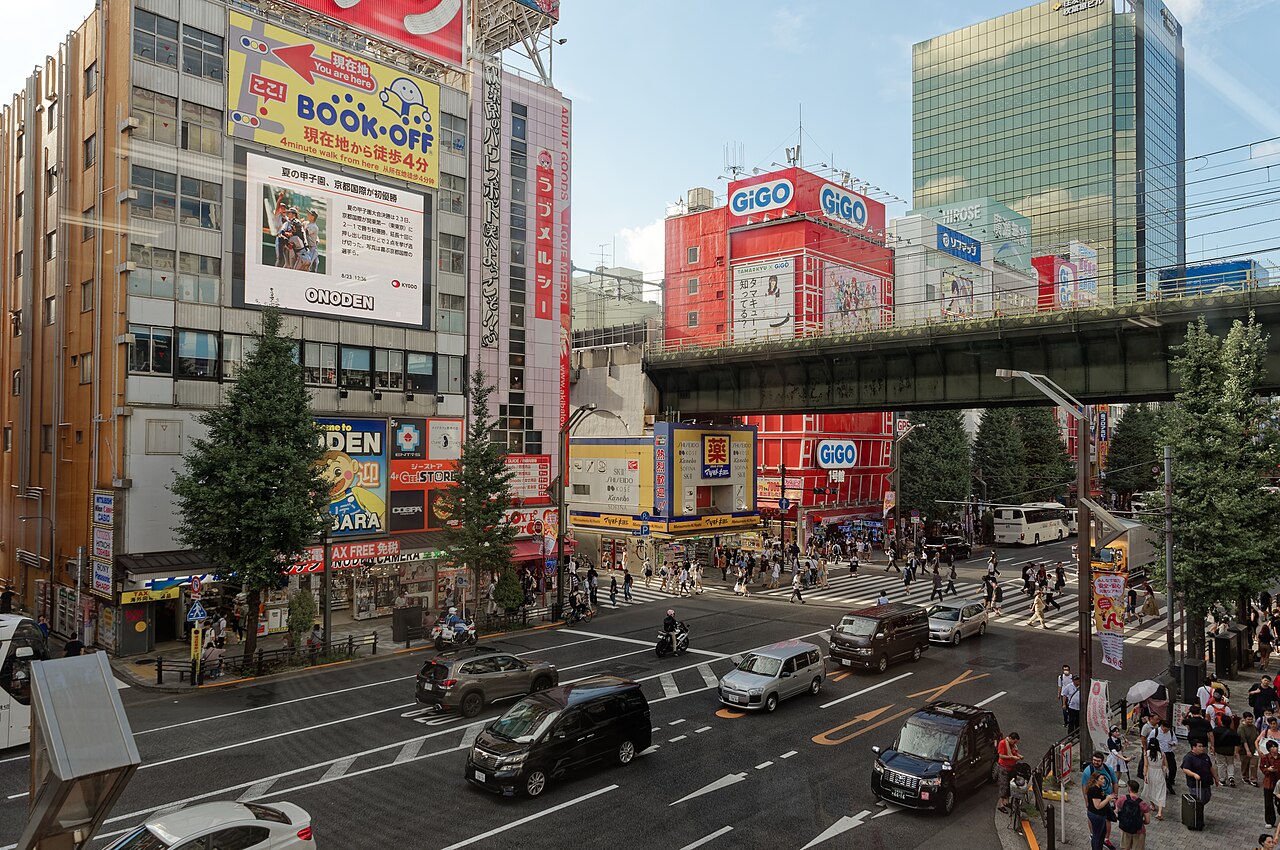
Akihabara Electric Town, in Tokyo's Chiyoda ward, is a world-famous hub for electronics, anime, and gaming. Beginning as a post-war market for household electrical appliances in the 1950s, it shifted to home computers in the 1980s and then evolved into the center of Japan's 'otaku' pop culture, packed with shops for anime, manga, figures, and retro games. Step out of JR Akihabara Station's Electric Town exit and the main Chuo Dori street unfolds with everything from tiny parts stalls to giant retailers like Yodobashi Camera and rows of maid cafes.
Large electronics retailers such as Yodobashi Camera Akiba, Bic Camera, and Sofmap lining Chuo Dori, spanning many floors of cameras, PCs, components, and appliances
Landmark hobby buildings like Radio Kaikan, Mandarake, and Super Potato, specializing in anime goods, figures, trading cards, and retro games
Capsule-toy (gachapon) halls with 500+ machines, plus multi-floor game arcades
The district's signature pop-culture experience of maid cafes and concept cafes
The Sunday afternoon 'Pedestrian Paradise,' when Chuo Dori is closed to car traffic for walking
Good to know
CautionSome concept cafes and bars use costumed staff handing out flyers on side streets to lure visitors, and a minority have grossly overcharged (e.g., billing tens of thousands of yen for a drink normally worth a few hundred). Don't follow street touts; choose reputable, established venues you've checked in advance.
CautionMaid cafes typically charge an entry/seating fee (roughly 500-1,000 yen) plus at least one required drink, with a time limit such as 60 minutes. Staff often won't warn you when time is up, so going even a few minutes over can trigger an automatic charge for another block. Check the price list first.
RulesMany maid and concept cafes ban in-store photography (or restrict it to a paid plan) to protect staff and customer privacy. Unauthorized photos of, or physical contact with, staff are not allowed. Follow each venue's rules.
MannersDuring the Sunday Pedestrian Paradise, cycling, handing out flyers, and street performances are prohibited. Crowds are heavy, so stopping in the middle of the street to take photos blocks foot traffic.
RulesTax-free shopping requires your passport and generally applies when you spend at least 5,000 yen (pre-tax) at a single store in one day. For electronics, always confirm voltage (Japan is 100V), plug type, language/OS compatibility, and whether an international warranty applies.
SeasonThe Pedestrian Paradise can be cancelled for rain, extreme-heat alerts, or major events like the Tokyo Marathon and Kanda Festival. Summer afternoons are very hot, so stay hydrated and use air-conditioned indoor spaces.
Practical info
The gateway is Akihabara Station, served by the JR Yamanote, Keihin-Tohoku, and Chuo-Sobu lines, the Tokyo Metro Hibiya Line, and the Tsukuba Express. The Electric Town exit leads into the shopping district; the Central (east) exit faces the large Yodobashi Camera. The Pedestrian Paradise runs on Sunday afternoons (roughly 13:00-17:00 in winter and 13:00-18:00 in summer) but varies with weather and events, so check current info for your visit date. Confirm store hours, fees, and tax-free terms before you go.
On-site reviews📍 Verified on-site
No reviews yet. If you are here, be the first to leave one.