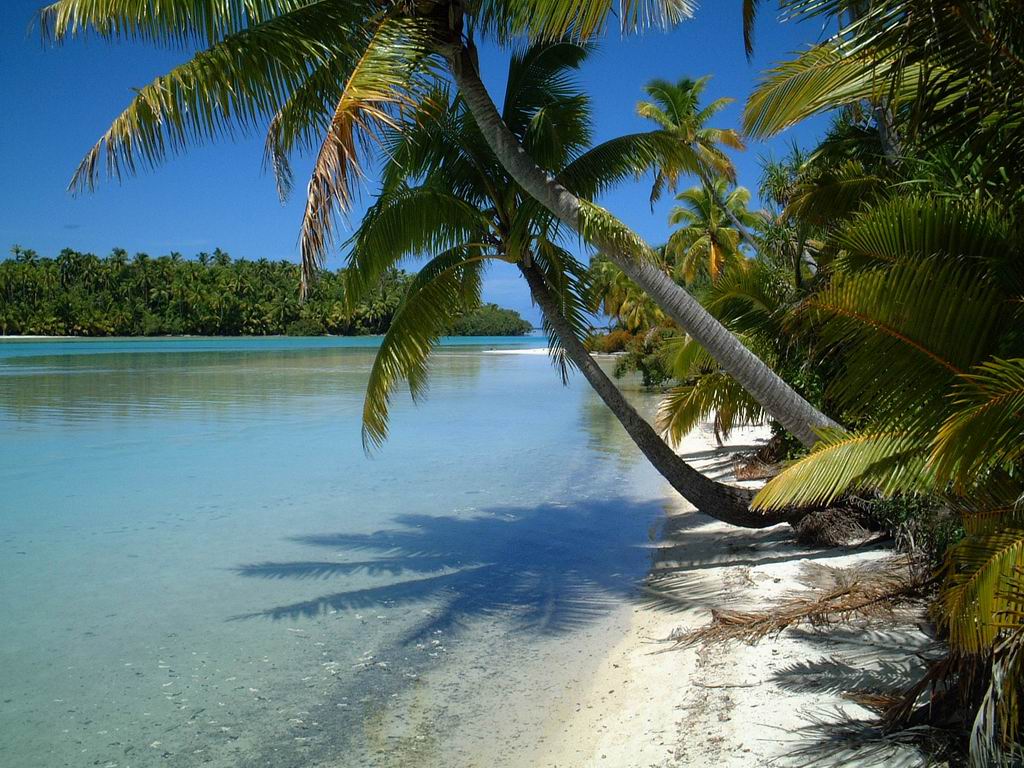
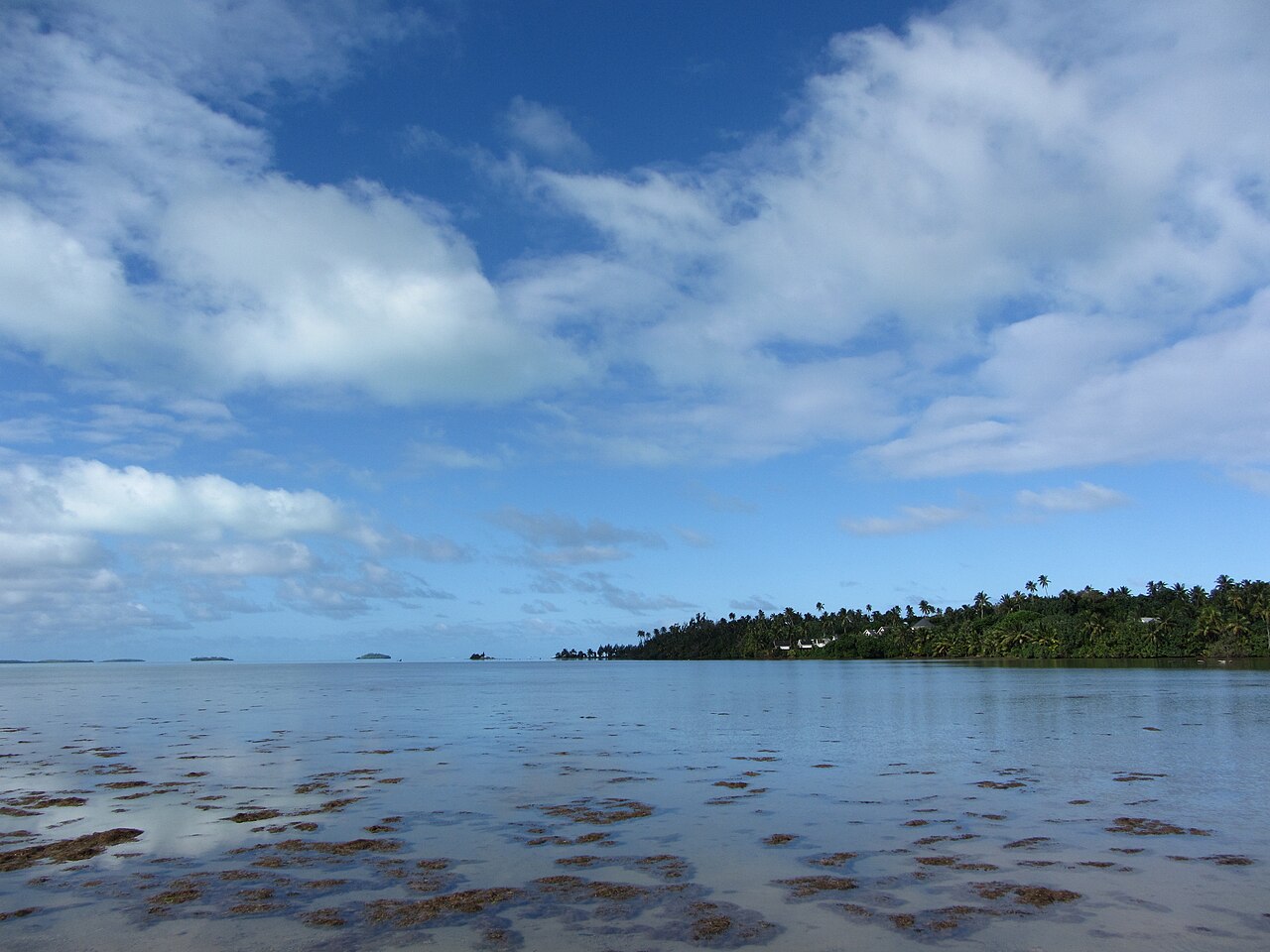
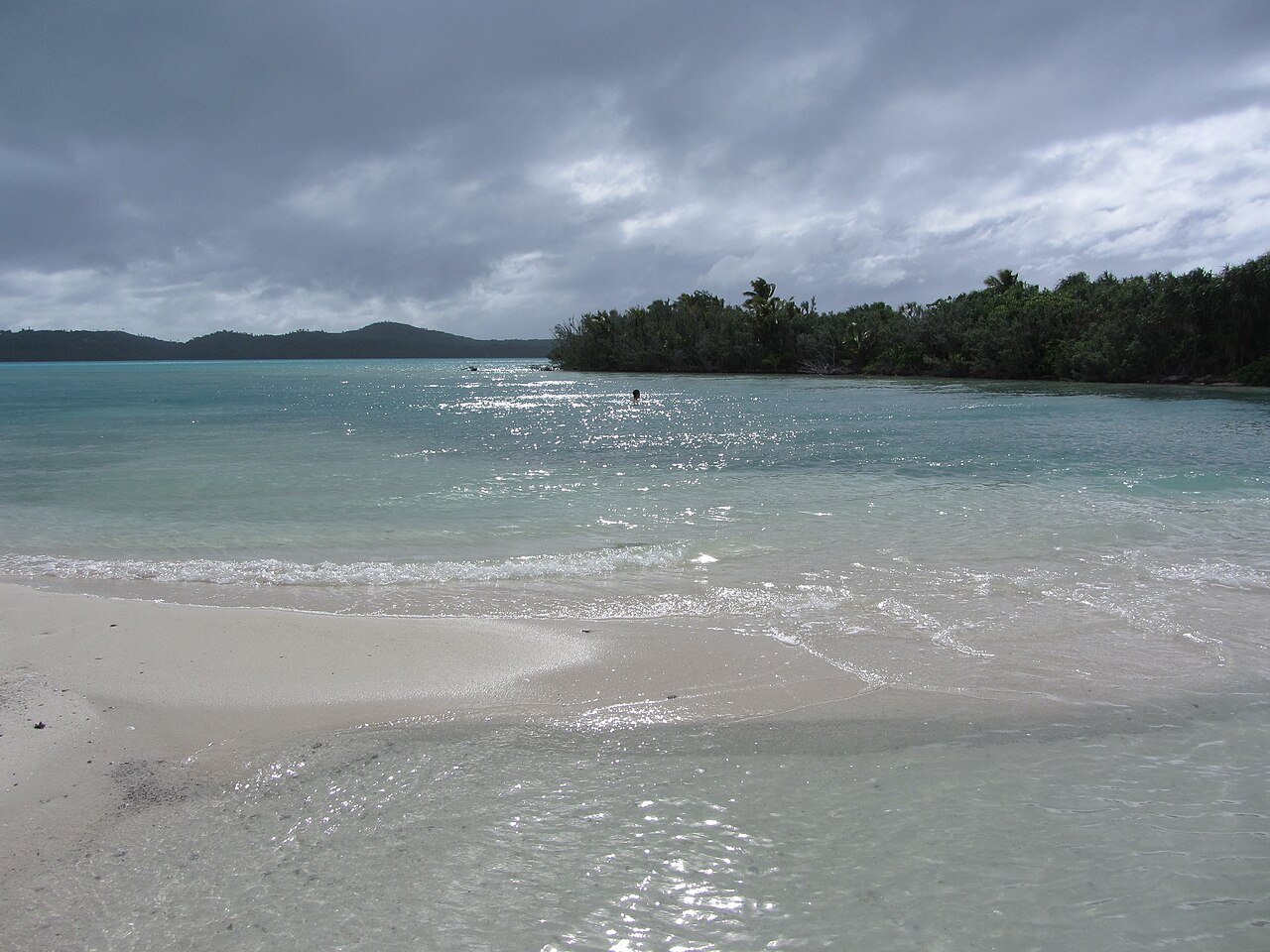
Aitutaki's triangular lagoon in the Cook Islands, famed for the impossibly clear turquoise known as 'Aitutaki blue,' ranks among the most beautiful lagoons on earth. Its icon, One Foot Island (Tapuaetai), is a sand motu best known for the passport stamp you can get at the world's smallest post office — but the finest coral and reef fish sit at the neighbouring coral gardens and giant clam reserves that lagoon cruises visit. In shallow, gentle water of roughly 1–4 m you snorkel over giant clams, purple coral, giant trevally (GTs) and clouds of butterflyfish and angelfish, and as of 2026 the lagoon cruise remains Aitutaki's signature experience.
One Foot Island (Tapuaetai) — the world's smallest post office passport stamp, plus a shallow sandbar you can wade across at low tide
Giant clam reserve — clams cultivated by the Aitutaki Marine Research Centre, viewed at 3–4 m within the ra'ui (protected areas)
Purple Wall — coral bommies draped in vivid purple coral at around 2 m, with buoys marking the safe snorkel zone
GT mooring and the Wreck of Alexander — big giant trevally and reef fish around a submerged cargo wreck
Coral gardens and tropical fish — butterflyfish, angelfish, Picasso triggerfish and stingrays in calm, clear water just 1–4 m deep
Good to know
SafetyThe inner lagoon is sheltered, but the reef passes (gaps in the reef) have strong currents that can pull you toward open sea. These channels are signposted — never swim near them, and stay inside the marked snorkel zones and buoys.
SafetyCruise boats and small skiffs move around the lagoon, so keep watch at the surface, avoid snorkelling alone, and use a buoy or float. Beginners should start where they can stand and be ready for mask fogging and panic before venturing out.
SafetyThe equatorial sun is fierce and long exposure brings sunburn and exhaustion — cover up with a rash guard and hat. Watch for stingrays resting on the sandy floor, and don't wear shiny jewellery at GT sites, where it can trigger a bite.
RulesThe lagoon holds ra'ui (traditional protected areas) and giant clam reserves. Do not touch or stand on coral, clams or other life, use only reef-safe mineral sunscreen (no oxybenzone or octinoxate), and pack out all your rubbish.
MannersNever chase or feed wildlife such as sea turtles — keep a respectful distance. Control your buoyancy so you never stand on coral or kick it with your fins.
SeasonSnorkelling is possible year-round, but the May–October dry season offers the clearest, calmest water. Water temperature is a mild 24–28°C; sea turtles are most often seen around November–February near Motu Maina by the clam reserve. November–April is cyclone season, so watch the weather.
Practical info
Aitutaki is reached by a short domestic flight from Rarotonga, and most snorkel sites are accessed on a lagoon cruise (operators such as Teking Tours or Aitutaki Adventures), typically departing around 9 am and running about five hours. Cruises usually supply mask and fins for free, and beach entry is possible near Ootu Beach. Fares, departure times and whether tours run (including Sundays) vary by operator and season, so confirm the latest details when you book.
On-site reviews📍 Verified on-site
No reviews yet. If you are here, be the first to leave one.